Artwork
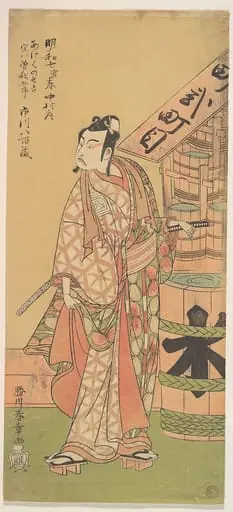
Ichikawa Yaozo II as a Otokodate Standing by a Bench
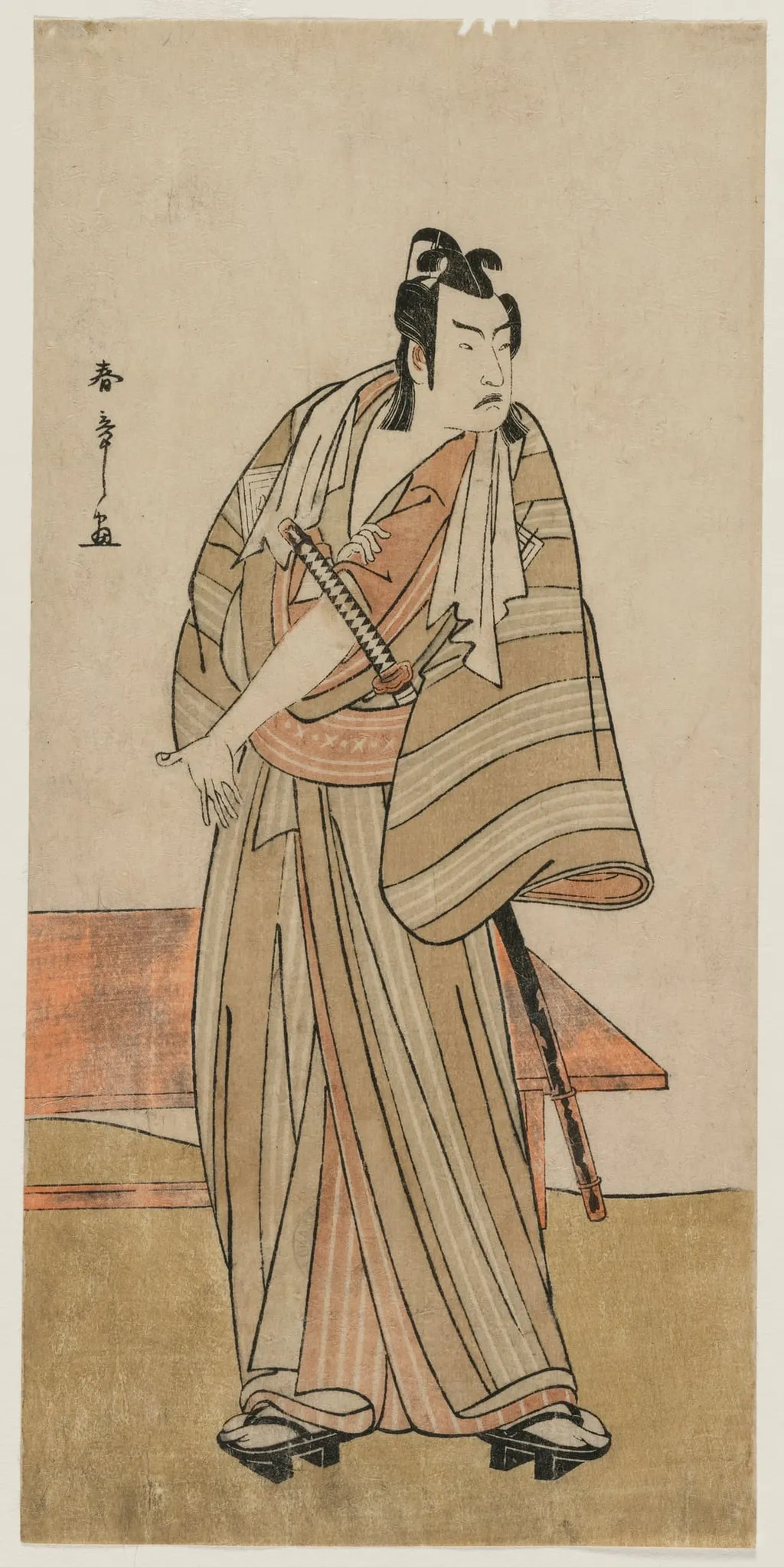
Ichikawa Yaozo II as a Otokodate Standing by a Bench is a print by the Romanticist artist Katsukawa Shunshō. It dates from 1780 and is held in the collection of the Cleveland Museum of Art.
About this work
Overview
It is currently held in the collection of The Cleveland Museum of Art, where it exemplifies the ukiyo-e tradition of capturing kabuki actors in defining roles.
Created around 1780 by Katsukawa Shunshō, this woodblock print portrays Ichikawa Yaozo II in the role of an otokodate, a type of urban vigilante admired for personal honor. The image is part of a series of actor portraits that blended theatrical persona with social archetype. It is currently held in the collection of The Cleveland Museum of Art, where it exemplifies the ukiyo-e tradition of capturing kabuki actors in defining roles.
Subject & Meaning
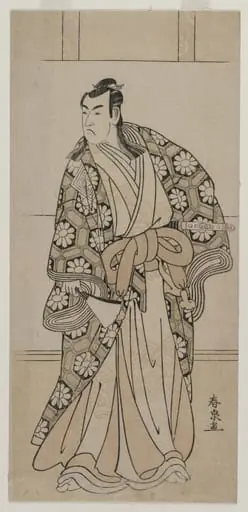
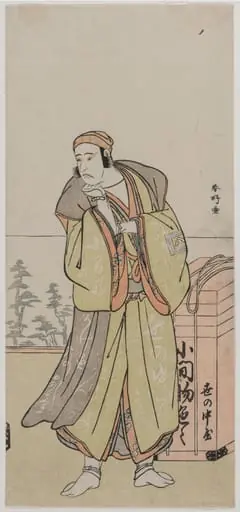
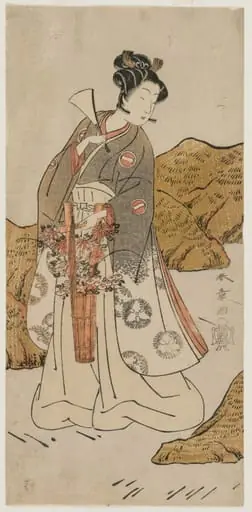
The figure represents a stylized interpretation of a common kabuki character type: the otokodate, a morally ambiguous but respected rogue who upheld justice outside the law. His upright stance, hand on sword, and solemn gaze convey quiet authority. The attire and posture reflect theatrical conventions of the time, signaling both his social role and the actor’s skill in embodying complex identities, not merely a literal depiction of historical figures.
Technique & Style
Shunshō employed fine linework and restrained color to emphasize the figure’s presence. The muted background isolates the subject, drawing focus to his costume’s subtle stripes and the sharp silhouette of the sword. Hair and fabric are rendered with delicate precision, typical of Shunshō’s actor portraits. The composition avoids ornamentation, relying on posture and expression to convey psychological depth rather than narrative detail.
History & Provenance
The print was produced during the height of Shunshō’s career, when actor portraits dominated the ukiyo-e market. It likely circulated as a collectible among kabuki enthusiasts in Edo. The Cleveland Museum of Art acquired it in the 20th century as part of its growing collection of Japanese prints, preserving it as a representative example of late 18th-century theatrical portraiture.
Context
In late 18th-century Edo, ukiyo-e prints served as both entertainment and cultural documentation. Actor portraits like this one allowed audiences to connect with performers beyond the stage, reinforcing the popularity of specific roles. The otokodate figure resonated with urban audiences who admired codes of personal honor amid rigid social hierarchies, making such images culturally significant beyond their aesthetic value.
Legacy
Shunshō’s approach to actor portraiture influenced later ukiyo-e artists, including Sharaku and Kunisada, who expanded on psychological depth in theatrical subjects. This print remains a key reference for understanding how kabuki roles were visualized and consumed in Edo society. Its restrained style and focus on character over spectacle mark a transitional moment in the evolution of Japanese printmaking.
Artist & collection
Artist
Katsukawa Shunshō spent his life in Edo (now Tokyo), where the city’s teahouses and theaters buzzed with energy.