Artwork
Ichikawa Monnosuke II as a Temple Page
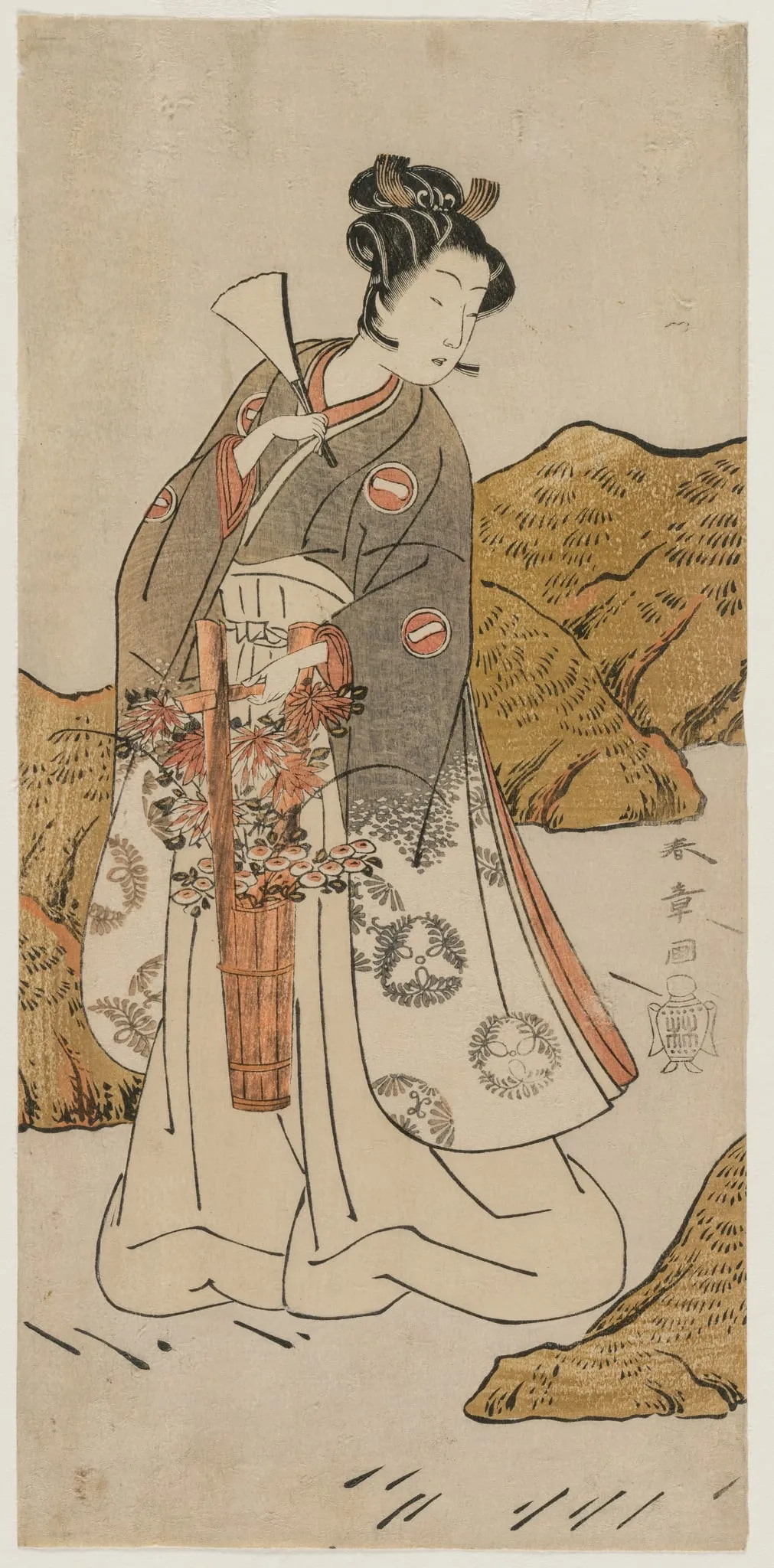
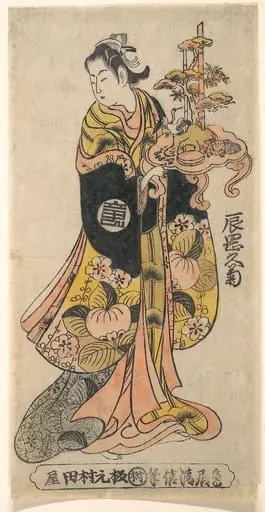
Ichikawa Monnosuke II as a Temple Page is a print by the Romanticist artist Katsukawa Shunshō. It dates from 1774 and is held in the collection of the Cleveland Museum of Art.
About this work
Overview
Created around 1774 by Katsukawa Shunshō, this woodblock print depicts Ichikawa Monnosuke II in the role of a temple page. It is part of the ukiyo-e tradition of depicting kabuki actors in character. The print is currently held in the collection of The Cleveland Museum of Art, where it serves as an example of late 18th-century actor portraiture in Japanese printmaking.
Subject & Meaning
Dressed in formal robes adorned with floral motifs, the actor kneels with quiet composure, holding a basket of offerings.
The figure represents a young temple attendant, a common role in kabuki drama symbolizing purity and devotion. Dressed in formal robes adorned with floral motifs, the actor kneels with quiet composure, holding a basket of offerings. The pose and attire reflect ritualistic stillness, aligning the character with spiritual humility rather than theatrical flamboyance, emphasizing inner calm over external drama.
Technique & Style
Shunshō employed fine line work and subtle gradations of color typical of the Katsukawa school’s actor portraits. The robe’s pattern is delicately printed, and the background’s muted tones draw focus to the figure’s form. Facial features are rendered with precision, capturing a restrained expression. The composition avoids clutter, using negative space to enhance the figure’s solemn presence.
History & Provenance
The print was produced during the height of Shunshō’s career, when actor portraits were in high demand among urban audiences. It likely circulated as a single-sheet print for collectors and theater enthusiasts. The Cleveland Museum of Art acquired it in the 20th century, preserving it as a representative work of Edo-period kabuki culture and print aesthetics.
Context
In 1770s Edo, actor prints were popular commodities, linking theater culture with visual art. Shunshō specialized in capturing the likenesses of kabuki performers with psychological nuance, moving beyond mere caricature. This print reflects the era’s fascination with theatrical roles as extensions of identity, blending real actors with fictional personas in public imagination.
Legacy
Shunshō’s approach influenced later generations of ukiyo-e artists by emphasizing individualized expression in actor portraits. This print exemplifies the transition from stylized representations to more naturalistic depictions of character. While not widely known outside specialist circles, it remains a quiet testament to the depth of Edo-period printmaking and its engagement with performance and spirituality.
Artist & collection
Artist
Katsukawa Shunshō spent his life in Edo (now Tokyo), where the city’s teahouses and theaters buzzed with energy.

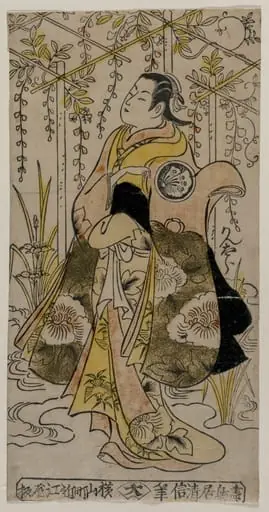 Sanjo Kantaro as a Young Woman Standing in a Wisteria Arbor
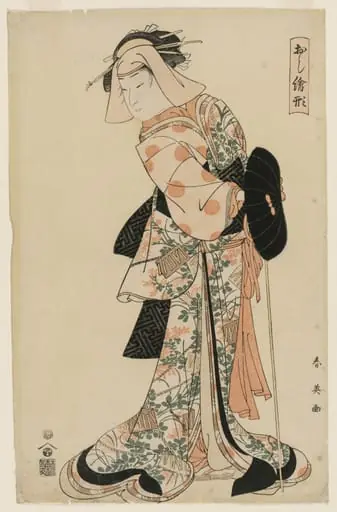 Dancer as Kuzunoha, Fox Spirit Disguised as a Woman
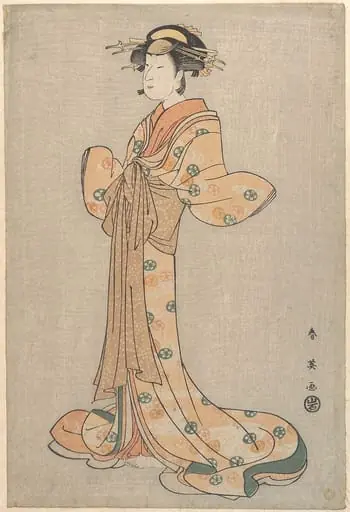 二代目中村二代目中村野塩のお軽|The Actor Nakamura Noshio II as the Courtesan Okaru
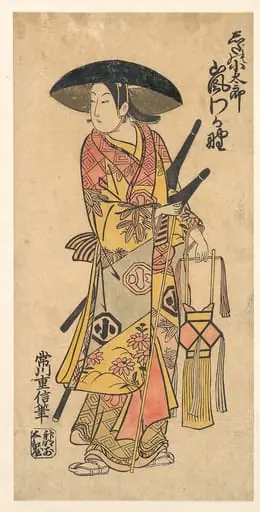 Untitled
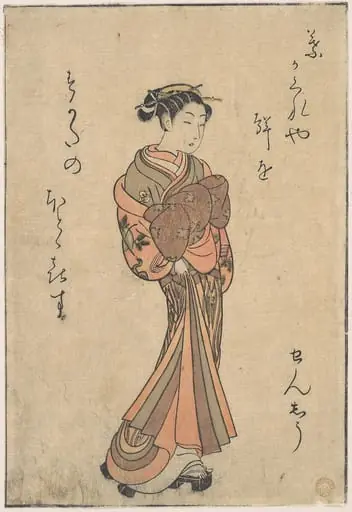 青楼美人合|The Courtesans, from the Series, "Seiro Bijin Awase Carver End Shigoro" (sic.)
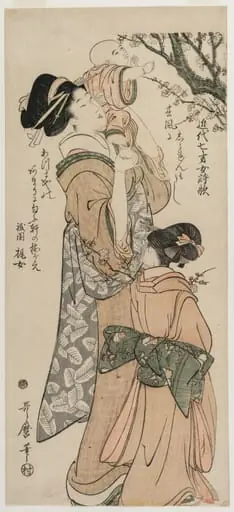 Mother Lifting a Child to a Plum Tree (from the series Chinese and Japanese Poems by Seven Year Old Girls of Recent Times)
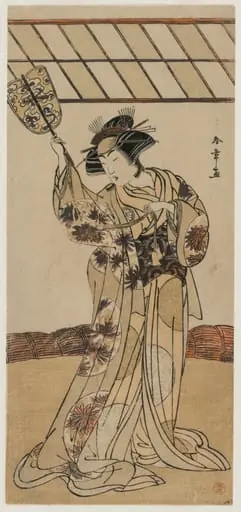 Segawa Kikunojō III as Teruha
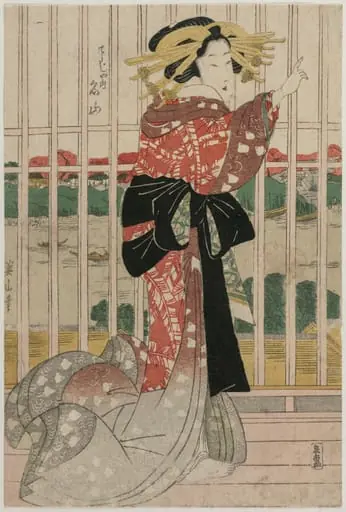 The Courtesan Meizan of the Chojiya on a Balcony Overlooking the Sumida River
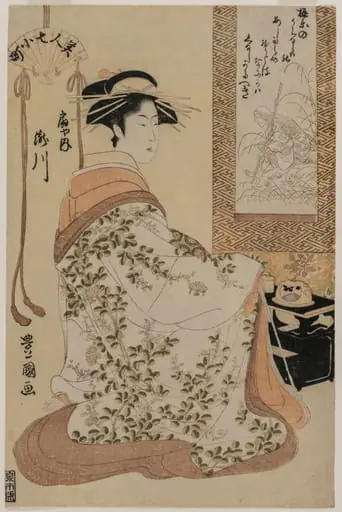 Takigawa of Ōgiya, from the series Beauties as the Seven Komachi
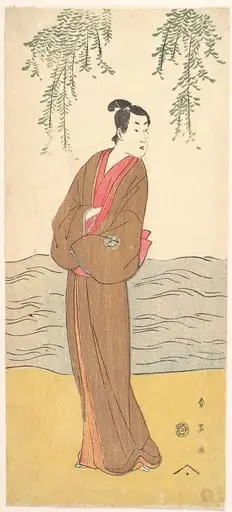 Untitled
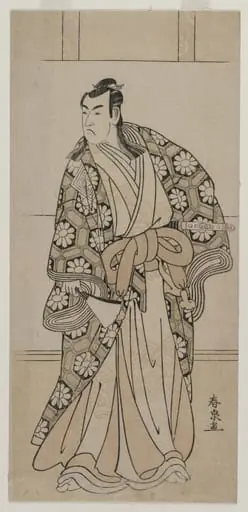 Ichikawa Monnosuke II as a Lord
 Untitled