Artwork
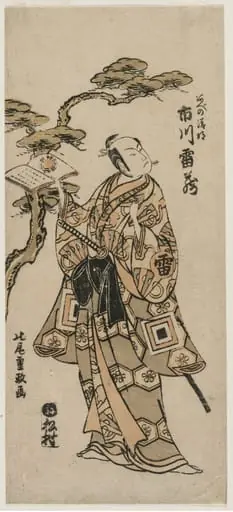
Ichikawa Danjuro II as a Young Samurai
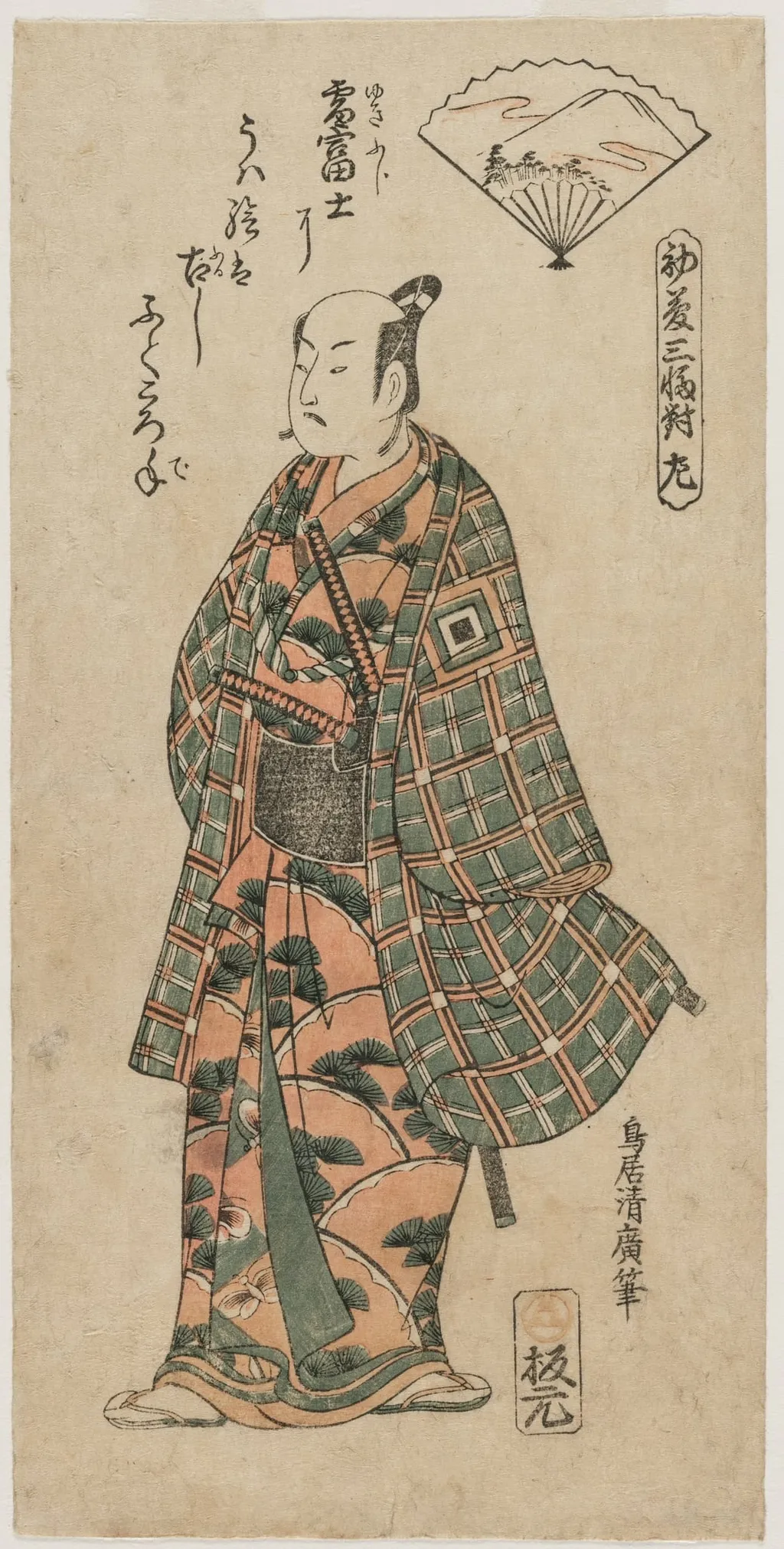
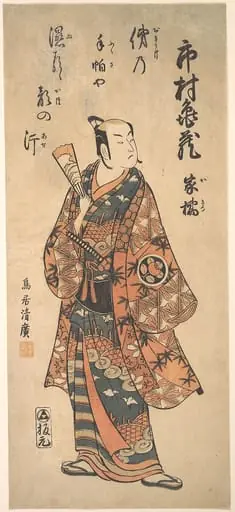
Ichikawa Danjuro II as a Young Samurai is a print by the Romanticist artist Torii Kiyohiro. It dates from 1754 and is held in the collection of the Cleveland Museum of Art.
About this work
Overview
Created around 1754 by Torii Kiyohiro, this woodblock print depicts Ichikawa Danjuro II in the role of a young samurai. Produced during the Edo period, it belongs to the ukiyo-e tradition of popular theater portraiture. The print is part of the collection at The Cleveland Museum of Art, where it serves as an example of early Kabuki actor imagery rendered in the Torii school’s distinctive style.
Subject & Meaning
His posture and attire reflect the idealized young warrior archetype common in theatrical performances of the time.
The subject is Ichikawa Danjuro II, a celebrated Kabuki actor known for portraying heroic male roles. His posture and attire reflect the idealized young warrior archetype common in theatrical performances of the time. The folded fan and subtle mountain motif suggest poetic restraint and noble intent, while the inscription likely identifies the role or performance, anchoring the image within its theatrical context.
Technique & Style
The print employs bold outlines and flat, unmodulated color fields, characteristic of early ukiyo-e woodblock printing. The peach-and-green plaid robe contrasts with black trim, creating visual clarity without shading. Background elements are minimal, focusing attention on the figure. The mountain scene on the fan and calligraphic text are delicately rendered, balancing detail with the overall graphic simplicity of the medium.
History & Provenance
The print was produced during a period when actor portraits were widely circulated among theatergoers. Torii Kiyohiro, a member of the influential Torii studio, specialized in such images for promotional and commemorative purposes. The work entered the Cleveland Museum of Art’s collection through documented acquisitions, preserving its original condition and historical context as a product of mid-18th-century Edo popular culture.
Context
In mid-1700s Edo, Kabuki theater was a central form of public entertainment, and actor prints functioned as both advertising and fan memorabilia. The Torii school dominated this niche, using stylized forms to capture the drama of performance. This print reflects the close relationship between theater and print culture, where costume, gesture, and inscription combined to convey character and narrative to a broad audience.
Legacy
As an early example of actor portraiture, the print illustrates the evolution of ukiyo-e from theatrical promotion to artistic expression. Torii Kiyohiro’s work influenced later artists who refined the genre, though his style remained rooted in clarity and immediacy. Today, such prints are valued for their documentation of Edo-period performance traditions and the visual language of Japanese theater.
Artist & collection

Artist
Torii Kiyohiro lived in Edo (now Tokyo) when the city was growing fast and theater was everywhere.

 Untitled
 Untitled
 Onoe Matsusuke I as Ebisu, from The Stand-In Seven Gods of Good Fortune
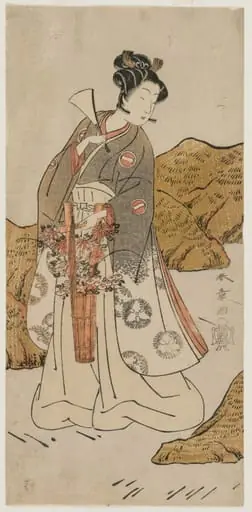 Ichikawa Monnosuke II as a Temple Page
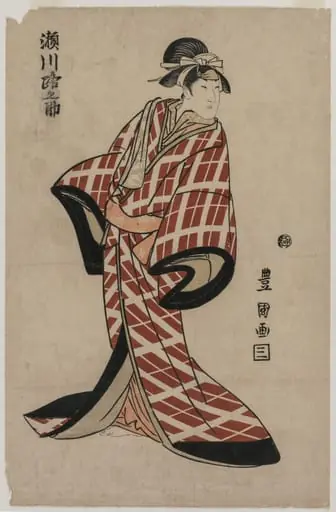 Segawa Michinosuke Wearing a Padded Plaid Robe
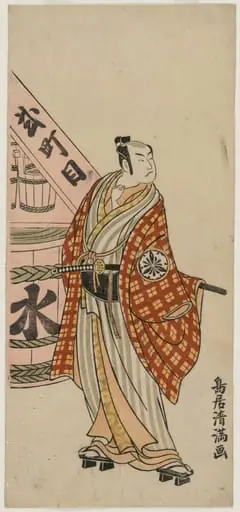 Matsumoto Koshiro IV as a Townsman Standing Beside a Water Barrel
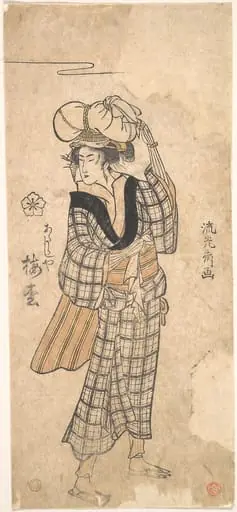 「あたらしや梅松」|The Courtesan Umematsu of the Atarashiya Brothel Costumed as an Ohara Maiden
 Ichikawa Raizo as Abe no Seimei