Artwork
The Actor Segawa Kikunojo II Dancing with a Parasol
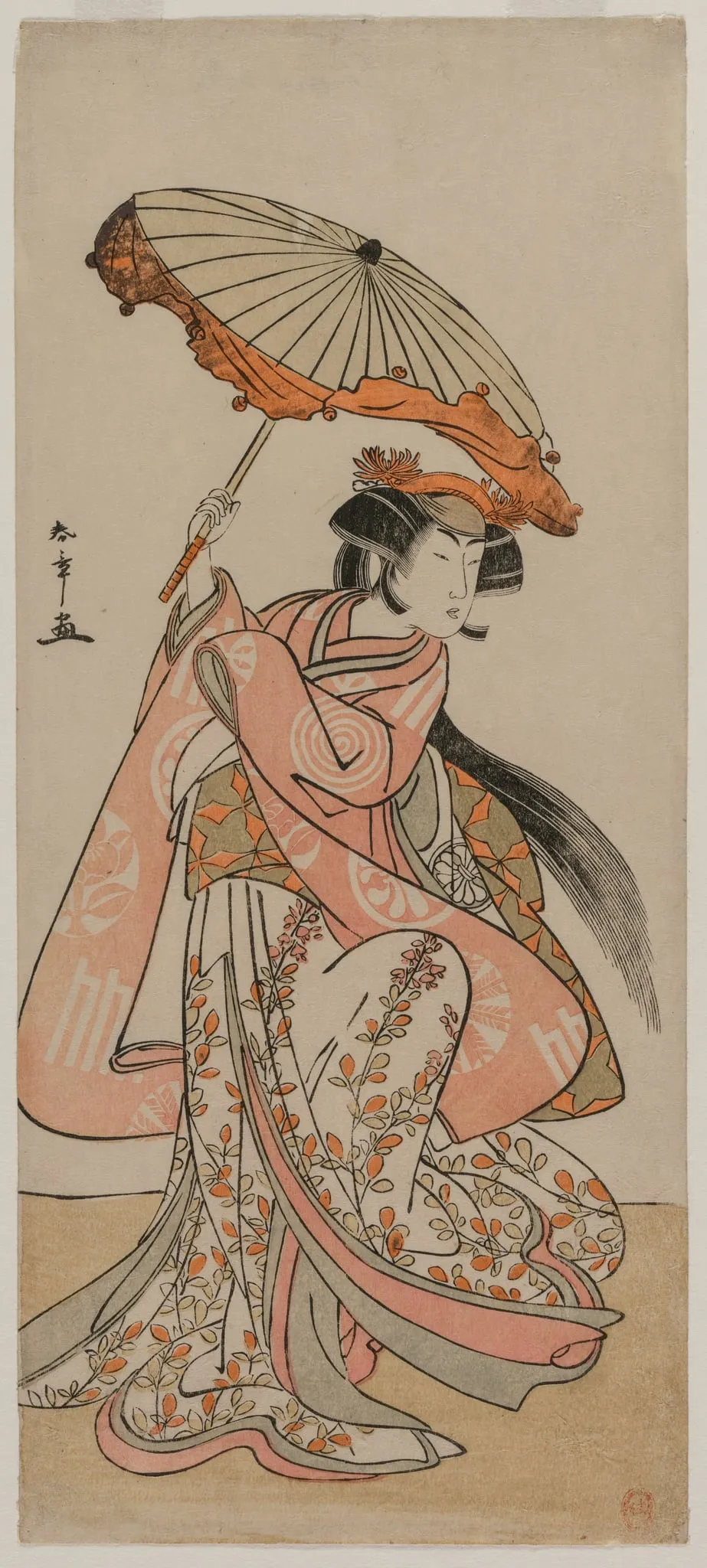
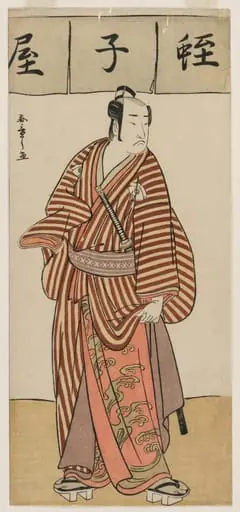
The Actor Segawa Kikunojo II Dancing with a Parasol is a print by the Romanticist artist Katsukawa Shunshō. It dates from 1774 and is held in the collection of the Cleveland Museum of Art. This woodblock print depicts the kabuki actor Segawa Kikunojo II in motion, holding a parasol as if mid-dance.
About this work
You see a Japanese actor dancing with a parasol in this painting.
The actor's robe is decorated with special crests, which were likely added to show respect for the actors they represent. These crests might have been a way to honor the actors or to show the dancer's connections to them.
Check out the work of artist Katsukawa Shunshō (Japanese, 1726–1792) for more like this.
Overview
This woodblock print depicts the kabuki actor Segawa Kikunojo II in motion, holding a parasol as if mid-dance. Created by Katsukawa Shunshō, it belongs to a series of actor portraits popular in Edo-period Japan. The image captures a moment of theatrical grace, emphasizing the performer’s physical poise and the elaborate costume that signals his status and affiliations.
Subject & Meaning
The crests on his robe—belonging to Ichimura Uzaemon IX, Nakamura Nakazo I, and Nakamura Tomijuro I—indicate lineage or patronage within the acting world.
The figure represents a celebrated kabuki performer, not merely as an individual but as a cultural symbol. The crests on his robe—belonging to Ichimura Uzaemon IX, Nakamura Nakazo I, and Nakamura Tomijuro I—indicate lineage or patronage within the acting world. These emblems function as visual acknowledgments of artistic heritage, linking the dancer to respected predecessors and reinforcing the communal nature of kabuki tradition.
Technique & Style
Shunshō employed fine linework and subtle color gradations typical of ukiyo-e portraiture. The robe’s patterns are rendered with precision, and the parasol’s curve adds rhythmic flow to the composition. Facial features are idealized yet expressive, capturing the actor’s role-specific demeanor. The background is left unadorned, directing focus entirely to the figure and his symbolic attire.
History & Provenance
Produced in the late 18th century, the print was likely commissioned for distribution among kabuki enthusiasts in Edo. Such images served as both souvenirs and status objects, reflecting the popularity of specific actors. While its early ownership is undocumented, the print aligns with Shunshō’s broader output for the theatrical market, circulating widely before entering institutional collections in the modern era.
Context
During the Edo period, kabuki theater was a central form of urban entertainment, and actor portraits were mass-produced commodities. Shunshō’s work helped define the aesthetic of actor prints, moving away from earlier stylizations toward more naturalistic representation. The inclusion of family crests reflects the importance of theatrical lineages, where identity was tied to mentorship and legacy rather than individual fame alone.
Legacy
Shunshō’s prints influenced later generations of ukiyo-e artists, including Sharaku and Hiroshige, who expanded the genre’s expressive range. This particular image remains a reference point for understanding how kabuki identity was visually encoded. The use of crests as markers of artistic kinship became a recurring motif, preserving the social architecture of theater through print culture.
Artist & collection
Artist
Katsukawa Shunshō spent his life in Edo (now Tokyo), where the city’s teahouses and theaters buzzed with energy.

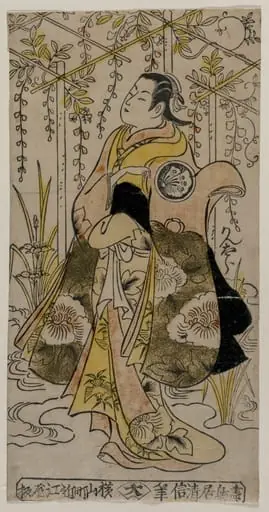 Sanjo Kantaro as a Young Woman Standing in a Wisteria Arbor
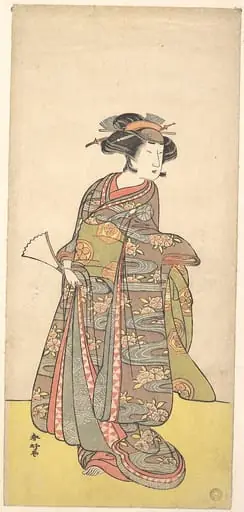 Untitled
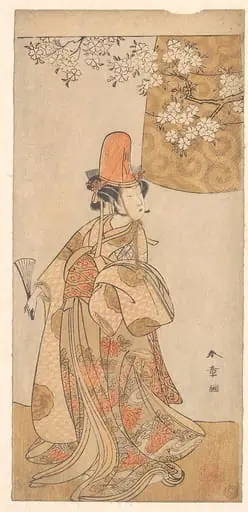 花形見風折烏帽子瀬川富三郎の娘道成寺|Segawa Tomisaburo in the Role of Musume Dojoji in "Hanagatami Kazaori Eboshi"
 Untitled
 Iwai Hanshiro IV as Oiso no Tora
 Untitled
 Ichimura Uzaemon IX as Soga no Juro
 Onoe Matsusuke I as Ebisu, from The Stand-In Seven Gods of Good Fortune