Artwork
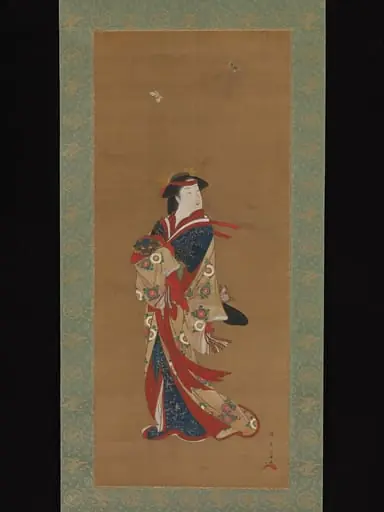
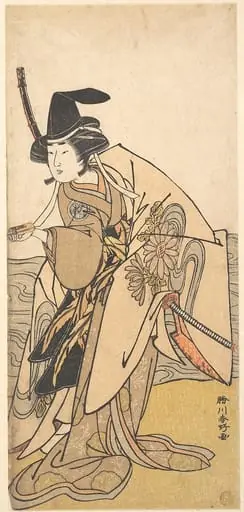
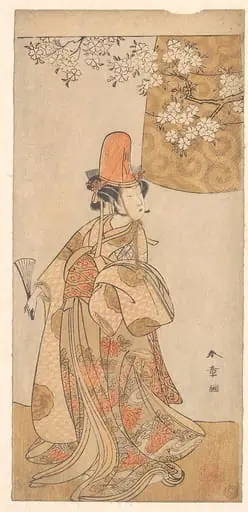
初代中村富十郎|Kabuki Actor Nakamura Tomijūrō I in a Female Dance Role
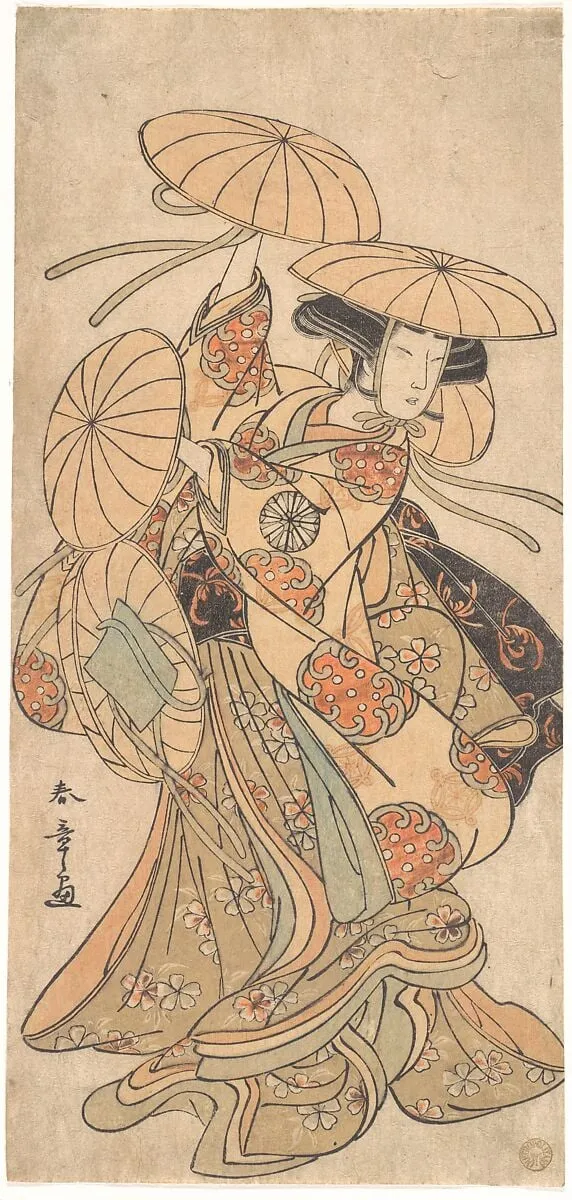
初代中村富十郎|Kabuki Actor Nakamura Tomijūrō I in a Female Dance Role is an ink print by the Romanticist artist Katsukawa Shunshō. It dates from 1777 and is held in the collection of the Metropolitan Museum of Art.
About this work
Overview
This woodblock print, created around 1777 by Katsukawa Shunshō, depicts the kabuki actor Nakamura Tomijūrō I portraying a female dance role.
This woodblock print, created around 1777 by Katsukawa Shunshō, depicts the kabuki actor Nakamura Tomijūrō I portraying a female dance role. Executed in nishiki-e technique, it features ink and color on paper, characteristic of Edo-period theatrical portraiture. The Metropolitan Museum of Art holds this example, which captures a moment of stylized performance rather than naturalistic representation.
Subject & Meaning
The print presents a male actor in the role of a woman, a convention in kabuki theater where male performers specialized in female characters. The elaborate costume, fan, and dual headpieces signal a refined, otherworldly femininity. The image does not aim for realism but instead emphasizes theatrical symbolism, reinforcing the artifice and ritual of kabuki performance.
Technique & Style
Shunshō employed bold, clean outlines and flat areas of vivid color—red, green, and gold—to define the figure against a blank background. The fabric patterns swirl with decorative precision, while the hats and garments appear weightless, suggesting movement through stylized drapery. The lack of shading and perspective heightens the graphic quality, typical of ukiyo-e’s emphasis on surface design and theatrical presence.
History & Provenance
Produced during the height of kabuki’s popularity in Edo, the print likely served as a promotional portrait for the actor or a souvenir for theatergoers. It entered the collection of The Metropolitan Museum of Art through documented acquisitions of Japanese prints in the late 19th and early 20th centuries, preserving a key example of Shunshō’s actor portraits from the 1770s.
Context
In the 1770s, Katsukawa Shunshō was a leading designer of actor prints, shifting focus from idealized beauty to individualized portrayals of performers. This work reflects the growing market for theatrical imagery among urban audiences, where recognition of specific actors and their signature roles became culturally significant. The print belongs to a broader tradition of ukiyo-e that documented Edo’s popular entertainment.
Legacy
Shunshō’s actor portraits, including this one, influenced later ukiyo-e artists by emphasizing psychological presence and costume detail over generic types. The print remains a reference for understanding how kabuki’s performative codes were translated into visual media, preserving the aesthetics of Edo’s theater culture for future generations.
Artist & collection
Artist
Katsukawa Shunshō spent his life in Edo (now Tokyo), where the city’s teahouses and theaters buzzed with energy.

 Untitled
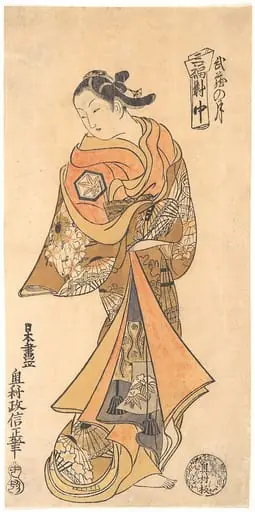 Sanpuku Tsui|Moon in Musashi Province
 Untitled
 花形見風折烏帽子瀬川富三郎の娘道成寺|Segawa Tomisaburo in the Role of Musume Dojoji in "Hanagatami Kazaori Eboshi"
 Untitled
 Untitled
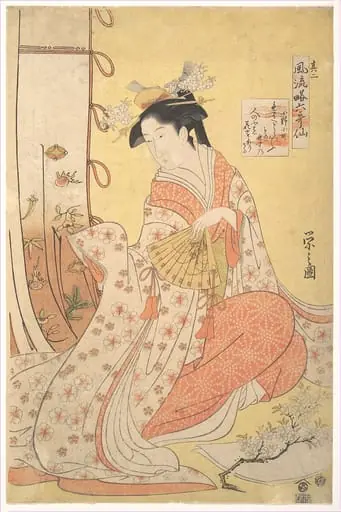 鳥文斎栄之画 「風流略六哥仙 其の二」小野小町|Ono no Komachi: Number Two (Sono ni), from the series Stylish Parodies of the Six Poetic Immortals (Fūryū yatsushi rokkasen)