Artwork
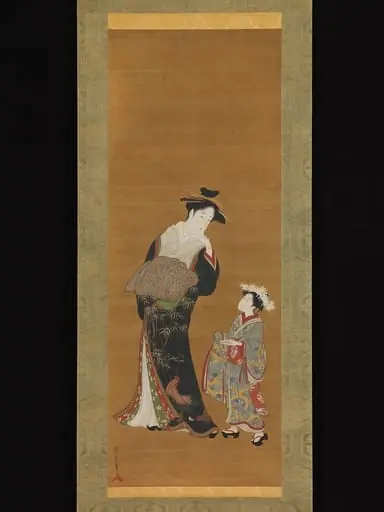
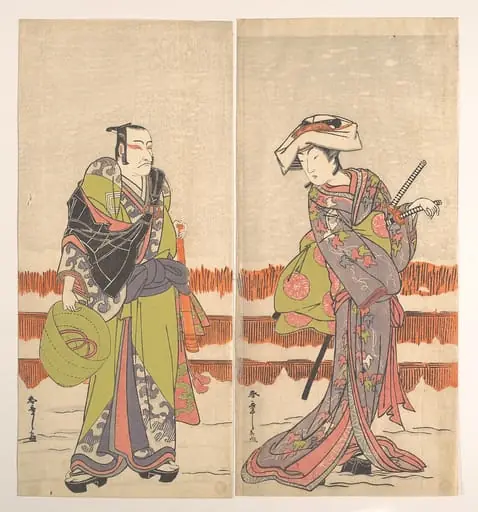
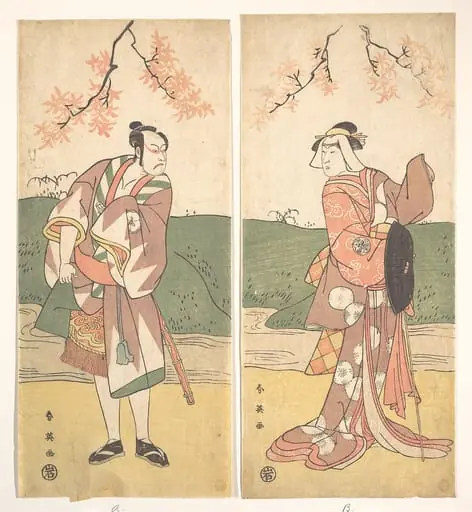
勝川春章画 三代目澤村宗十郎と三代目瀬川菊之丞|Kabuki Actors Sawamura Sōjūrō III and Segawa Kikunojō III
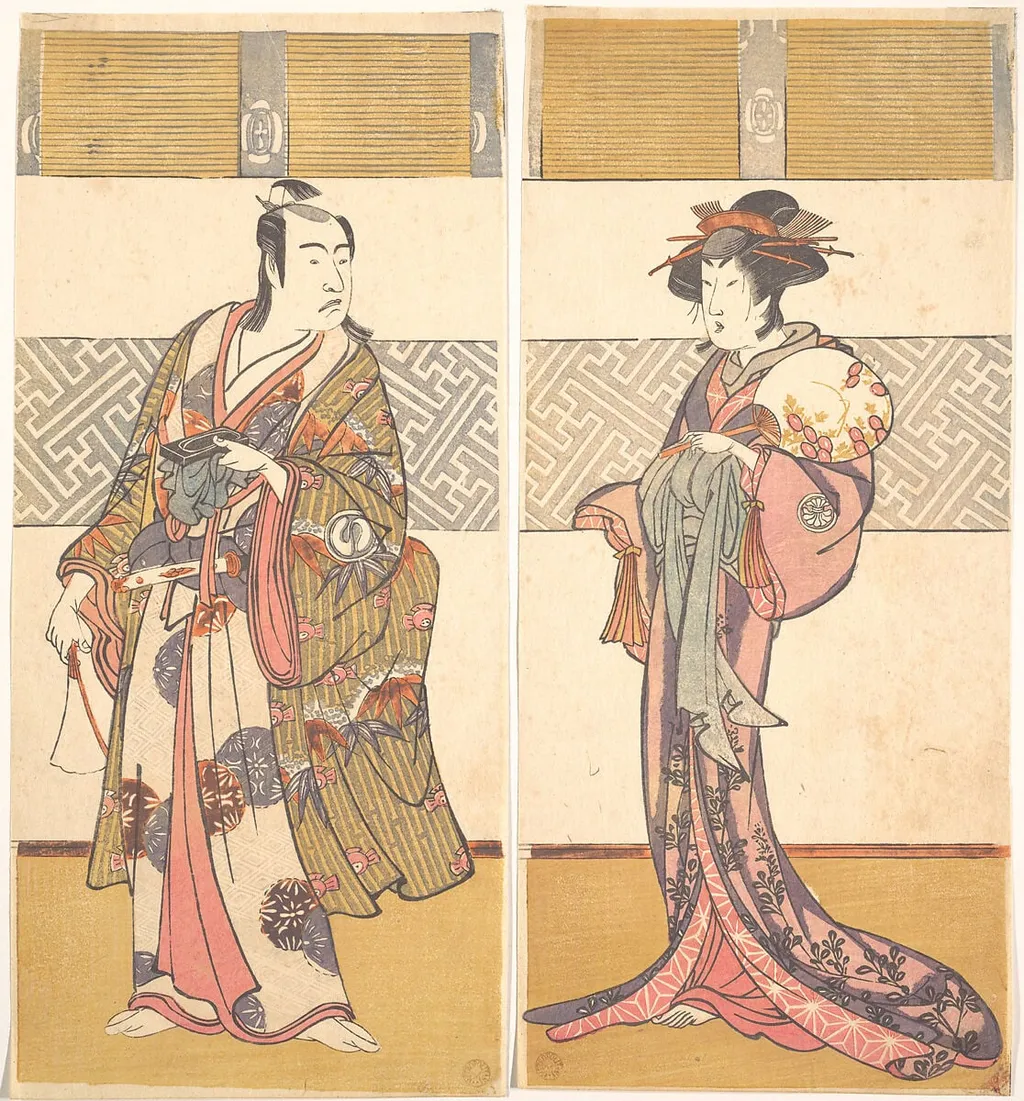
勝川春章画 三代目澤村宗十郎と三代目瀬川菊之丞|Kabuki Actors Sawamura Sōjūrō III and Segawa Kikunojō III is an ink print by the Romanticist artist Katsukawa Shunshō. It dates from 1780 and is held in the collection of the Metropolitan Museum of Art.
About this work
Overview
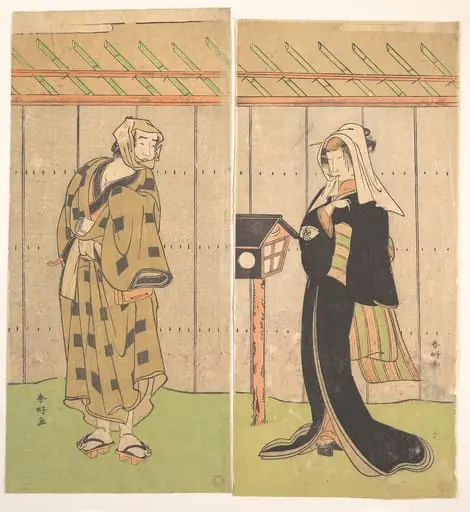
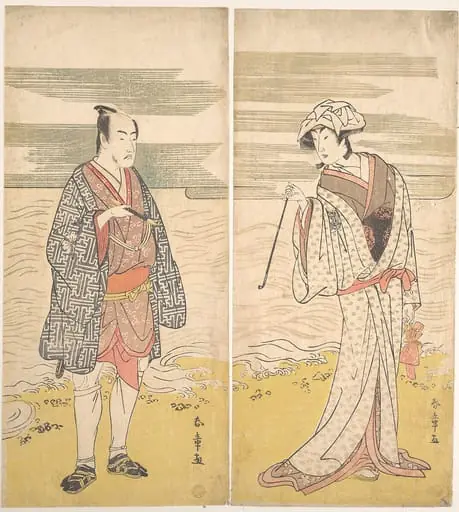
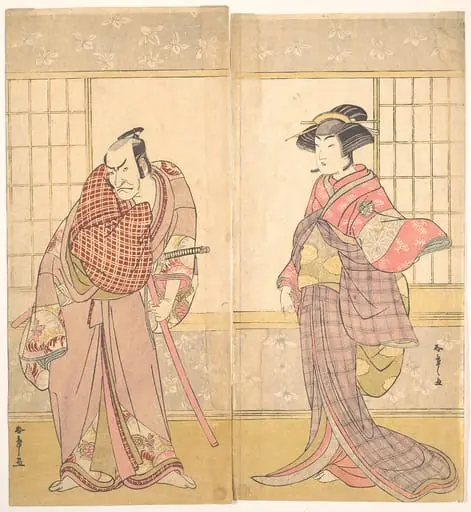
This diptych, created around 1780 by Katsukawa Shunshō, features two prominent kabuki actors of the Edo period rendered in nishiki-e woodblock print.
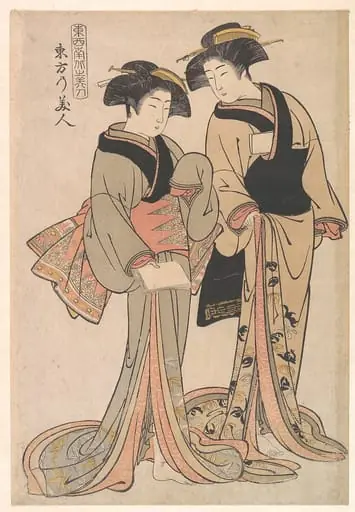
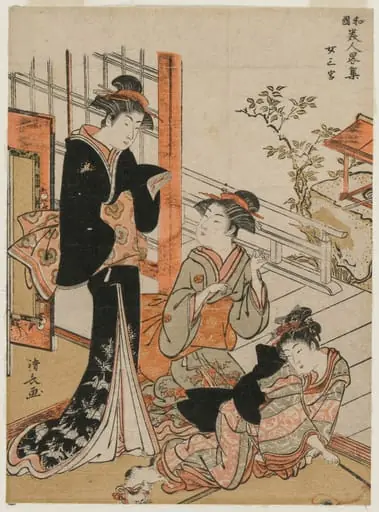
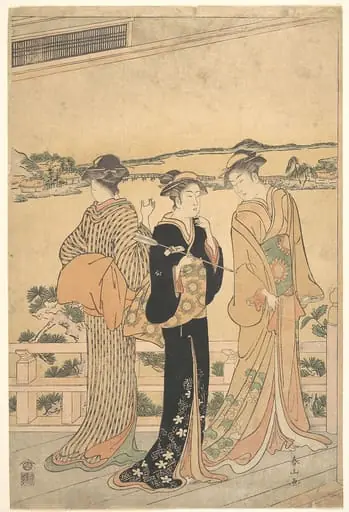
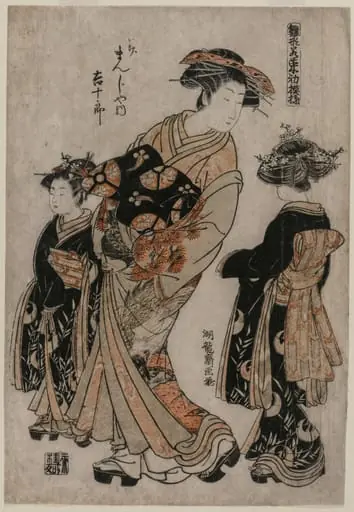
This diptych, created around 1780 by Katsukawa Shunshō, features two prominent kabuki actors of the Edo period rendered in nishiki-e woodblock print. Each actor occupies one panel, depicted in full costume against a plain background. The work exemplifies the ukiyo-e tradition of capturing theatrical performers, combining precise line work with vibrant, layered pigments applied through multiple carved blocks. It is part of the collection at The Metropolitan Museum of Art.
Subject & Meaning
The figures are Sawamura Sōjūrō III and Segawa Kikunojō III, celebrated actors known for their roles in popular plays. Their poses and attire reflect specific characters they portrayed on stage, likely from a recent performance. The inclusion of props like the fan and ornate headwear signals their roles’ social status or dramatic function. These prints served as both memorabilia and cultural artifacts, allowing audiences to connect with performers beyond the theater.
Technique & Style
Shunshō employed the nishiki-e technique, using multiple woodblocks to apply rich, saturated colors with fine detail. The robes display intricate patterns—stripes and florals—carefully aligned across the blocks. Facial features are simplified yet expressive, following the Katsukawa school’s emphasis on individualized actor likenesses. The background is minimal, focusing attention on costume and posture, while subtle textures, like fan tassels, reveal the printer’s technical precision.
History & Provenance
Produced in the late 18th century during the peak of kabuki’s popularity, this diptych was likely commissioned for public sale as a collectible portrait. It entered The Metropolitan Museum of Art’s collection through documented acquisitions of Japanese prints in the early 20th century. Its survival in good condition reflects its value as a cultural artifact and the care taken in its preservation over centuries.
Context
During the Edo period, kabuki actors were celebrities, and their likenesses were widely circulated in print. Shunshō, a leading artist of the Katsukawa school, revolutionized actor portraiture by emphasizing individual expression over generic types. These prints were affordable and accessible, circulating among urban audiences who followed theatrical performances closely. The format of the diptych mirrored stage pairings, reinforcing the connection between performance and print.
Legacy
Shunshō’s approach to actor portraiture influenced generations of ukiyo-e artists, including Sharaku and Hokusai. This diptych represents a key moment in the evolution of printmaking as a medium for documenting performance culture. Its clarity of form and attention to costume detail set a standard for later actor prints, preserving the visual language of Edo-era theater for future study and appreciation.
Artist & collection
Artist
Katsukawa Shunshō spent his life in Edo (now Tokyo), where the city’s teahouses and theaters buzzed with energy.