Artwork
Untitled
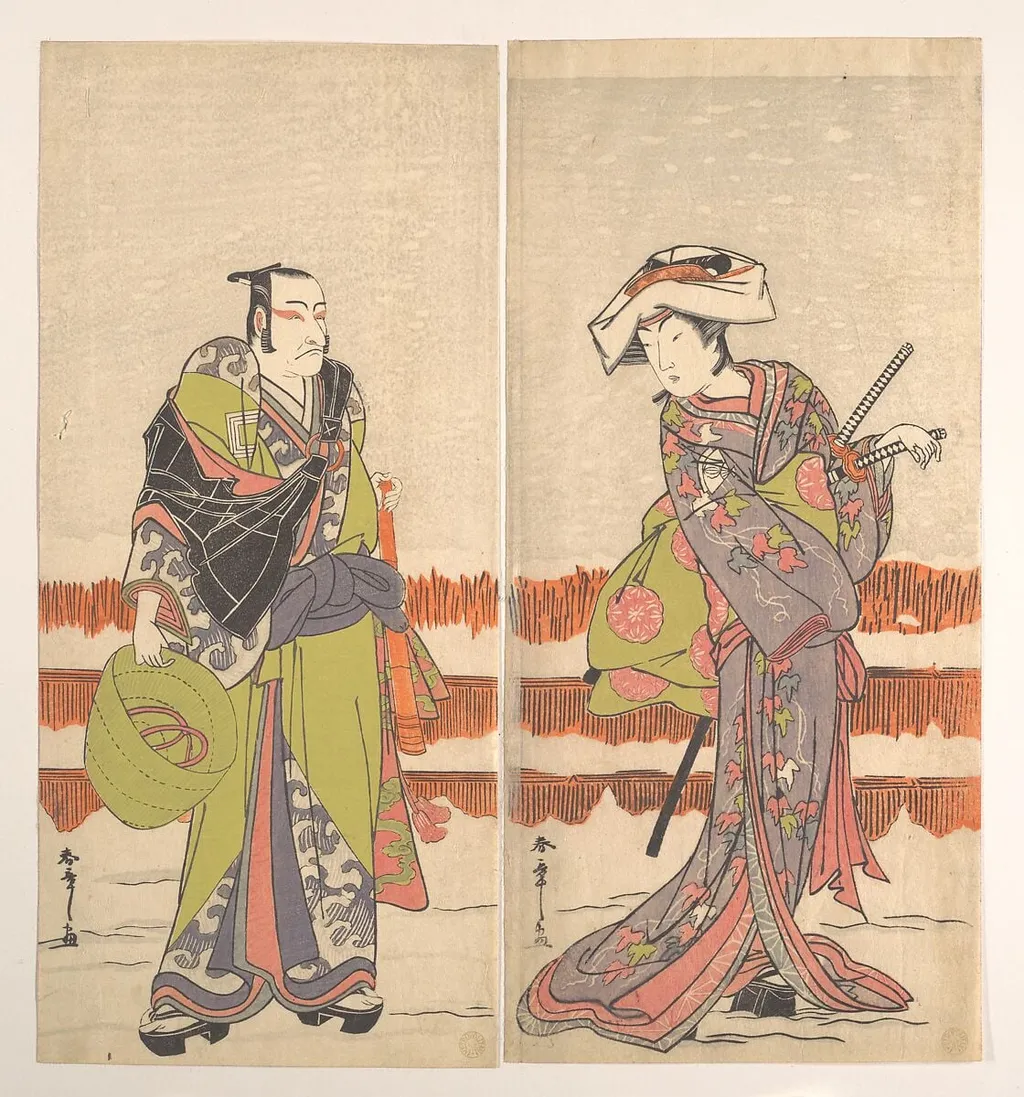
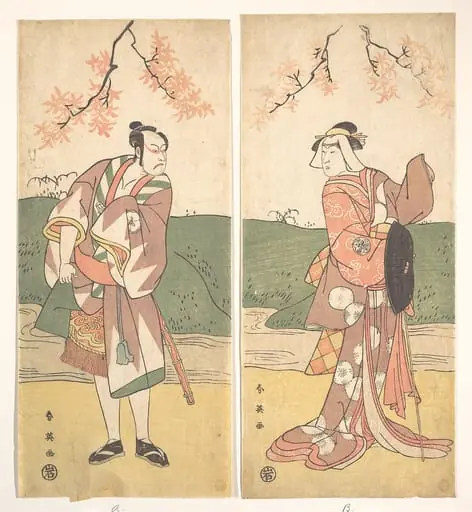
Untitled is an ink print by the Romanticist artist Katsukawa Shunshō. It dates from 1775 and is held in the collection of the Metropolitan Museum of Art.
About this work
The person on the left wears a green robe with a black and white pattern, and holds a round hat in their hand.
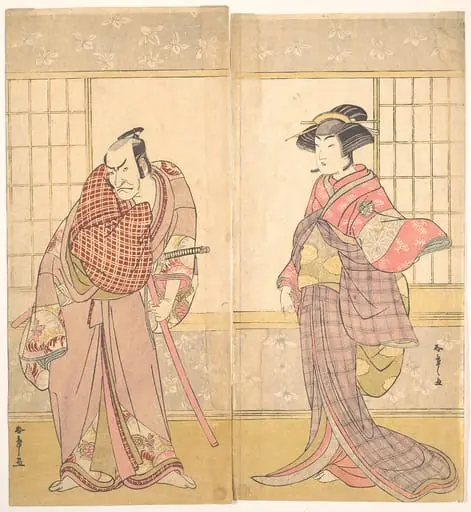
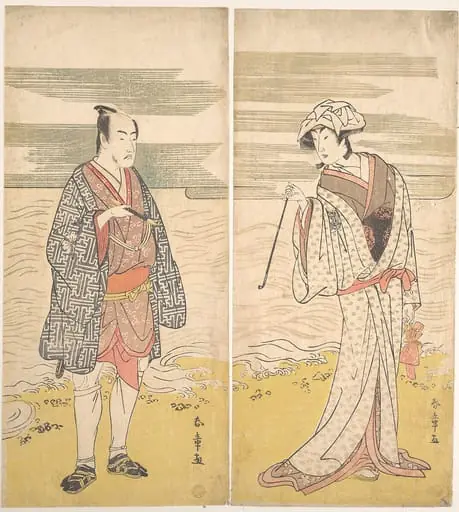
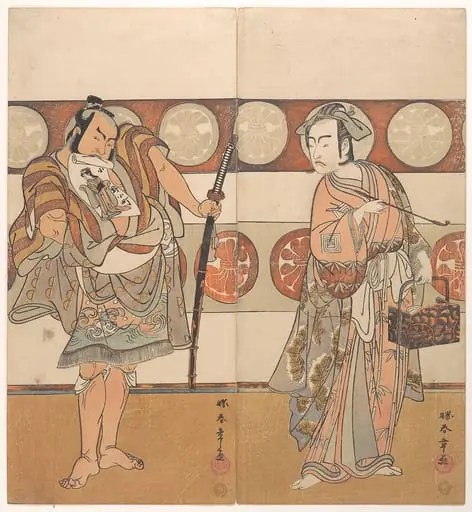
This painting shows two people in traditional Japanese clothing. The person on the left wears a green robe with a black and white pattern, and holds a round hat in their hand. The person on the right wears a purple robe with a pink and green pattern, and holds a sword.
The background of the painting is beige, with some orange and white details. The people are standing in front of a low wall, with some trees or bushes behind them.
The painting is a diptych, meaning it is made up of two separate panels. The artist, Katsukawa Shunshō, was a Japanese painter who was active in the 18th century. If you're interested in learning more about Japanese art, you might want to look up the Romanticism movement.
Overview
Created around 1775, this two‑panel woodblock work by Katsukawa Shunshō is part of the Metropolitan Museum of Art’s collection. Executed in the nishiki-e technique, the prints combine ink outlines with vibrant color applied to paper, forming a diptych that presents a compact narrative scene.
Subject & Meaning
The composition depicts a pair of figures dressed in formal Edo‑period attire. The left figure, clad in a green kimono patterned with black and white motifs, holds a round hat, while the right figure wears a purple garment with pink and green designs and bears a sword. Their stance before a low wall and foliage suggests a ceremonial or confrontational moment, typical of theatrical or literary references.
Technique & Style
Shunshō employed the multi‑block nishiki-e process, carving separate woodblocks for each color and aligning them to produce precise registration. The ink outlines define the garments and accessories, while the pigments render the contrasting greens, purples, and patterned details. The background’s muted beige with orange and white accents provides a subtle stage‑like setting.
History & Provenance
The diptych was produced in the mid‑18th century, a period when ukiyo‑e printmaking flourished in Japan. It entered the Metropolitan Museum of Art’s holdings through acquisition, joining a broader representation of Katsukawa Shunshō’s oeuvre, which includes portraits of actors and scenes from popular literature.
Artist & collection
Artist
Katsukawa Shunshō spent his life in Edo (now Tokyo), where the city’s teahouses and theaters buzzed with energy.

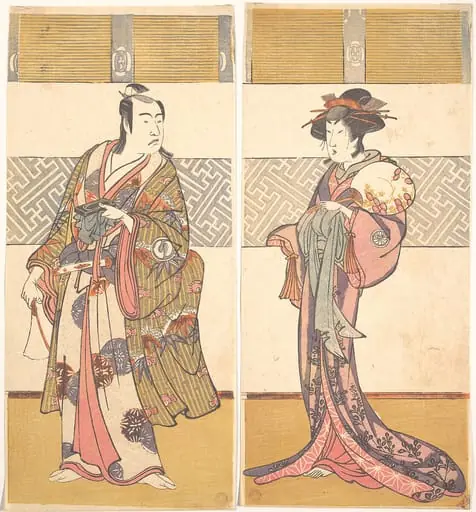 勝川春章画 三代目澤村宗十郎と三代目瀬川菊之丞|Kabuki Actors Sawamura Sōjūrō III and Segawa Kikunojō III
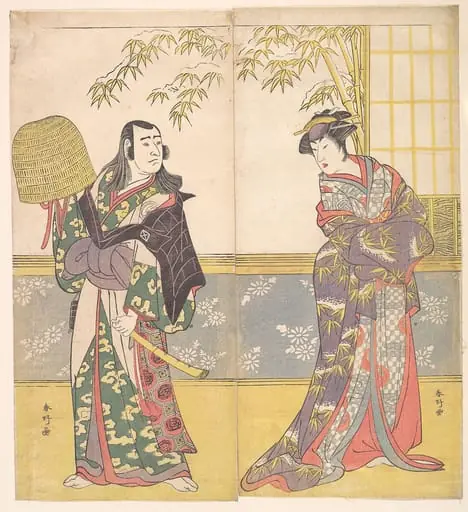 勝川春好画 三代目澤村宗十郎 三代目佐野川市松 |Kabuki Actors Sawamura Sōjūrō III and Sanogawa Ichimatsu III in "A Courtesan’s Mirror for the Eastern Provinces" (Keisei Azuma kagami)
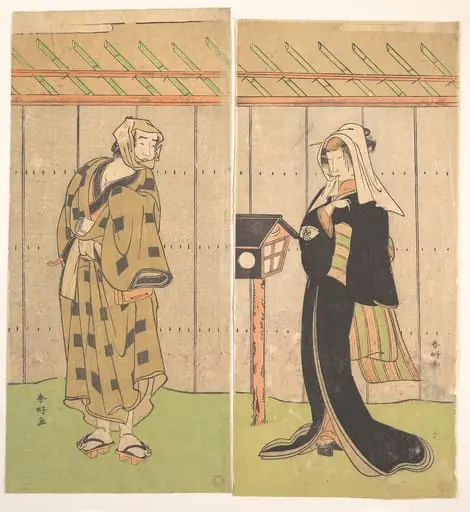 Untitled
 Untitled
 Untitled
 Untitled
 Untitled
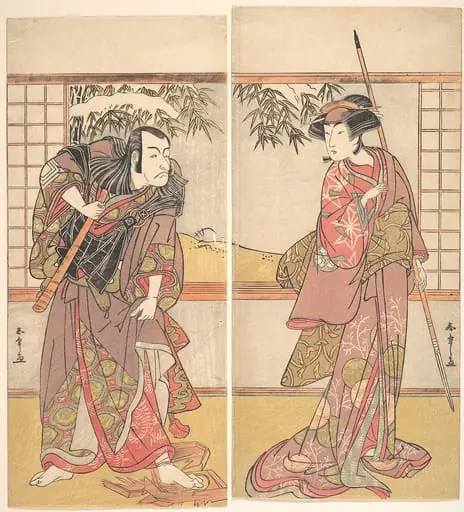 勝川春章画 二代目小佐川常世・五代目市川団十郎|Kabuki Actors Osagawa Tsuneyo II and Ichikawa Danjūrō V
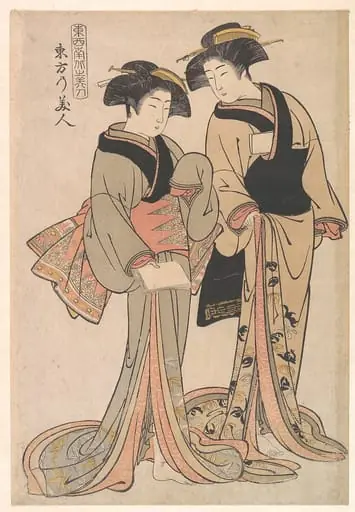 Untitled
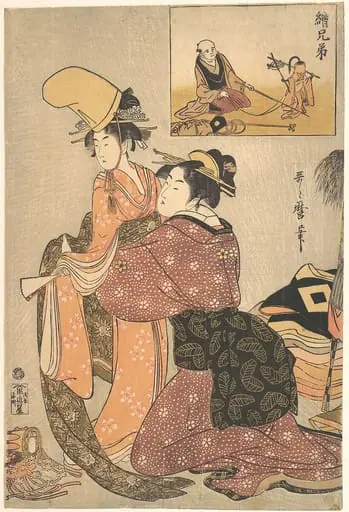 喜多川歌麿画 絵兄弟娘道成寺 見立猿廻し 「絵兄弟」|A Woman Dressing a Girl for a the Kabuki Dance “Musume Dojōji,” with “Brother Picture” (E-kyōdai) of a Monkey Trainer
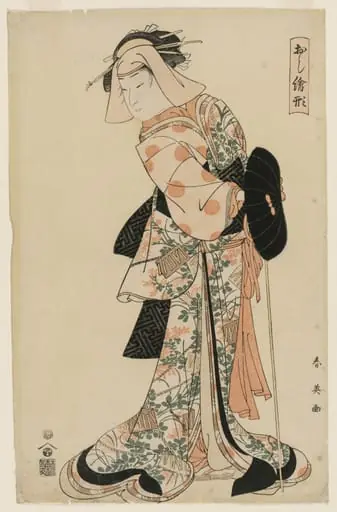 Dancer as Kuzunoha, Fox Spirit Disguised as a Woman
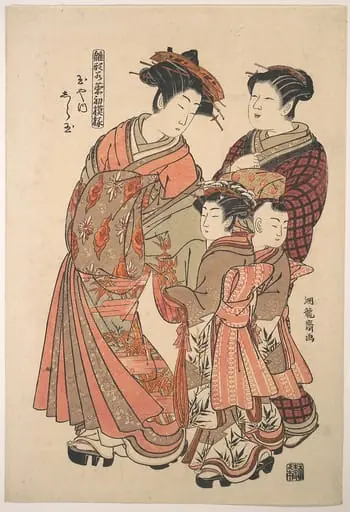 『雛形若菜初模様 玉や内 しら玉』|The Courtesan Shiratama of the Tamaya Brothel, from the series “A Pat-tern Book of the Year’s First Designs, Fresh as Spring Herbs” (“Hinagata wakana hatsu moyō”)