Artwork
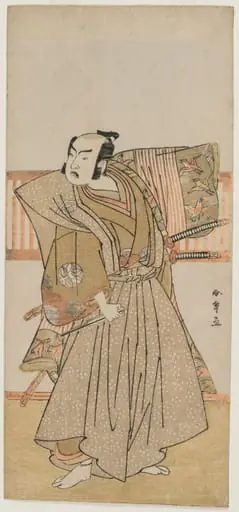
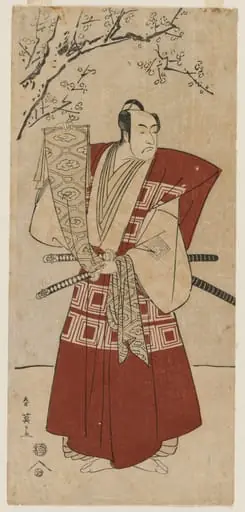
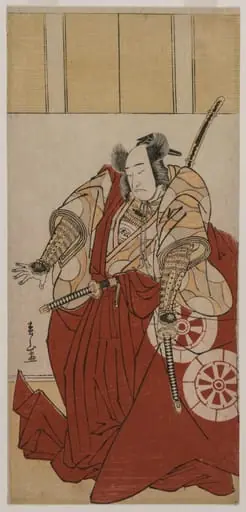
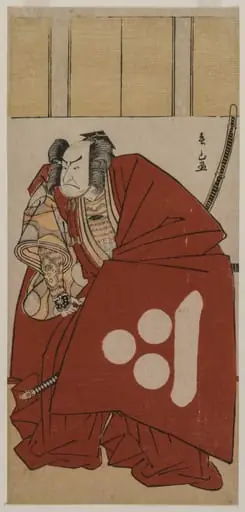
Ichikawa Monnosuke II as Urabe no Suetake
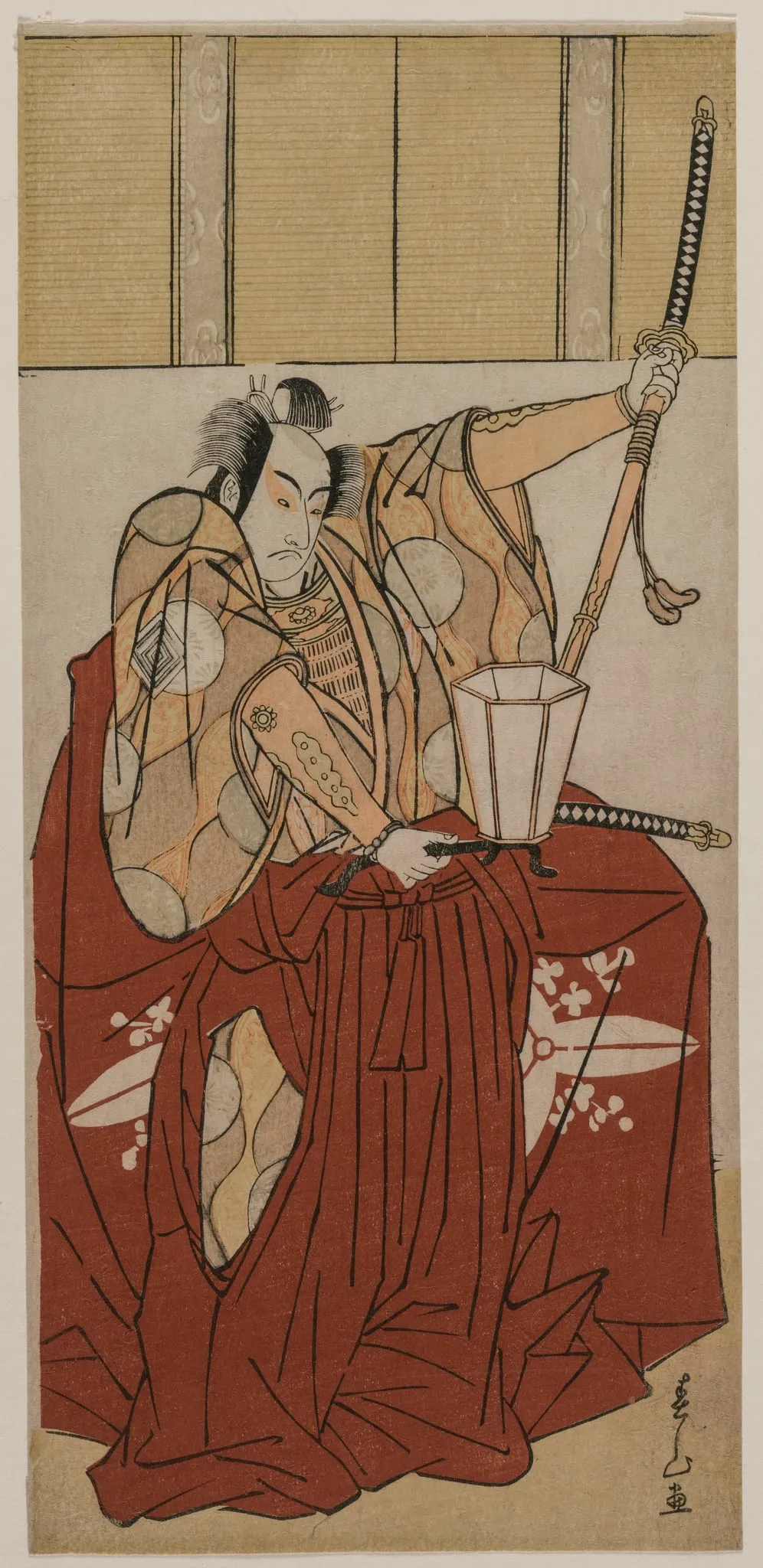
Ichikawa Monnosuke II as Urabe no Suetake is a print by the Romanticist artist Katsukawa Shunzan. It dates from 1781 and is held in the collection of the Cleveland Museum of Art.
About this work
Overview
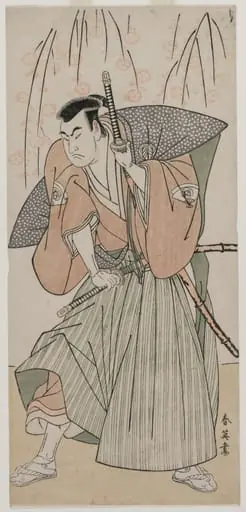
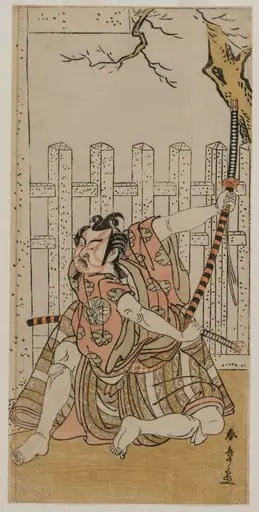
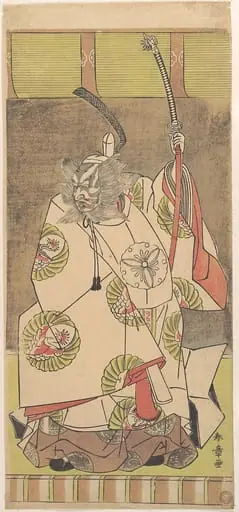
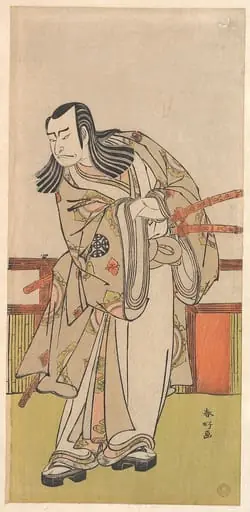
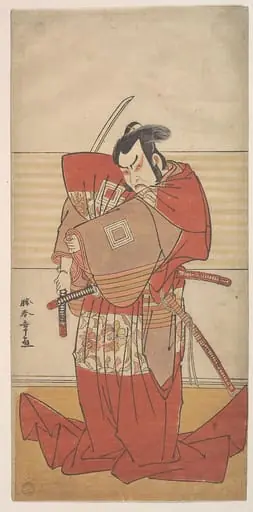
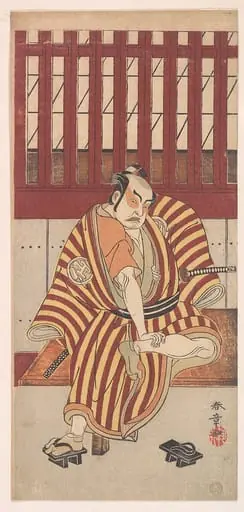
This woodblock print forms the left panel of a three‑panel series that portrays actors in the roles of three of the legendary Four Heavenly Kings who served the 10th‑century warrior Minamoto Yorimitsu. The composition is part of a narrative triptych that visually links the figures through shared motifs and the presence of heraldic family crests.
Subject & Meaning
The central figure is the celebrated kabuki performer Ichikawa Monnosuke II, depicted as Urabe no Suetake, one of the four mythic protectors of Yorimitsu. The portrayal connects the historical hero’s martial virtues with the theatrical tradition of embodying heroic archetypes on stage.
Technique & Style
Executed in the ukiyo‑e woodblock technique, the image combines bold line work with delicate color application. The actor’s costume is rendered in vivid pigments, while the large family crest on his robe serves both as an identifier and a decorative element characteristic of the period’s print design.
History & Provenance
Created by the Edo‑period artist Katsukawa Shunzan, the triptych was produced for a popular series of actor prints that circulated among theatergoers and collectors. The prints were likely distributed as a set, each panel representing a different member of the Shitennō.
Context
The Four Heavenly Kings, drawn from Buddhist iconography, were adapted in Japanese legend as the loyal retainers of Minamoto Yorimitsu. Their depiction in theatrical prints reflects the Edo era’s fascination with heroic folklore and the blending of religious symbolism with contemporary popular culture.
Artist & collection

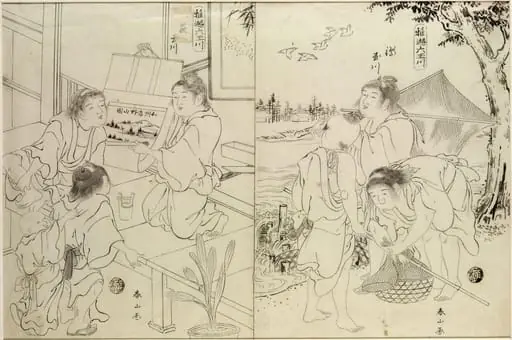 The Chidori Tama River and the Kôya Tama River
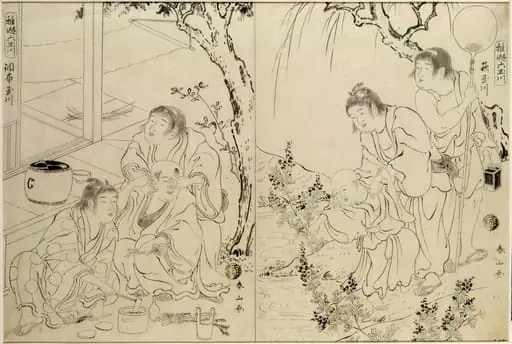 Hagi and Chofu Tamagawa
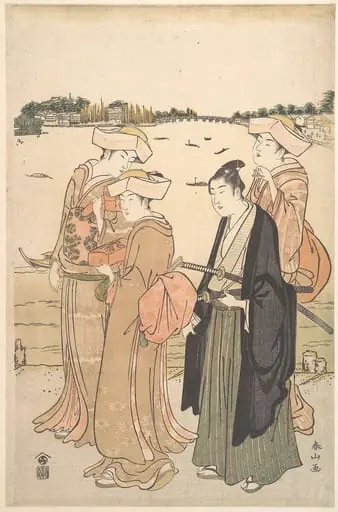 Untitled
 Untitled
 Untitled
 Onoe Matsusuke as Usui Sadamitsu
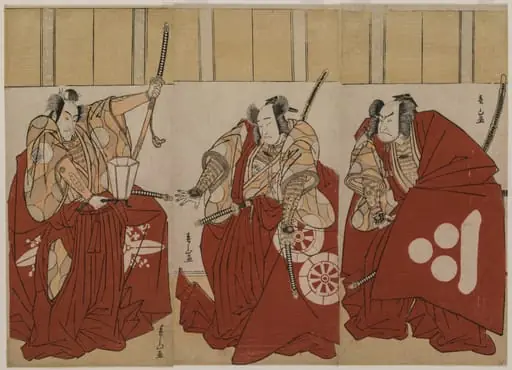 Ichikawa Monnosuke II as Urabe Suetake, Onoe Matsusuke I as Usui Sadamitsu, and Nakamura Nakazo I as Watanabe no Tsuna in “The Four Heavenly Kings Costumed as the Night Watch”
 Nakamura Nakazo I as Watanabe no Tsuna