Artwork
Untitled
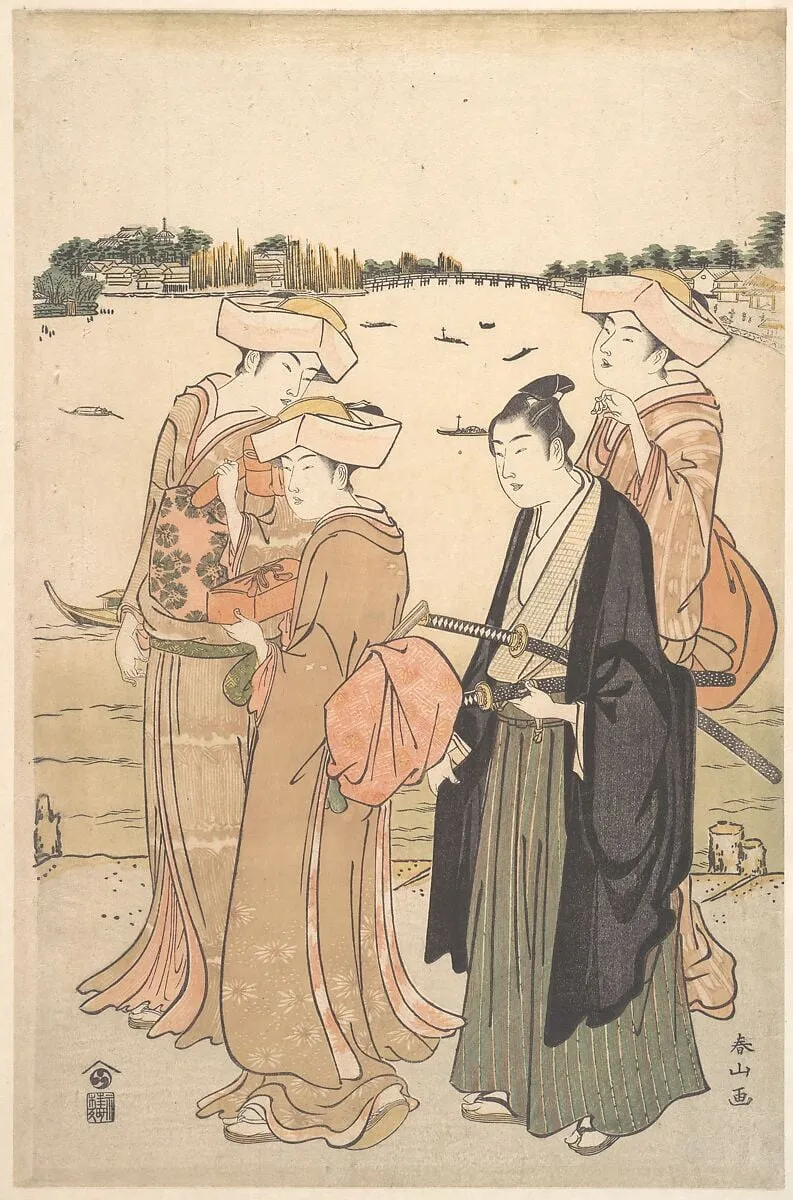
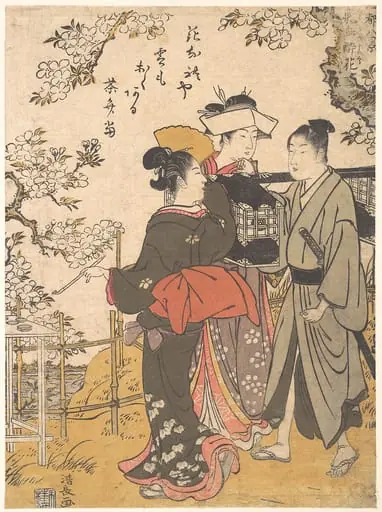
Untitled is an ink print by the Romanticist artist Katsukawa Shunzan. It dates from 1789 and is held in the collection of the Metropolitan Museum of Art.
About this work
Overview
The work is part of the collection at The Metropolitan Museum of Art, where it is preserved as an example of ukiyo-e’s engagement with daily life.
This woodblock print, dated around 1789, is attributed to Katsukawa Shunzan and executed in ink and color on paper. It depicts a quiet outdoor scene along a river, featuring four figures in motion. The composition emphasizes naturalism and subtle detail, typical of late 18th-century Japanese printmaking. The work is part of the collection at The Metropolitan Museum of Art, where it is preserved as an example of ukiyo-e’s engagement with daily life.
Subject & Meaning
The scene captures a moment of ordinary travel: three women in wide-sleeved robes and straw hats, carrying fans or small bags, walk alongside a man dressed in darker attire with a sword at his hip. His presence distinguishes him from the others, suggesting social status or occupation. The setting—river, boats, and bridge—evokes a common journey, possibly along a well-traveled path near Edo. The sword, though minor in scale, signals a shift in identity amid the otherwise uniform civilian attire.
Technique & Style
The print employs traditional ukiyo-e woodblock techniques, with fine lines defining figures and landscape elements. Soft color gradations and delicate ink washes render fabric folds and water reflections with restraint. The figures are arranged in a shallow, horizontal plane, guiding the viewer’s eye along the riverbank. Attention to clothing textures and posture reflects the genre’s focus on social nuance, avoiding dramatic gestures in favor of quiet observation.
History & Provenance
Created in the late 1780s, the print belongs to a period when ukiyo-e artists increasingly turned to scenes of everyday life rather than theatrical or erotic subjects. Though little is documented about its early ownership, it entered The Metropolitan Museum of Art’s collection as part of a broader acquisition of Edo-period prints. Its preservation reflects institutional interest in documenting the visual culture of non-elite urban life during Japan’s Tokugawa era.
Context
During the late 18th century, ukiyo-e prints flourished as affordable art for the merchant class, often depicting scenes of travel, fashion, and leisure. The inclusion of a sword-wielding man among civilians hints at the complex social hierarchy of Edo-period Japan, where samurai retained symbolic presence despite declining military roles. Such prints subtly reinforced social distinctions through costume and posture, offering viewers a coded glimpse into contemporary norms.
Legacy
This print contributes to the historical record of how ordinary life was visually codified in Japanese print culture. Its quiet composition and attention to detail influenced later artists interested in realism and social observation. While not widely known outside museum circles, it remains a representative example of ukiyo-e’s capacity to capture fleeting moments of daily existence with dignity and precision.
Artist & collection

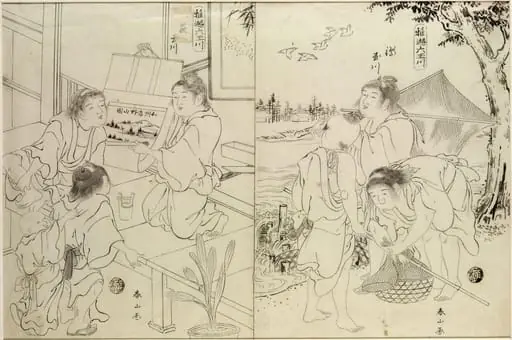 The Chidori Tama River and the Kôya Tama River
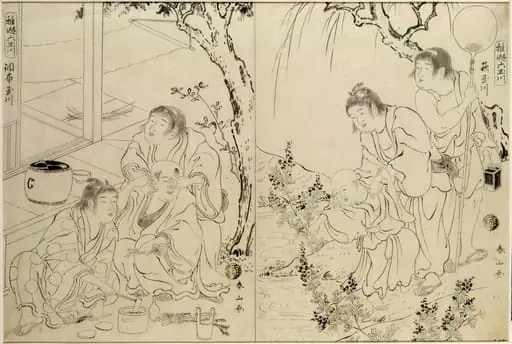 Hagi and Chofu Tamagawa
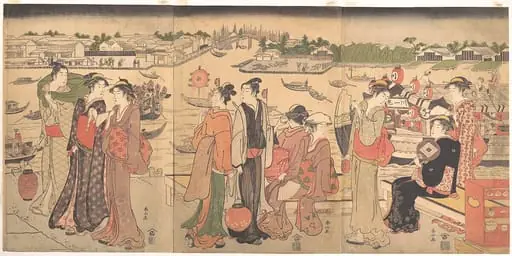 Untitled
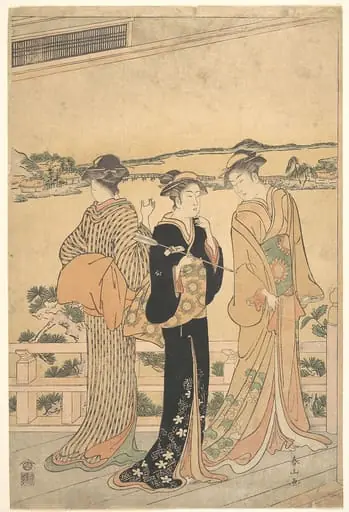 Untitled
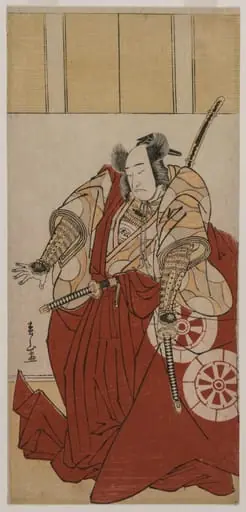 Onoe Matsusuke as Usui Sadamitsu
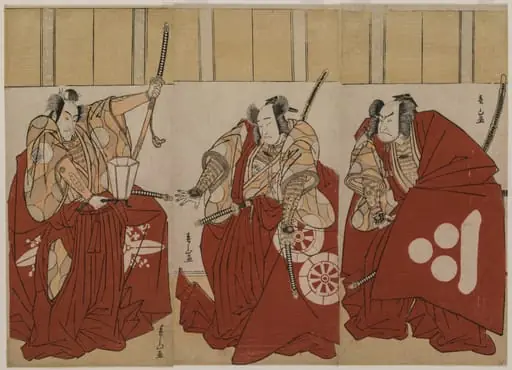 Ichikawa Monnosuke II as Urabe Suetake, Onoe Matsusuke I as Usui Sadamitsu, and Nakamura Nakazo I as Watanabe no Tsuna in “The Four Heavenly Kings Costumed as the Night Watch”
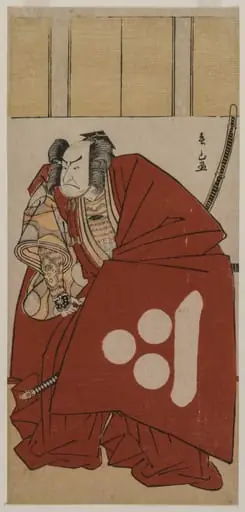 Nakamura Nakazo I as Watanabe no Tsuna
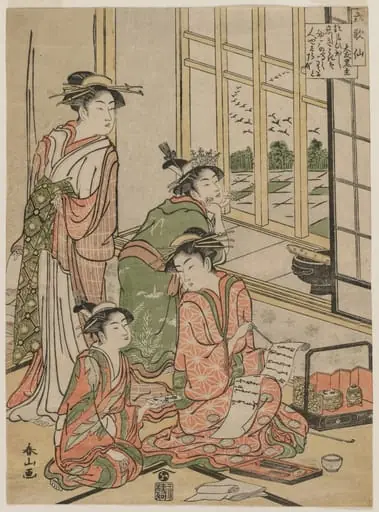 Courtesans at Leisure from the series The Six Immortal Poets
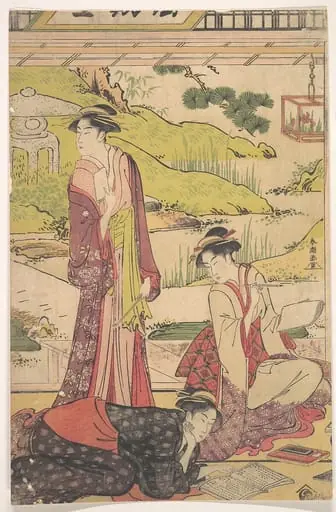 あやめ燈籠図|Three Women Enjoying Literary Pursuits
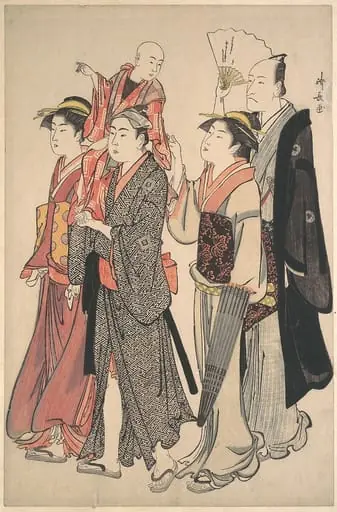 Untitled
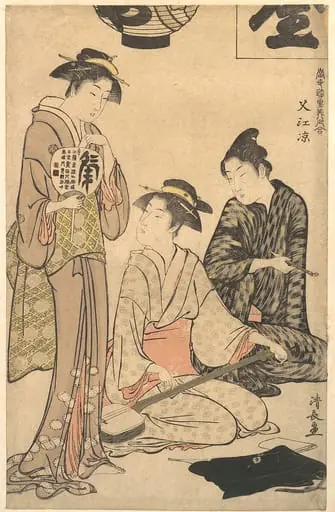 Untitled
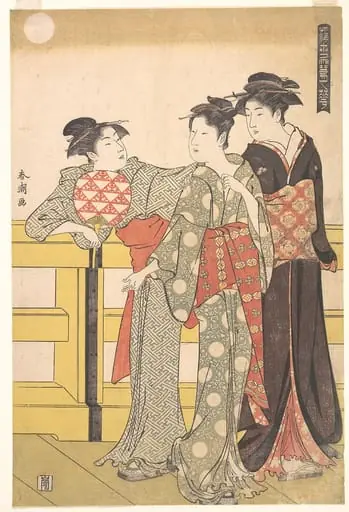 Untitled
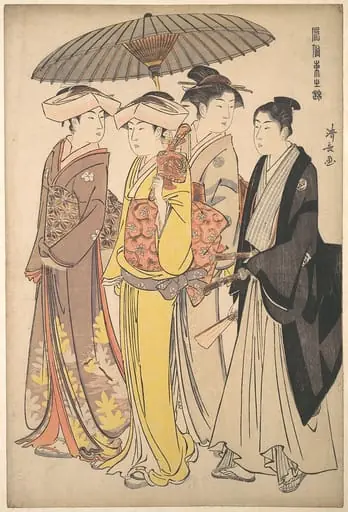 「風俗東之錦」 武家の息女と侍女と若党 |A Lady from a Samurai Household with Three Attendants, from the series A Brocade of Eastern Manners (Fūzoku Azuma no nishiki)
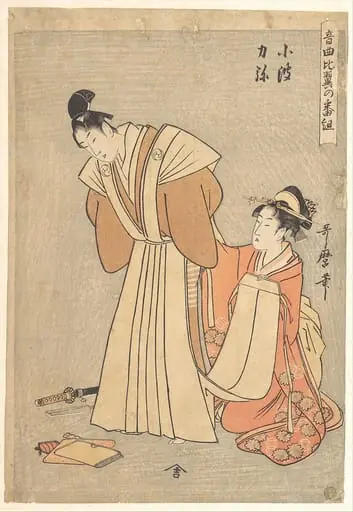 音曲比翼の番組 小波 力弥|Rikiya and Konami, from the series A Program with Music about Loving Couples (Ongyoku hiyoku no bangumi)
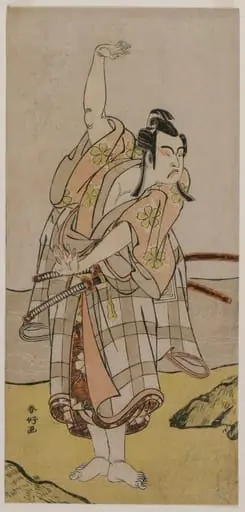 Actor Ichikawa Yaozō II as Sakuramaru
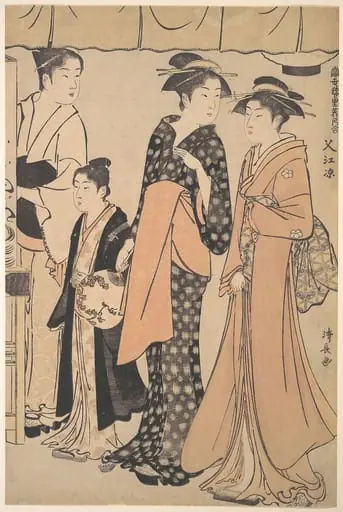 Sako no Suzumi|Cooling Off at Nakazu
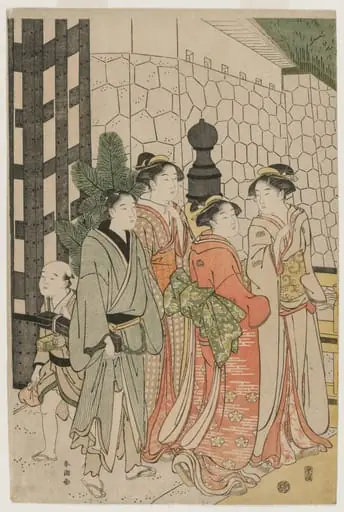 Young Man and Women on Tokiwa Bridge
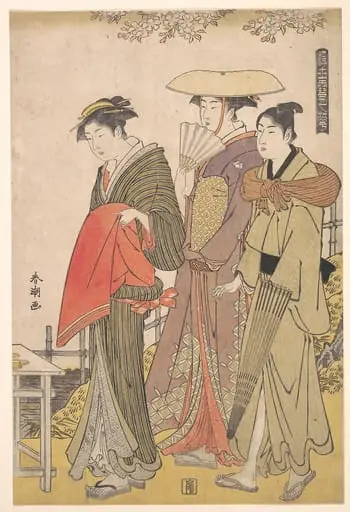 Ukiyoe Ga|The Beauty of the Floating World
 Untitled