Artwork
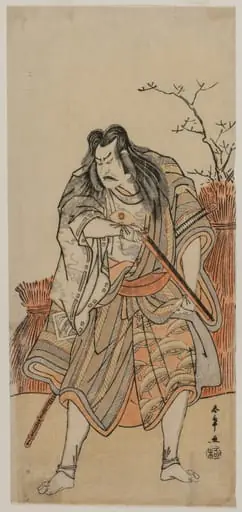
Ichimura Uzaemon IX as Umeomaru
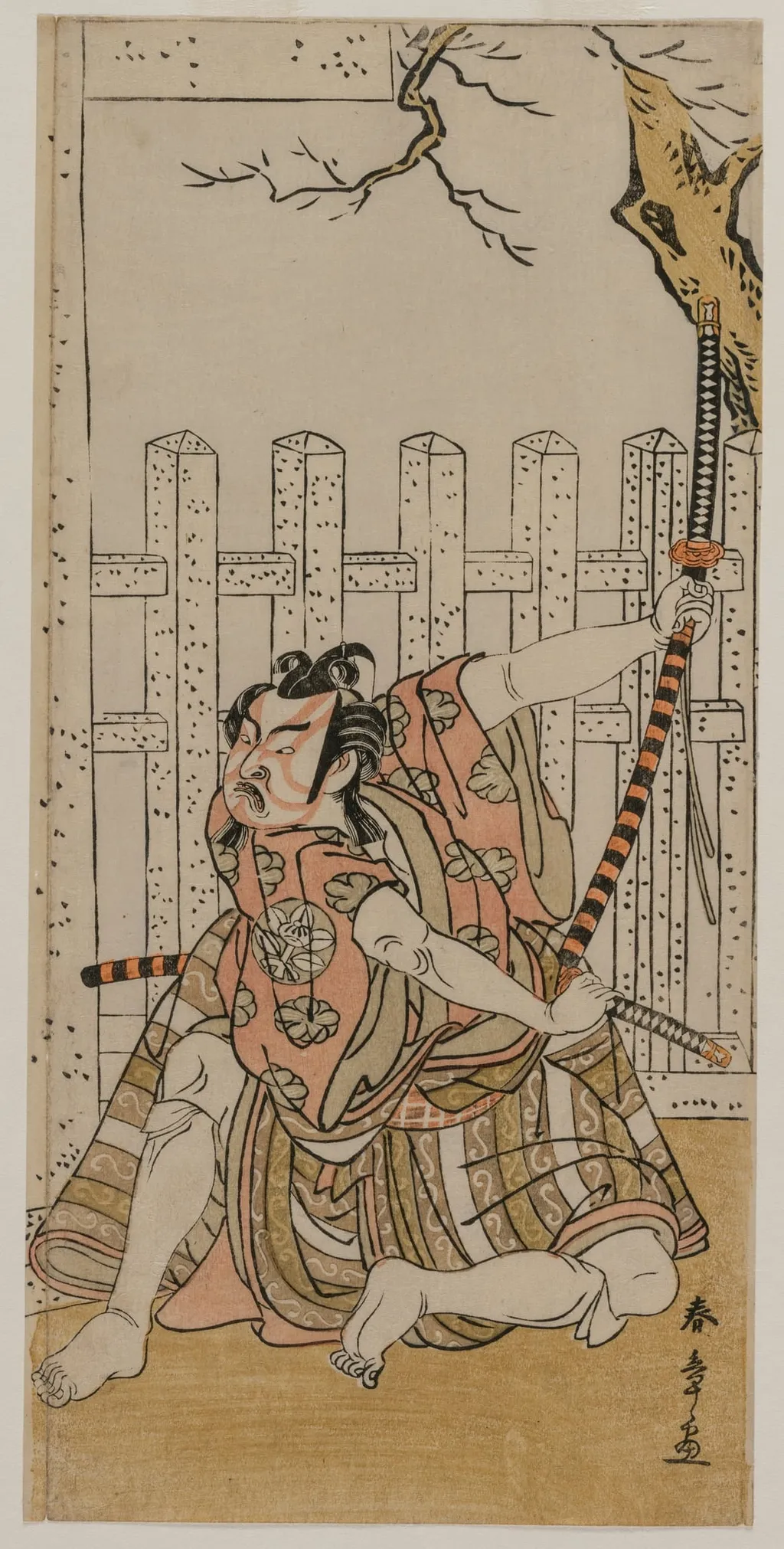
Ichimura Uzaemon IX as Umeomaru is a print by the Romanticist artist Katsukawa Shunshō. It dates from 1774 and is held in the collection of the Cleveland Museum of Art.
About this work
Overview
Ichimura Uzaemon IX as Umeomaru is a late 18th-century print by Japanese artist Katsukawa Shunshō, dating to around 1774. The work is part of the collection at The Cleveland Museum of Art.
Subject & Meaning
The print depicts Ichimura Uzaemon IX, a kabuki actor, in the role of Umeomaru. His intense, dynamic pose and fierce facial expression convey the dramatic energy characteristic of kabuki theater.
Technique & Style
Executed in Shunshō's characteristic style, the print features a traditional Japanese costume with intricate leaf-patterned robes and striped undergarments, set against a subdued, textured background of light-colored walls with visible wooden beams.
History & Provenance
Created circa 1774, the print's history prior to its acquisition by The Cleveland Museum of Art is not detailed here, highlighting the need for further research into its provenance.
Context
Part of the Edo period's flourishing ukiyo-e woodblock print tradition, this work showcases Shunshō's contribution to kabuki-e, a genre focused on capturing the drama and personalities of kabuki theater.
Legacy
While not explicitly linked to Western Romanticism, the print's emphasis on emotional intensity and dynamic movement resonates with themes found in later Romantic art movements, offering a point of cross-cultural comparison.
Artist & collection
Artist
Katsukawa Shunshō spent his life in Edo (now Tokyo), where the city’s teahouses and theaters buzzed with energy.

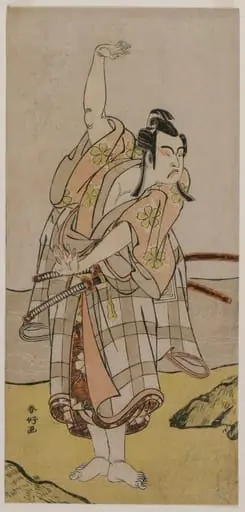 Actor Ichikawa Yaozō II as Sakuramaru
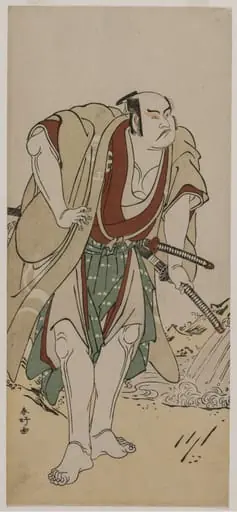 Otani Hiroji III as a Samurai Standing Beside a Stream
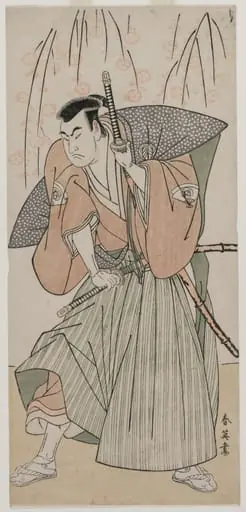 Onoe Matsusuke I as a Samurai Standing Beneath a Cherry Tree
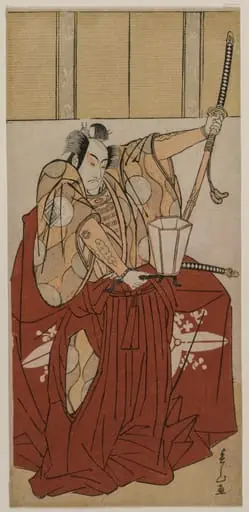 Ichikawa Monnosuke II as Urabe no Suetake
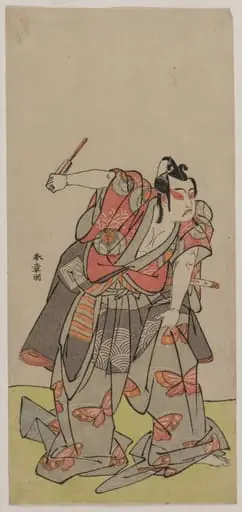 Ichikawa Yaozo II as Soga no Goro
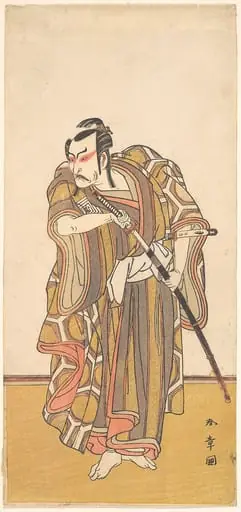 四代目市川團蔵|Kabuki Actor Ichikawa Danzō IV
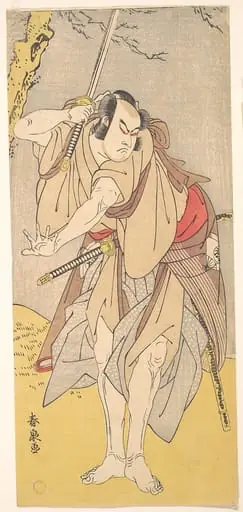 Untitled
 Nakajima Kanzaemon as a Lord Disguised as a Hunter with a Rifle