Artwork
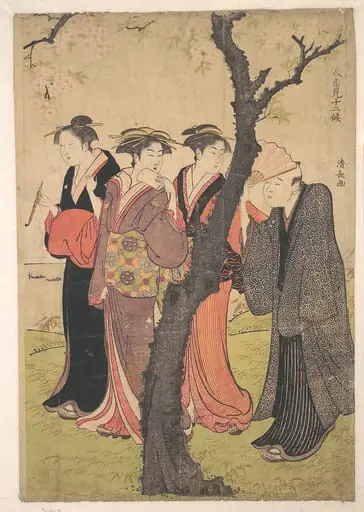
「風俗東之錦」 武家の息女と侍女と若党 |A Lady from a Samurai Household with Three Attendants, from the series A Brocade of Eastern Manners (Fūzoku Azuma no nishiki)
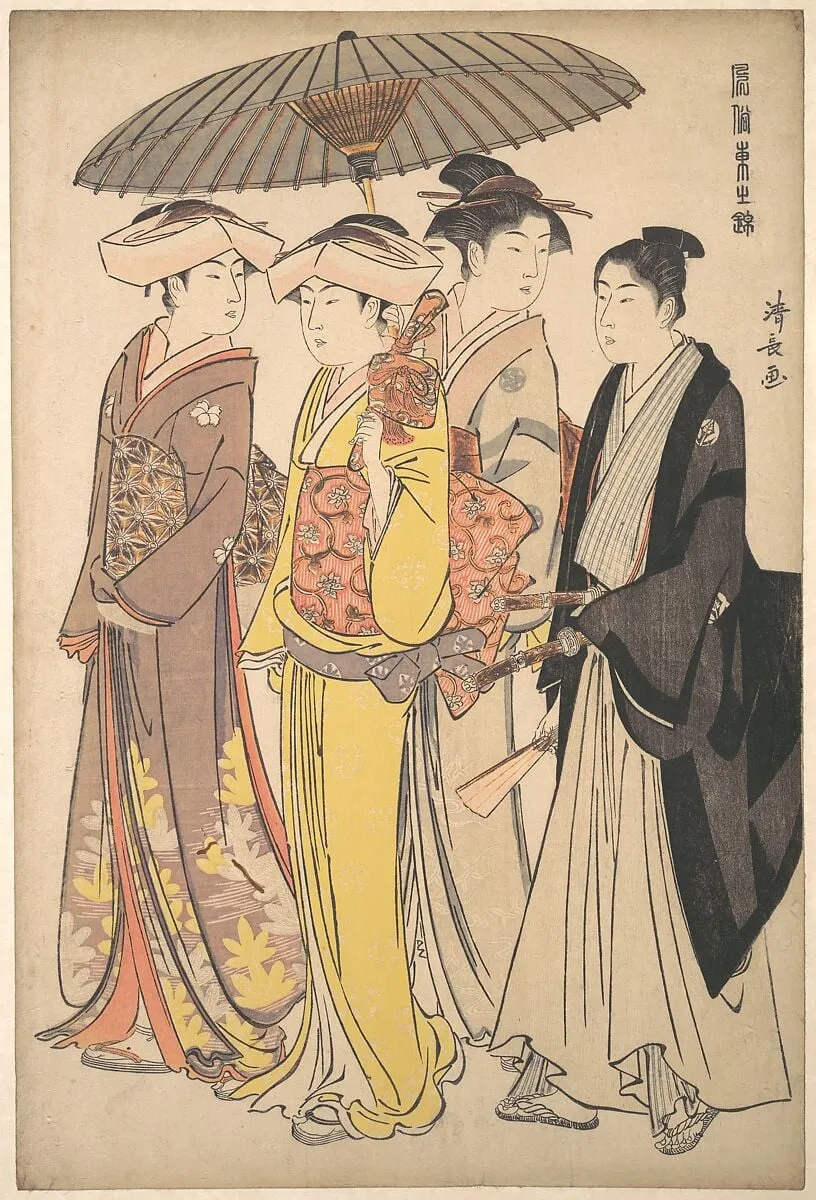
「風俗東之錦」 武家の息女と侍女と若党 |A Lady from a Samurai Household with Three Attendants, from the series A Brocade of Eastern Manners (Fūzoku Azuma no nishiki) is an ink print by the Romanticist artist Torii Kiyonaga. It is held in the collection of the Metropolitan Museum of Art.
About this work
Overview
Created around 1820, this woodblock print by Torii Kiyonaga forms part of the series titled A Brocade of Eastern Manners. It portrays a samurai family’s daughter accompanied by three attendants—a pair of women and a young male page—moving together in a linear composition. The work is part of the Metropolitan Museum of Art’s collection and exemplifies early‑nineteenth‑century ukiyo‑e portraiture.
Subject & Meaning
The grouping conveys the hierarchical structure of a samurai household and the cultivated elegance expected of its female members.
The central figure, a young woman in a bright yellow kimono, holds a decorative fan, suggesting refinement and social status. Flanking her are two women in subdued brown garments, one sheltering herself with a parasol, while a man in a dark kimono follows behind, likely serving as a page. The grouping conveys the hierarchical structure of a samurai household and the cultivated elegance expected of its female members.
Technique & Style
Executed with ink and multiple pigments on paper, the print demonstrates Kiyonaga’s characteristic use of flat colour fields and delicate line work. The intricate kimono patterns are rendered through fine carving, while the plain beige background isolates the figures, emphasizing their attire and gestures. The composition’s diagonal movement and balanced spacing reflect the artist’s skill in orchestrating depth within the two‑dimensional medium.
History & Provenance
The print was produced in the Edo period, a time when woodblock publishing flourished for both popular and elite audiences. It entered the Metropolitan Museum of Art’s collection through a 20th‑century acquisition, though earlier ownership records remain sparse. Its survival in good condition attests to the durability of the ukiyo‑e printing process and careful preservation.
Context
A Brocade of Eastern Manners documented contemporary fashions and social customs of the early 19th‑century samurai class. Kiyonaga’s work contributed to a visual archive that informed later artists and scholars about period dress and etiquette. The print continues to serve as a reference point for studies of gender roles, textile design, and the commercial art market of Edo‑period Japan.
Artist & collection

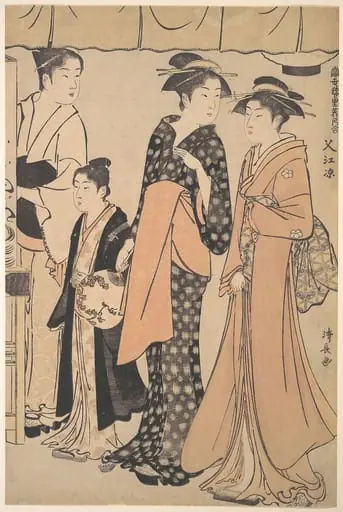 Sako no Suzumi|Cooling Off at Nakazu
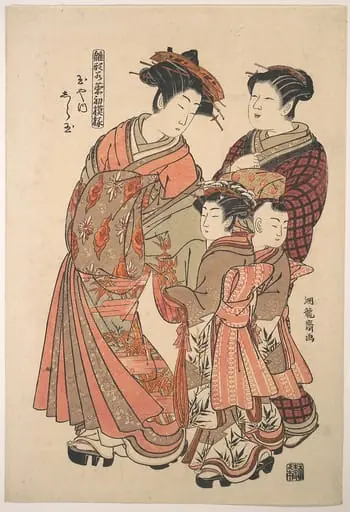 『雛形若菜初模様 玉や内 しら玉』|The Courtesan Shiratama of the Tamaya Brothel, from the series “A Pat-tern Book of the Year’s First Designs, Fresh as Spring Herbs” (“Hinagata wakana hatsu moyō”)
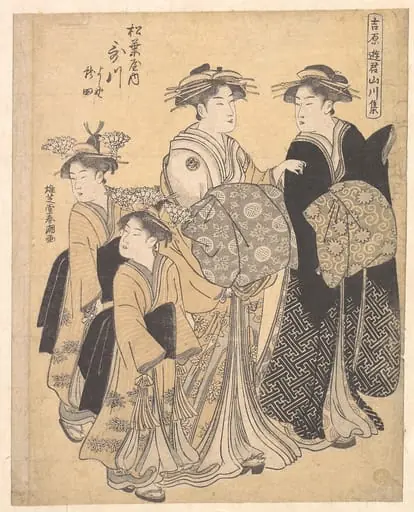 Untitled
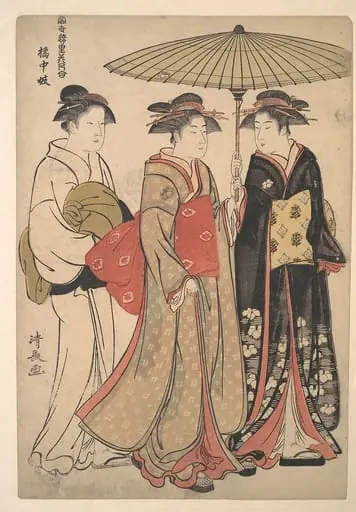 Kitchugi|Geisha of the Tachibana Street
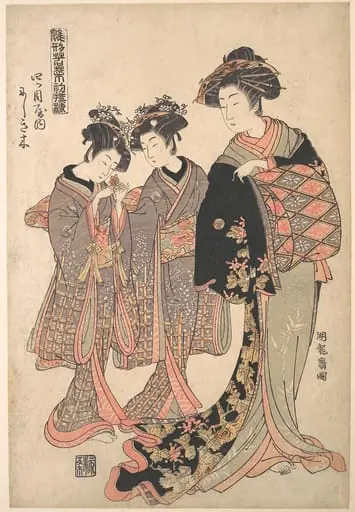 『雛形若菜初模様 四ツ目屋内 にしき木』|The Courtesan Nishikigi of the Yotsumeya Brothel, from the series “A Pattern Book of the Year’s First Designs, Fresh as Spring Herbs” (“Hinagata wakana hatsu moyō”)
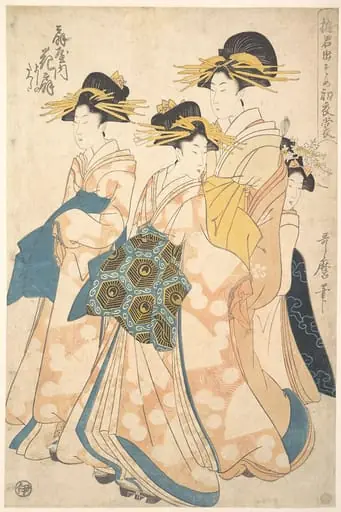 遊君出そめ初衣裳 扇屋内花扇|The Oiran Hanaogi of Ogiya attended by Two Shinzo and Her Kamuro Yoshino
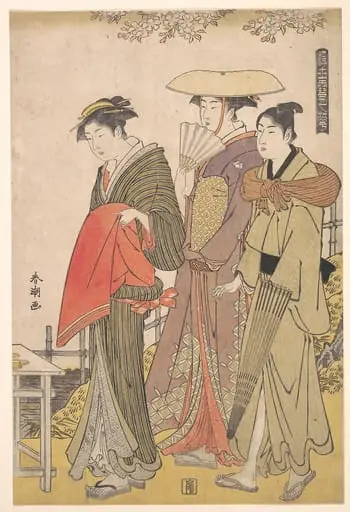 Ukiyoe Ga|The Beauty of the Floating World
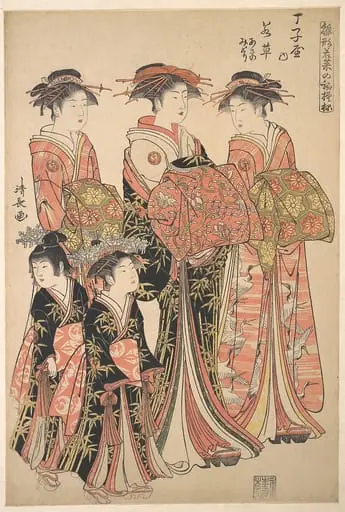 鳥居清長画 「雛形若菜の初模様 丁子屋の若草・ あさの・みどり」|The Courtesan Wakakusa of the Chōjiya Brothel, and Attendants Asano and Midori, from the series “A Pattern Book of the Year’s First Designs, Fresh as Spring Herbs” (Hinagata wakana no hatsumoyō)
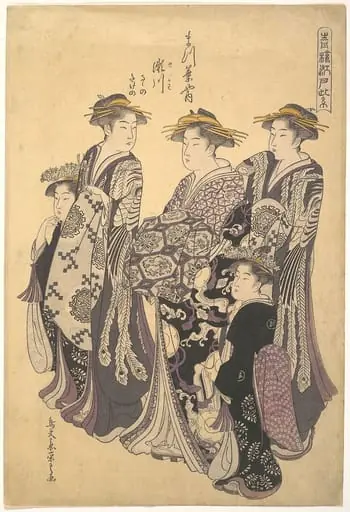 Seiryu Edo|Courtesan District of Edo
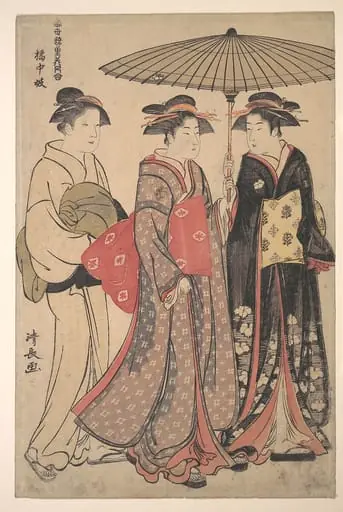 Kitchugi|Dancers of Tachibana Street