Artwork
Fashionable Places in Edo
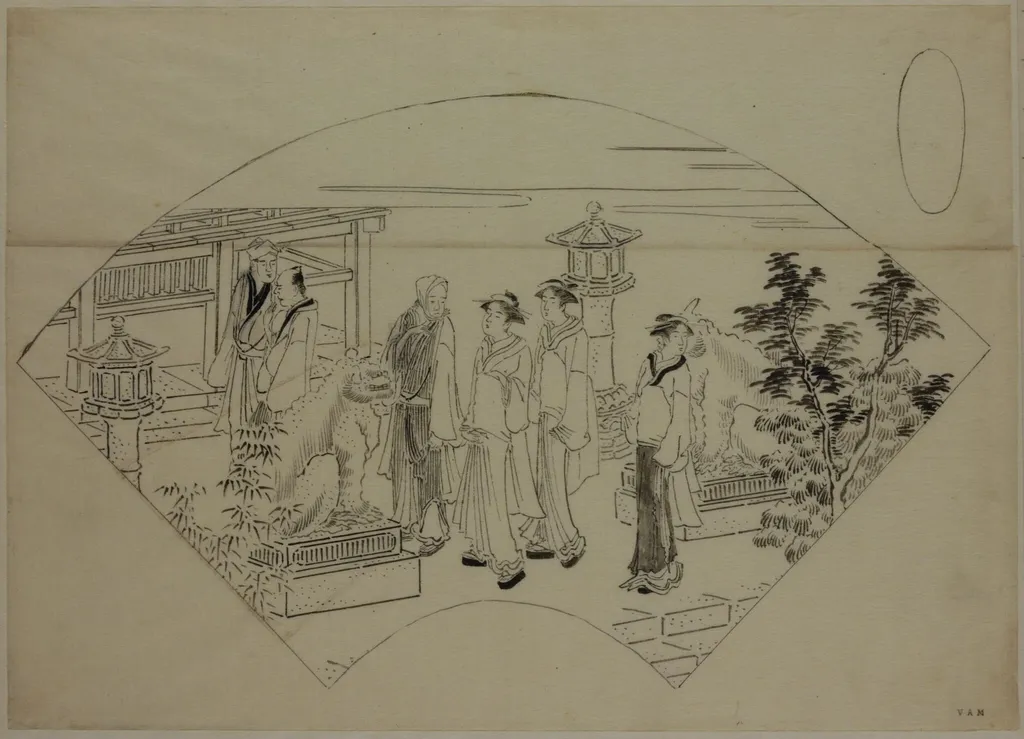
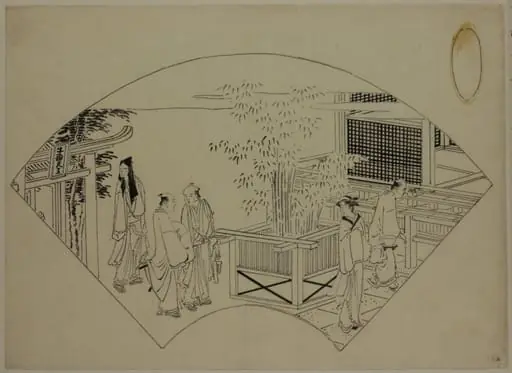
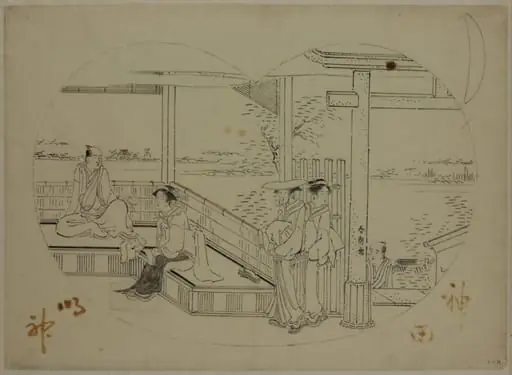
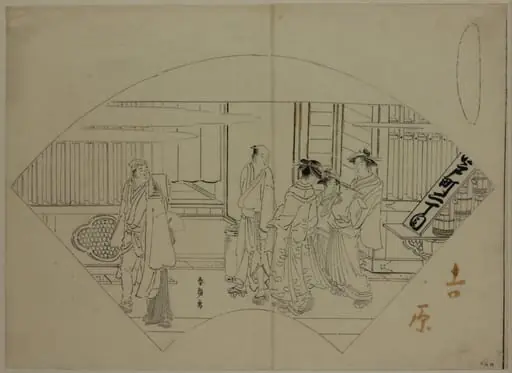
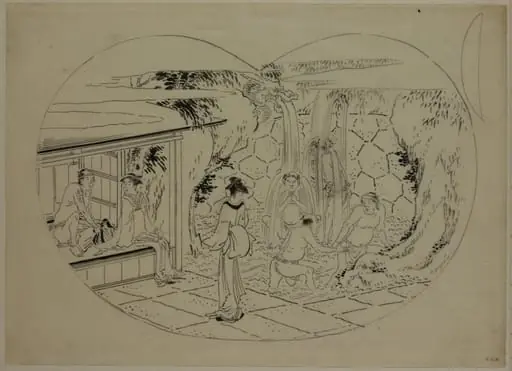
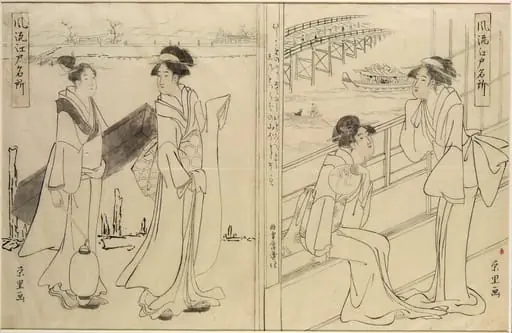
Fashionable Places in Edo is a drawing by the Japonisme artist Katsushika Hokusai. It dates from 1786 and is held in the collection of the Victoria and Albert Museum. This ink drawing, created between 1785 and 1787, served as a hanshita-e—a preparatory template for woodblock carving.
About this work
This is a quick sketch from 1785–87. It shows three Edo women in fine kimonos walking past a wooden fence and a blank wall. The lines are light and confident, almost like doodles.
This drawing was made to guide woodblock carvers. Hokusai signed it “Shunro,” a name he used early in his career. You can see the pencil marks where changes were made.
Check out other works by Katsushika Hokusai.
Overview
This ink drawing, created between 1785 and 1787, served as a hanshita-e—a preparatory template for woodblock carving. It belongs to a series of early works by Katsushika Hokusai, who at the time signed his pieces as 'Shunro.' Executed with swift, assured lines, it was intended not as a finished artwork but as a functional guide for craftsmen who would translate its form into a printed image.
Subject & Meaning
The scene depicts three women in elegant kimonos strolling past a simple wooden fence and a plain wall, capturing a quiet moment of urban life in Edo. No narrative or symbolic elements are emphasized; instead, the focus lies in the rhythm of movement and the subtle interplay of figures against a neutral backdrop, reflecting the everyday aesthetics of the city’s fashionable classes.
Technique & Style
The drawing is rendered in light, fluid ink lines, with visible pencil revisions indicating an iterative process. The brushwork is economical yet precise, conveying form and posture without heavy shading. Its sketch-like quality reveals Hokusai’s confidence in line and composition, prioritizing clarity for the carver over decorative finish.
History & Provenance
This work is part of a small group of surviving hanshita-e from Hokusai’s Shunro period (1779–1794), rare because such preparatory drawings were typically discarded after use. Its preservation offers insight into the collaborative production methods of ukiyo-e publishing, where the artist’s design was mediated through multiple artisans before reaching the public.
Context
During the late 18th century, Edo’s urban culture flourished, and depictions of fashionable women in public spaces became popular subjects in woodblock prints. Hokusai’s sketches like this one contributed to a growing visual record of city life, aligning with the demand for images that reflected contemporary social habits and attire.
Legacy
As one of the few surviving hanshita-e from Hokusai’s early career, this drawing illuminates the practical foundations of ukiyo-e production. It reveals how artistic vision was translated into mass-printed imagery, offering scholars a direct link between the artist’s hand and the final commercial product.
Artist & collection

Artist
Katsushika Hokusai spent his life in Edo, now Tokyo, where he drew and carved prints for a living.