Artwork
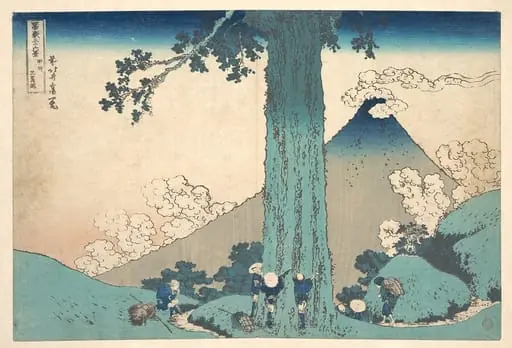
冨嶽三十六景 遠江山中|In the Mountains of Tōtomi Province (Tōtomi sanchū), from the series Thirty-six Views of Mount Fuji (Fugaku sanjūrokkei)
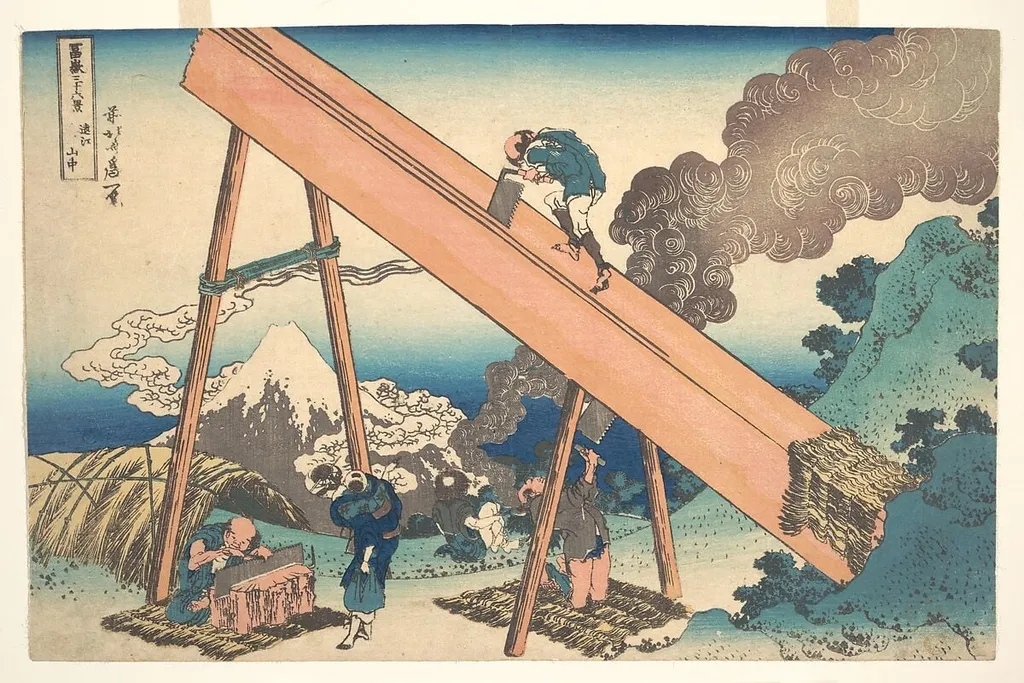
冨嶽三十六景 遠江山中|In the Mountains of Tōtomi Province (Tōtomi sanchū), from the series Thirty-six Views of Mount Fuji (Fugaku sanjūrokkei) is an ink print by the Japonisme artist Katsushika Hokusai. It dates from 1831 and is held in the collection of the Metropolitan Museum of Art.
About this work
Overview
The composition balances human effort with the natural landscape, emphasizing the relationship between labor and environment.
Created around 1831 by Katsushika Hokusai, this woodblock print is part of the Thirty-six Views of Mount Fuji series. It depicts a rural labor scene in Tōtomi Province, where workers manipulate a heavy timber using ropes and levers. The composition balances human effort with the natural landscape, emphasizing the relationship between labor and environment. The print is held in the collection of The Metropolitan Museum of Art.
Subject & Meaning
The scene portrays a group of laborers engaged in the physical task of moving a large wooden beam, likely for construction or forestry. Their strained postures and focused expressions convey the weight of their labor, not as spectacle but as everyday reality. The distant Mount Fuji, barely visible, anchors the scene in the broader cultural and spiritual context of the series, where human activity unfolds within the presence of the sacred mountain.
Technique & Style
Hokusai employed fine linework and layered color printing to render texture and motion. The figures are rendered with angular, dynamic poses, while the mountainous backdrop uses muted tones to recede into the distance. The beam’s horizontal line cuts across the composition, creating visual tension. The use of Prussian blue, newly available at the time, adds depth to the sky and foliage, enhancing the print’s spatial clarity and atmospheric effect.
History & Provenance
Produced during the peak of Hokusai’s career, this print was part of a widely distributed series that popularized landscape prints in Edo-period Japan. The Metropolitan Museum of Art acquired the work as part of its broader collection of Japanese prints, which grew significantly in the late 19th and early 20th centuries through donations and purchases from collectors familiar with ukiyo-e traditions.
Context
This print emerged during a period of growing urban interest in rural life and natural scenery. While Mount Fuji appears subtly in the distance, the focus on laborers reflects a broader shift in ukiyo-e toward depicting ordinary people and their environments. The series as a whole responded to increased travel and regional pride, offering viewers a visual tour of Japan’s diverse landscapes through the unifying presence of the mountain.
Legacy
Hokusai’s series influenced later generations of artists in Japan and abroad, particularly in the way it merged natural grandeur with intimate human activity. The print’s emphasis on labor, spatial depth, and restrained color palette contributed to the evolution of landscape representation in printmaking. Its inclusion in major Western collections helped establish Japanese woodblock prints as significant artistic objects in global art history.
Artist & collection

Artist
Katsushika Hokusai spent his life in Edo, now Tokyo, where he drew and carved prints for a living.

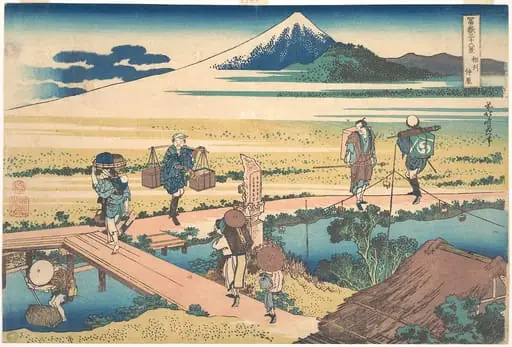 冨嶽三十六景 相州仲原|Nakahara in Sagami Province (Sōshū Nakahara), from the series Thirty-six Views of Mount Fuji (Fugaku sanjūrokkei)
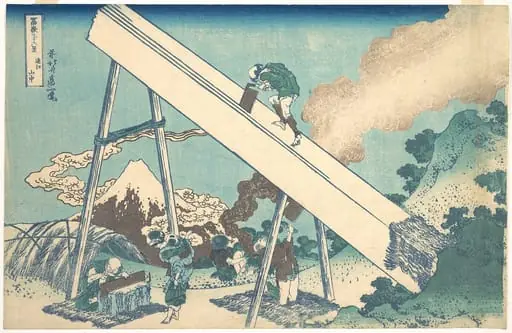 冨嶽三十六景 遠江山中|In the Mountains of Tōtomi Province (Tōtomi sanchū), from the series Thirty-six Views of Mount Fuji (Fugaku sanjūrokkei)
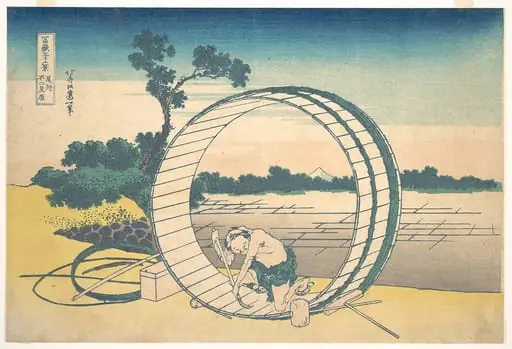 冨嶽三十六景 尾州不二見原|Fujimigahara in Owari Province (Bishū Fujimigahara), from the series Thirty-six Views of Mount Fuji (Fugaku sanjūrokkei)
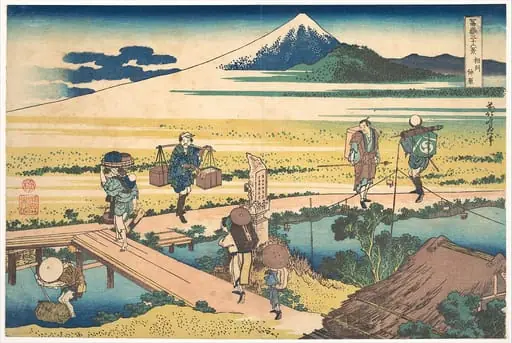 冨嶽三十六景 相州仲原|Nakahara in Sagami Province (Sōshū Nakahara), from the series Thirty-six Views of Mount Fuji (Fugaku sanjūrokkei)
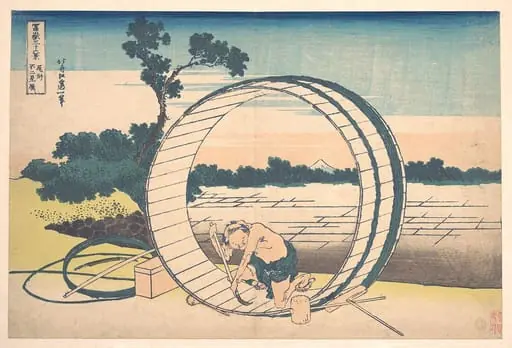 冨嶽三十六景 尾州不二見原|Fujimigahara in Owari Province (Bishū Fujimigahara), from the series Thirty-six Views of Mount Fuji (Fugaku sanjūrokkei)
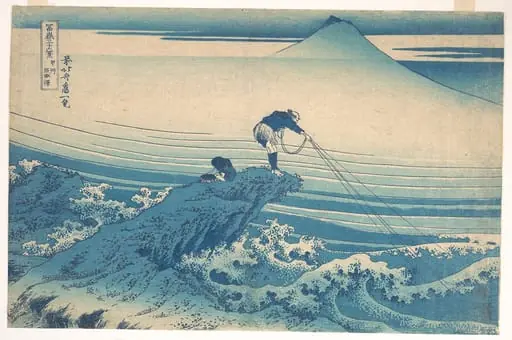 冨嶽三十六景 甲州石班沢|Kajikazawa in Kai Province (Kōshū Kajikazawa), from the series Thirty-six Views of Mount Fuji (Fugaku sanjūrokkei)
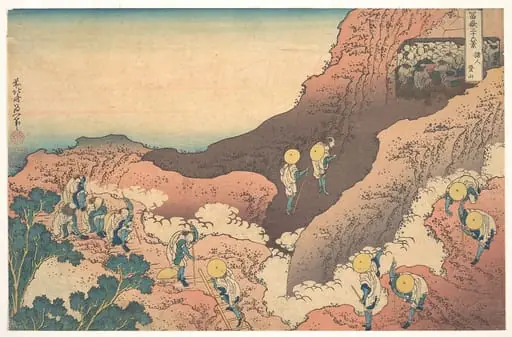 冨嶽三十六景 諸人登山|Groups of Mountain Climbers (Shojin tozan), from the series Thirty-six Views of Mount Fuji (Fugaku sanjūrokkei)
 冨嶽三十六景 甲州三島越|Mishima Pass in Kai Province (Kōshū Mishima goe), from the series Thirty-six Views of Mount Fuji (Fugaku sanjūrokkei)