Artwork
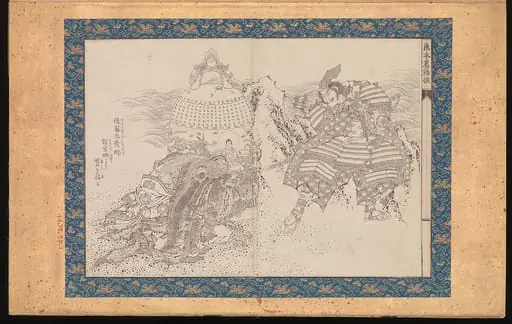
Poem by Kakinomoto no Hitomaro, from One Hundred Poems by One Hundred Poets Explained by an Old Nurse
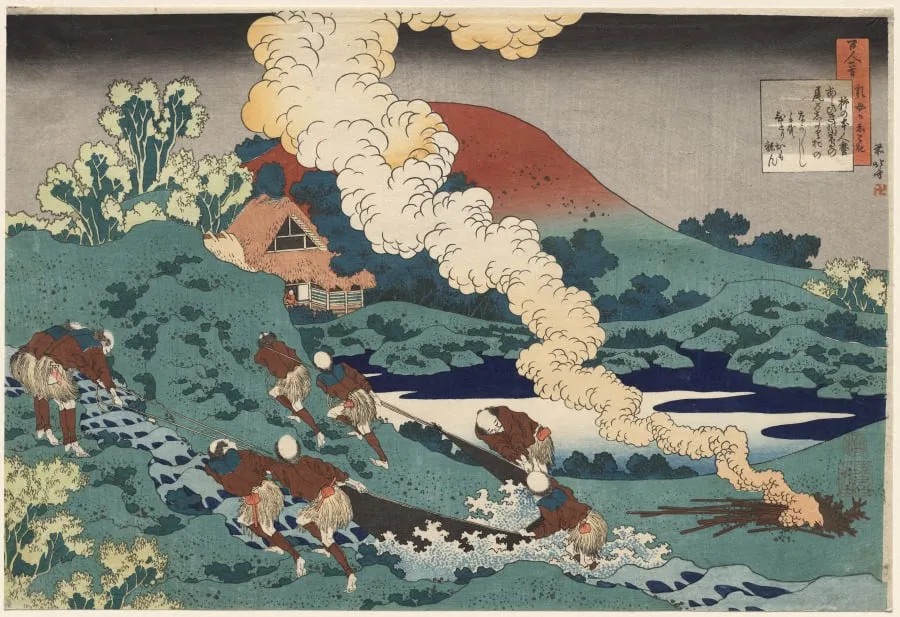
Poem by Kakinomoto no Hitomaro, from One Hundred Poems by One Hundred Poets Explained by an Old Nurse is a print by the Romanticist artist Katsushika Hokusai. It dates from 1836 and is held in the collection of the Cleveland Museum of Art.
About this work
This painting shows a scene from a Japanese poem.
The poem is about a person who is lonely at night. The artist, Hokusai, illustrated this poem in a way that is a bit funny because he didn't fully understand the poem's subtle meanings.
Look up the work of artist: Katsushika Hokusai (Japanese, 1760–1849) to see more of his unique illustrations.
Overview
This woodblock print, part of a series by Katsushika Hokusai (1760–1849), visualizes a poem attributed to the early Nara‑period poet Kakinomoto no Hitomaro (c. 660–739). The image presents a night scene with billowing smoke and a distant figure, likely a nurse, set against a rural landscape.
Subject & Meaning
The original poem expresses a solitary, emotionally taxing night, likening the prolonged darkness to the tail of a mountain pheasant separated from its dove. Hokusai’s interpretation, however, reads the verse as a literal description of labor, depicting fishermen hauling nets upstream, thereby creating a humorous mismatch between text and picture.
Technique & Style
Executed in the ukiyo‑e woodblock tradition, the print employs bold outlines and flat colour planes typical of Hokusai’s late works. The composition uses atmospheric smoke to guide the viewer’s eye toward the remote figure, while the stylized landscape conveys a sense of distance and isolation.
History & Provenance
The series was produced in the early 19th century as part of Hokusai’s broader effort to illustrate classical Japanese poetry. It was circulated as a popular printed book, intended for a literate audience familiar with both the poems and the visual humor of misinterpretation.
Context
During the Edo period, it was common for artists to pair poems with images, often emphasizing the poem’s emotional tone. Hokusawa’s choice to depict a literal, labor‑focused scene reflects a playful subversion of this convention, highlighting the gap between scholarly knowledge and everyday perception.
Legacy
The print exemplifies Hokusai’s willingness to experiment with narrative and visual irony, influencing later Japanese illustrators who explored the relationship between text and image in a similarly tongue‑in‑cheek manner.
Artist & collection

Artist
Katsushika Hokusai spent his life in Edo, now Tokyo, where he drew and carved prints for a living.

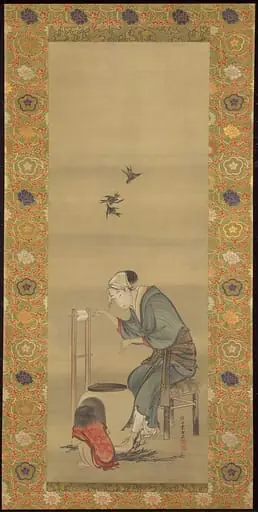
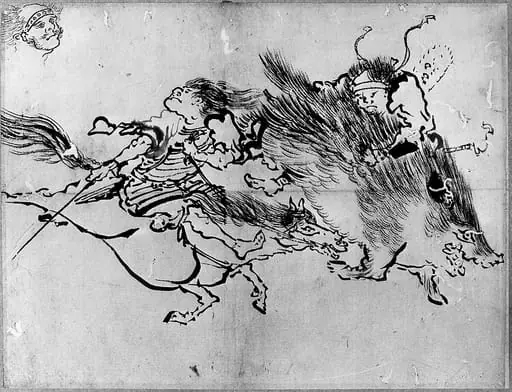
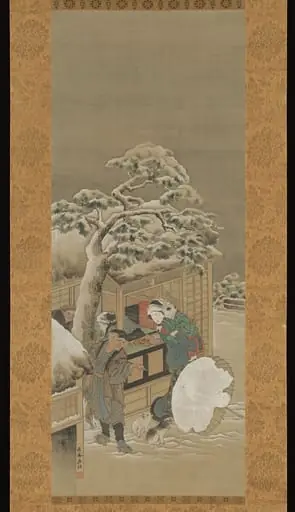
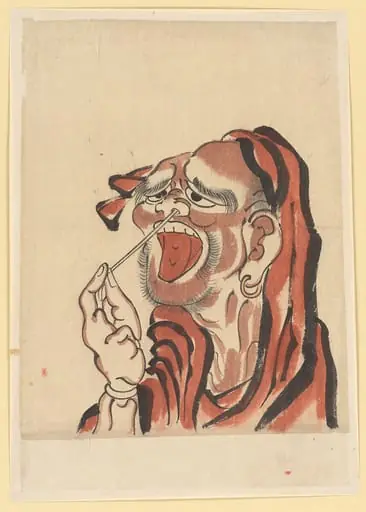
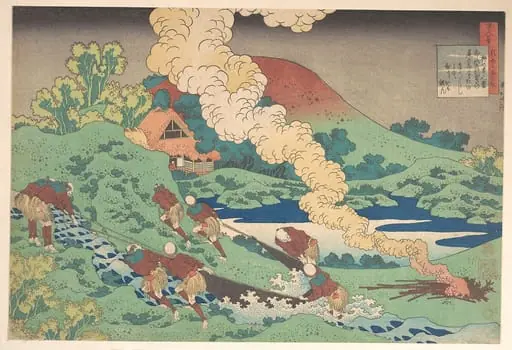 百人一首 乳母かゑとき 柿本人麿|Poem by Kakinomoto Hitomaro, from the series One Hundred Poems Explained by the Nurse (Hyakunin isshu uba ga etoki)
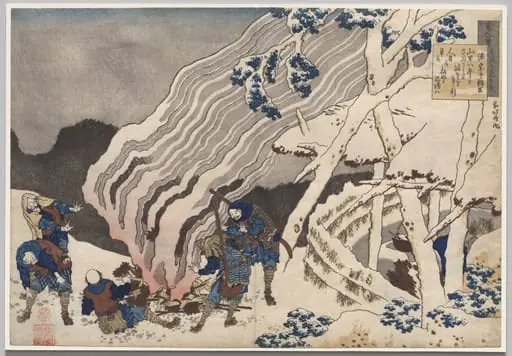 Poem by Minamoto no Muneyuki from the series One Hundred Poems by One Hundred Poets Explained by the Nurse
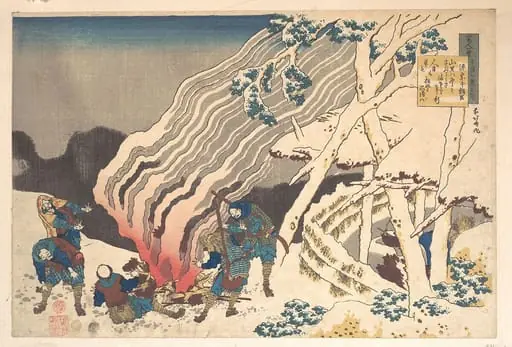 百人一首 うはかゑとき 源宗于朝臣|Poem by Minamoto no Muneyuki Ason, from the series One Hundred Poems Explained by the Nurse (Hyakunin isshu uba ga etoki)
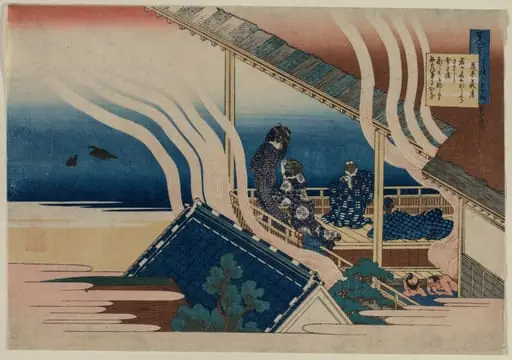 Poem by Fujiwara no Yoshitaka, from the series One Hundred Poems by One Hundred Poets Explained by an Old Nurse
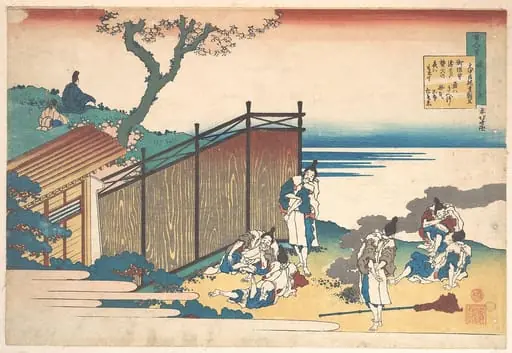 百人一首 姥か恵と起 大中臣能宣朝臣|Poem by Ōnakatomi no Yoshinobu Ason, from the series One Hundred Poems Explained by the Nurse (Hyakunin isshu uba ga etoki)
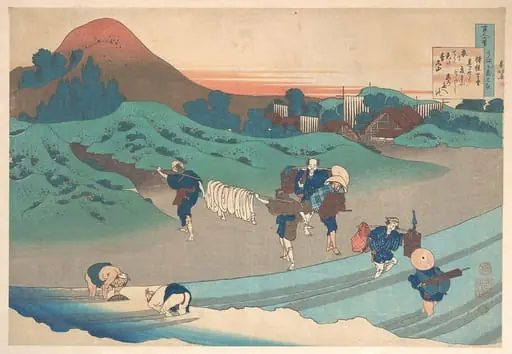 百人一首 うはかゑとき 持統天皇|Poem by Jitō Tenno (Empress Jitō), from the series One Hundred Poems Explained by the Nurse (Hyakunin isshu uba ga etoki)