Artwork
Poem by Minamoto no Muneyuki from the series One Hundred Poems by One Hundred Poets Explained by the Nurse
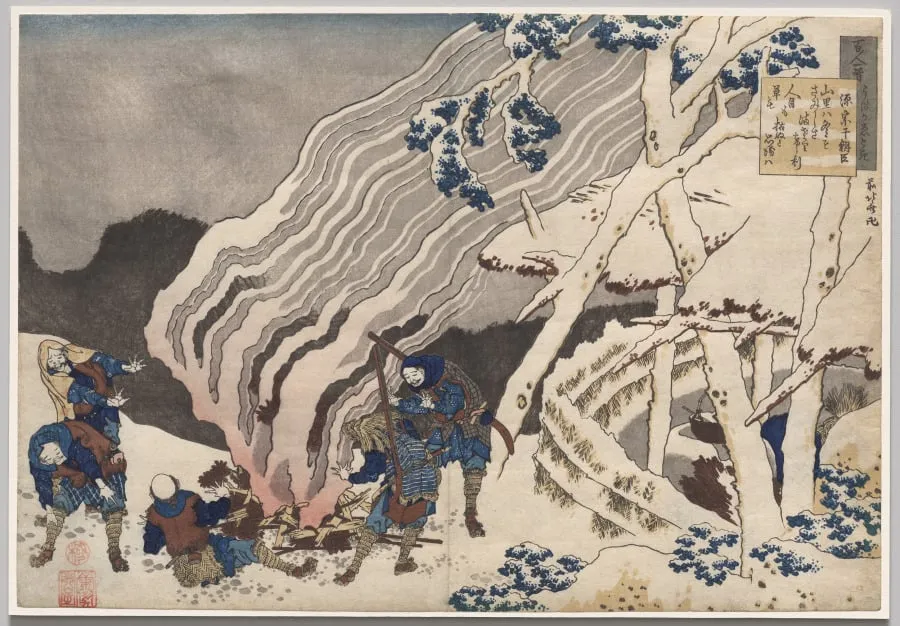
Poem by Minamoto no Muneyuki from the series One Hundred Poems by One Hundred Poets Explained by the Nurse is a print by the Romanticist artist Katsushika Hokusai. It dates from 1836 and is held in the collection of the Cleveland Museum of Art.
About this work
Instead of loneliness, we get a clumsy traveler in a blizzard, as if the nurse mixed up the words.
A lone figure trudges up a snowy mountain path, a straw hat hiding their face. Bare trees claw at the sky, and a tiny village clings to the slope below.
Hokusai didn’t just illustrate the poem—he played with it. The print shows a nurse’s silly take, missing the poem’s quiet sadness. Instead of loneliness, we get a clumsy traveler in a blizzard, as if the nurse mixed up the words.
To see how real poetry prints looked, search *japan, edo period (1615–1868)*.
Overview
This woodblock print, designed by Katsushika Hokusai, is part of the series 'One Hundred Poems by One Hundred Poets Explained by the Nurse'. It humorously juxtaposes a classical poem with a misinterpretive illustration, highlighting the comedic mismatch between the two.
Subject & Meaning
The featured poem by Minamoto no Muneyuki expresses the intensification of loneliness in a mountain village during winter, symbolized by withered grasses and infrequent visits. In contrast, Hokusai's illustration depicts a lively, albeit inaccurate, scene of activity, substituting the poem's melancholy with a bustling narrative.
Technique & Style
Hokusai's design employs a deliberate disconnect between the somber, contemplative tone of the poem and the vibrant, dynamic illustration. The visual elements, such as a lone traveler in a snowstorm and a distant village, further emphasize this contrast, showcasing Hokusai's playful manipulation of the poem's themes.
History & Provenance
Part of a larger series, this print reflects Hokusai's work during the Edo period (1615-1868). The series' unique approach to illustrating classical poetry highlights Hokusai's innovative style within the historical context of Japanese woodblock printing.
Context
To appreciate the series' novelty, compare it with traditional Edo-period poetry prints (search *japan, edo period*), which typically featured more literal and respectful illustrations of the poems.
Legacy
This print exemplifies Hokusai's ability to reimagine traditional subjects with humor and creativity, contributing to his lasting influence on Japanese art and beyond.
Artist & collection

Artist
Katsushika Hokusai spent his life in Edo, now Tokyo, where he drew and carved prints for a living.

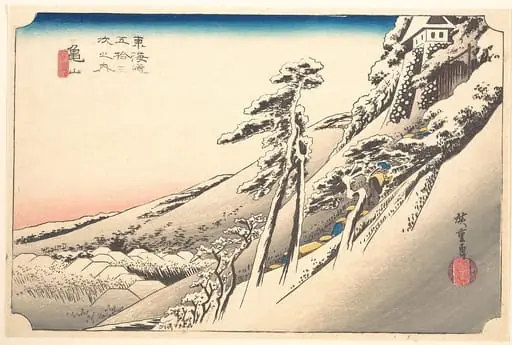 東海道五十三次之内 亀山 雪晴|Clear Weather after Snow
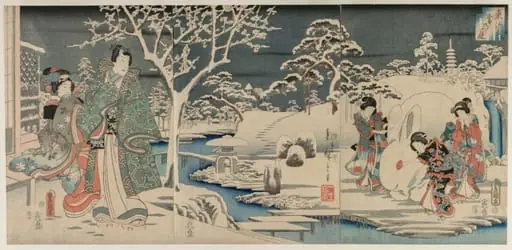 The Snowy Garden
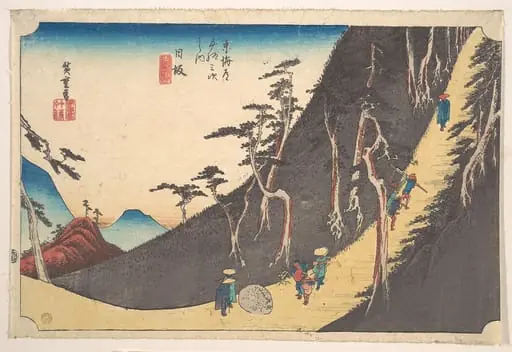 東海道五十三次之内 日坂 佐夜の中山|Nissaka, Sayo Nakayama
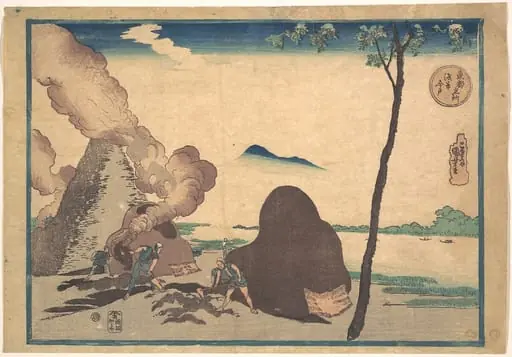 Untitled
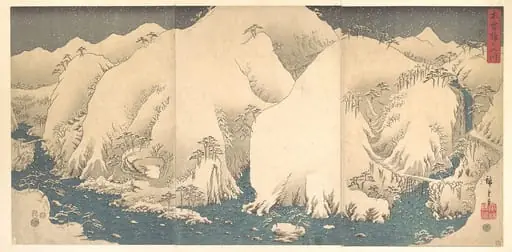 Kisojo no San Sen|木曽路之山川|The Kiso Mountains in Snow
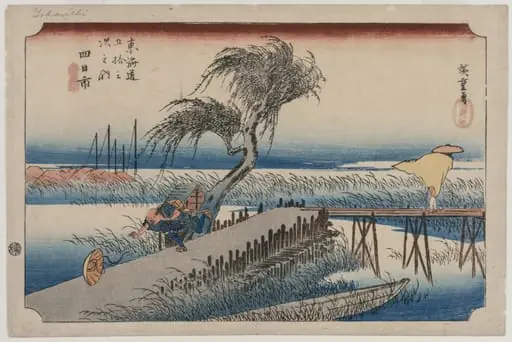 Yokkaichi: View of the Mie River, from the series The Fifty-Three Stations of the Tōkaidō
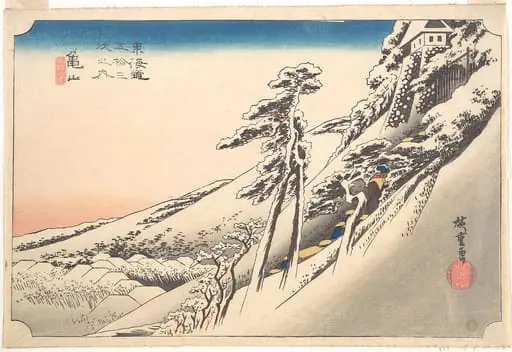 東海道五十三次之内 亀山 雪晴|Kameyama, Yuki Hare
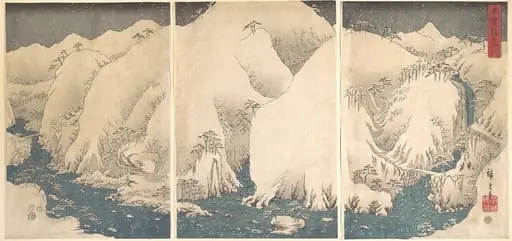 雪月花 木曽路之山川|Kiso Gorge in the Snow