Artwork
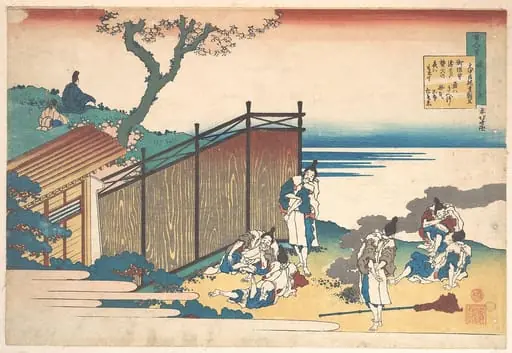
百人一首 うはかゑとき 源宗于朝臣|Poem by Minamoto no Muneyuki Ason, from the series One Hundred Poems Explained by the Nurse (Hyakunin isshu uba ga etoki)
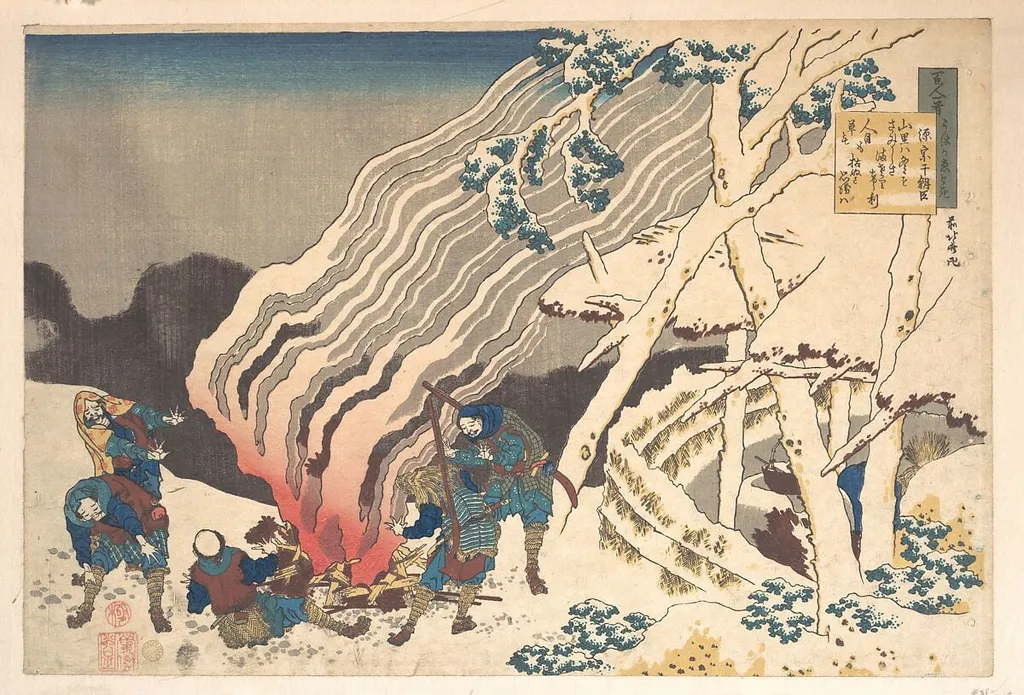
百人一首 うはかゑとき 源宗于朝臣|Poem by Minamoto no Muneyuki Ason, from the series One Hundred Poems Explained by the Nurse (Hyakunin isshu uba ga etoki) is an ink print by the Japonisme artist Katsushika Hokusai. It dates from 1839 and is held in the collection of the Metropolitan Museum of Art.
About this work
Overview
This woodblock print, created in 1839 by Katsushika Hokusai, is part of the series 'One Hundred Poems Explained by the Nurse' (Hyakunin isshu uba ga etoki). It is now in the collection of The Metropolitan Museum of Art.
Subject & Meaning
The print depicts a serene landscape featuring a prominently rendered tree with sparse, white branches and partial leafing on one side. Figures in traditional attire (blue and red robes) are integrated into the scene, with one seated at the base of the tree, set against a backdrop suggestive of distant mountains or hills. The composition conveys a sense of peace and contemplation.
Technique & Style
The work showcases Hokusai's use of bold lines juxtaposed with soft coloration, emphasizing the natural beauty of the central tree and its environs. The contrast between the tree's white trunk and branches and the colored robes of the figures adds depth to the print.
History & Provenance
Created in 1839, the print is a late work by Hokusai within the 'Hyakunin isshu uba ga etoki' series. It is currently housed at The Metropolitan Museum of Art, though specific details of its provenance before acquisition are not provided here.
Context
Part of a series illustrating poems from the 'Hyakunin isshu' collection, this print specifically accompanies a poem by Minamoto no Muneyuki Ason. The series blends literary heritage with Hokusai's ukiyo-e artistic tradition.
Legacy
As part of Hokusai's extensive oeuvre, this print contributes to the artist's enduring influence on Japanese ukiyo-e and global perceptions of Japanese aesthetics, though its individual impact within his corpus is not distinctly highlighted here.
Artist & collection

Artist
Katsushika Hokusai spent his life in Edo, now Tokyo, where he drew and carved prints for a living.

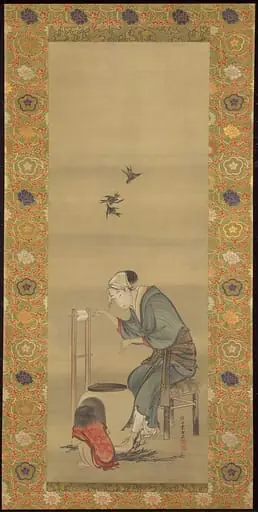
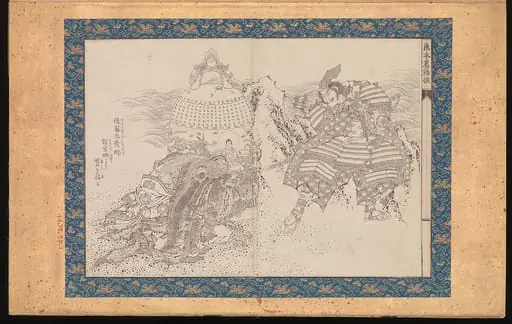
 百人一首 姥か恵と起 大中臣能宣朝臣|Poem by Ōnakatomi no Yoshinobu Ason, from the series One Hundred Poems Explained by the Nurse (Hyakunin isshu uba ga etoki)
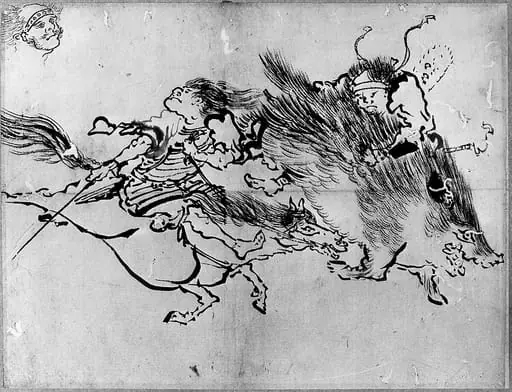
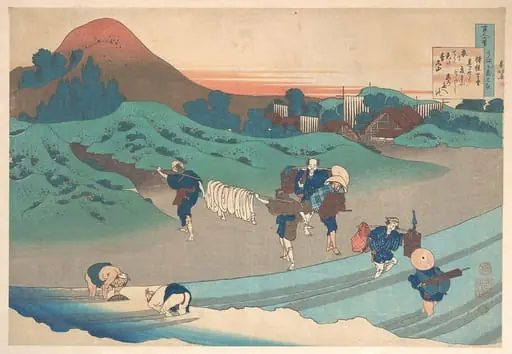 百人一首 うはかゑとき 持統天皇|Poem by Jitō Tenno (Empress Jitō), from the series One Hundred Poems Explained by the Nurse (Hyakunin isshu uba ga etoki)
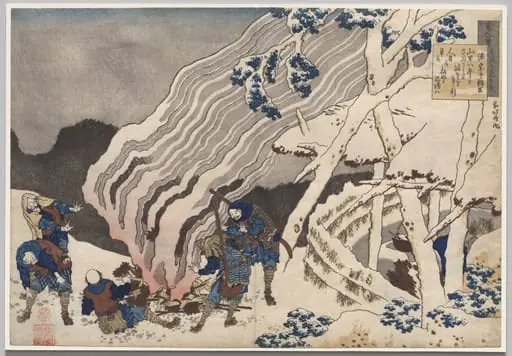 Poem by Minamoto no Muneyuki from the series One Hundred Poems by One Hundred Poets Explained by the Nurse
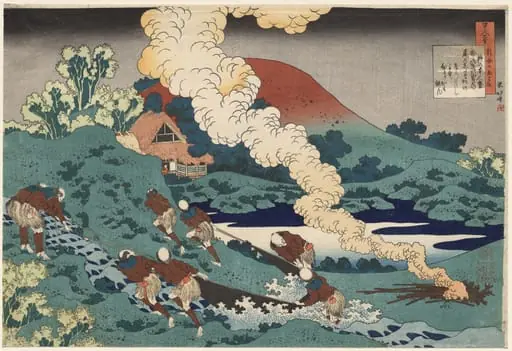 Poem by Kakinomoto no Hitomaro, from One Hundred Poems by One Hundred Poets Explained by an Old Nurse
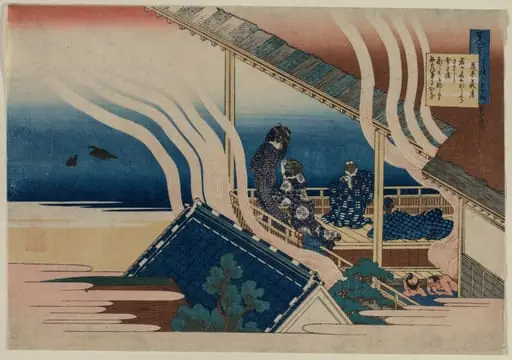 Poem by Fujiwara no Yoshitaka, from the series One Hundred Poems by One Hundred Poets Explained by an Old Nurse
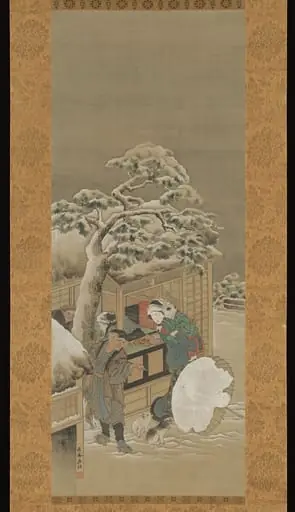
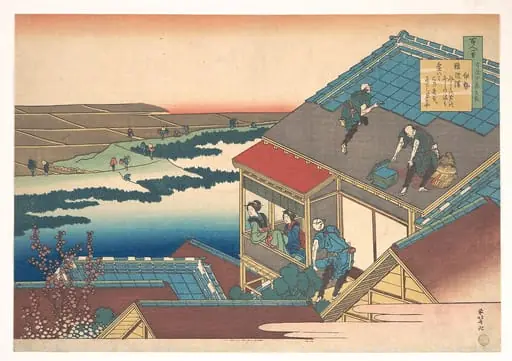 百人一首 うばがゑとき 伊勢|Poem by Ise, from the series One Hundred Poems Explained by the Nurse (Hyakunin isshu uba ga etoki)