Artwork
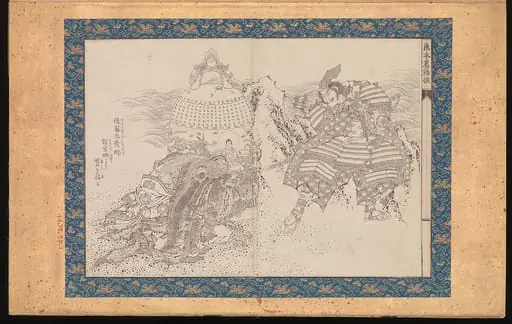
百人一首 姥か恵と起 大中臣能宣朝臣|Poem by Ōnakatomi no Yoshinobu Ason, from the series One Hundred Poems Explained by the Nurse (Hyakunin isshu uba ga etoki)
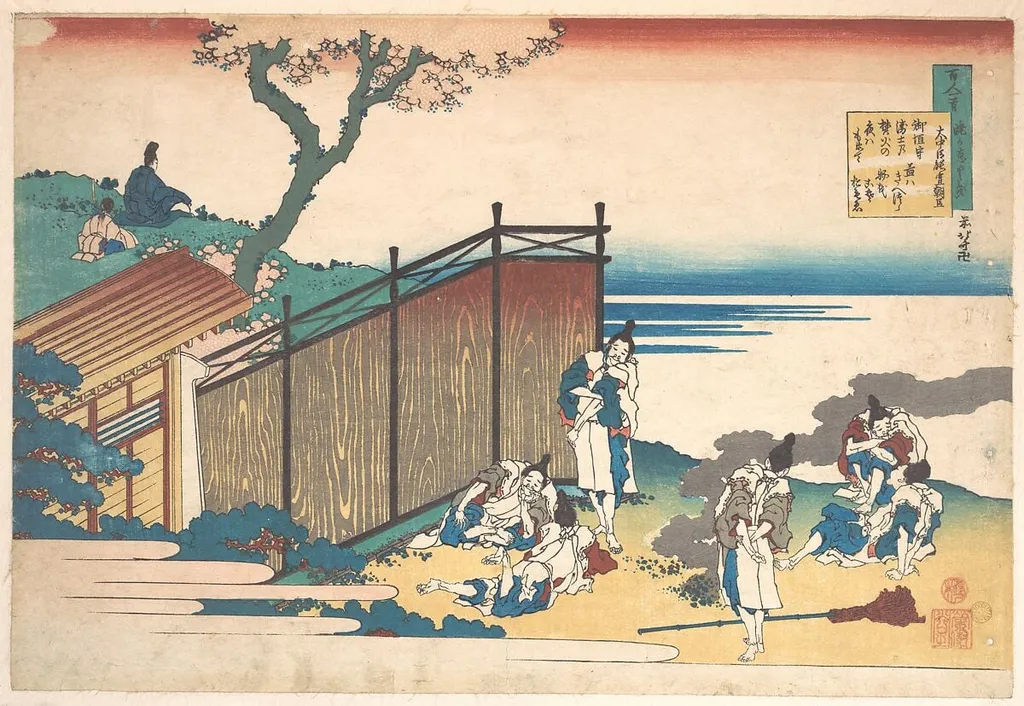
百人一首 姥か恵と起 大中臣能宣朝臣|Poem by Ōnakatomi no Yoshinobu Ason, from the series One Hundred Poems Explained by the Nurse (Hyakunin isshu uba ga etoki) is an ink print by the Japonisme artist Katsushika Hokusai. It dates from 1839 and is held in the collection of the Metropolitan Museum of Art.
About this work
The painting features a mix of colors, including blues, greens, and browns, which are used to create a sense of depth and atmosphere.
This painting depicts a scene with several figures in the foreground and background. The main focus is on a group of people gathered near a building, with one figure standing out in the center. In the background, there are more people and a tree visible.
The painting features a mix of colors, including blues, greens, and browns, which are used to create a sense of depth and atmosphere. The overall mood of the painting appears to be one of calmness and serenity.
The painting is a woodblock print, ink, and color on paper, created by Katsushika Hokusai in 1839. It is part of the Romanticism movement and is held at The Metropolitan Museum of Art. The artist, Katsushika Hokusai, is known for his beautiful and detailed works, and this painting is a great example of his skill.
Overview
This 1839 woodblock print by Katsushika Hokusi presents a visual interpretation of a poem from the Hyakunin Isshu collection, specifically the piece attributed to Ōnakatomi no Yoshinobu. Executed in ink and color on paper, the work belongs to the series known as One Hundred Poems Explained by the Nurse. It is part of the Metropolitan Museum of Art’s collection.
Subject & Meaning
The image portrays a gathering of figures near a building, with a central character highlighted against a backdrop of additional people and a solitary tree. The composition reflects the poem’s themes of gentle reflection and the passage of time, using the arrangement of participants to suggest a calm, contemplative atmosphere.
Technique & Style
Hokusai employed traditional ukiyo‑e woodblock methods, carving separate blocks for line work and each hue. A restrained palette of blues, greens, and earth tones creates depth, while the ink outlines define the figures and architectural elements. The print’s balanced composition and subtle tonal shifts exemplify the artist’s mature handling of color and space.
History & Provenance
Created in the late Edo period, the print was produced as part of a popular series that illustrated classic Japanese poetry for a literate audience. It entered the Metropolitan Museum of Art’s holdings through a 20th‑century acquisition, where it remains catalogued as an example of Hokusai’s later output.
Context
The series Hyakunin Isshu uba ga etoki merged literary culture with visual art, a common practice in Edo‑era publishing. Hokusai’s involvement reflects his engagement with both high literature and popular print culture, situating the work within the broader Romantic‑like interest in nostalgia and the evocation of historic sentiment.
Artist & collection

Artist
Katsushika Hokusai spent his life in Edo, now Tokyo, where he drew and carved prints for a living.

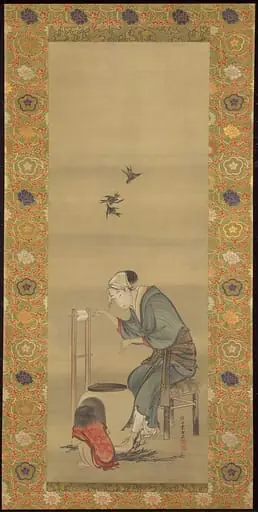
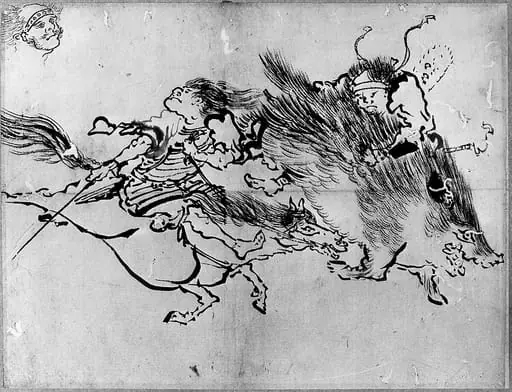
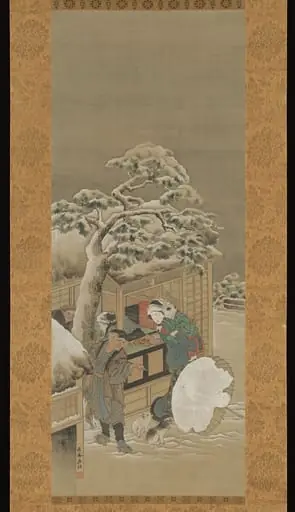
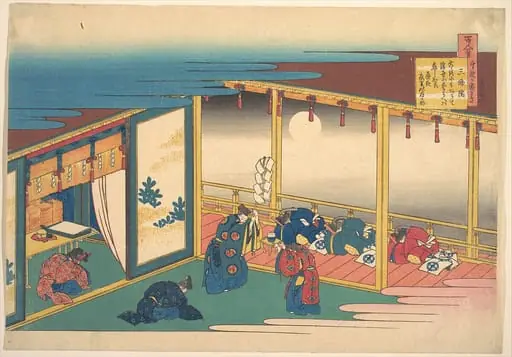 百人一首 うばがゑとき 三条院|Poem by Sanjō-in, from the series One Hundred Poems Explained by the Nurse (Hyakunin isshu uba ga etoki)
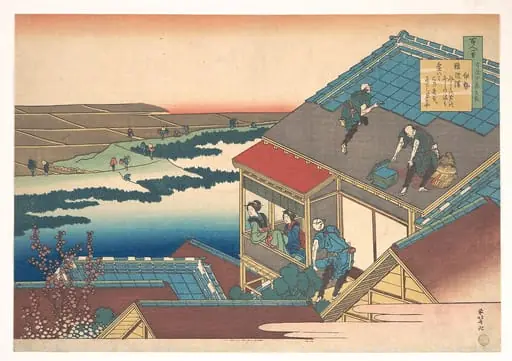 百人一首 うばがゑとき 伊勢|Poem by Ise, from the series One Hundred Poems Explained by the Nurse (Hyakunin isshu uba ga etoki)
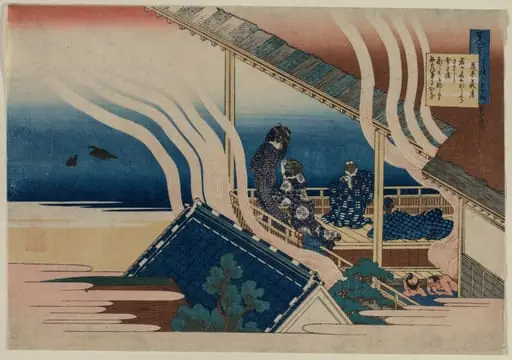 Poem by Fujiwara no Yoshitaka, from the series One Hundred Poems by One Hundred Poets Explained by an Old Nurse
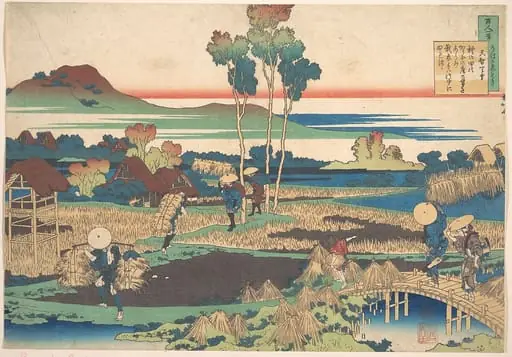 百人一首 うはかゑとき 天智天皇|Poem by Tenchi Tennō, from the series One Hundred Poems Explained by the Nurse (Hyakunin isshu uba ga etoki)
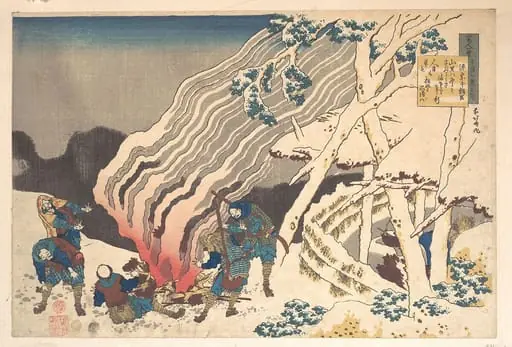 百人一首 うはかゑとき 源宗于朝臣|Poem by Minamoto no Muneyuki Ason, from the series One Hundred Poems Explained by the Nurse (Hyakunin isshu uba ga etoki)
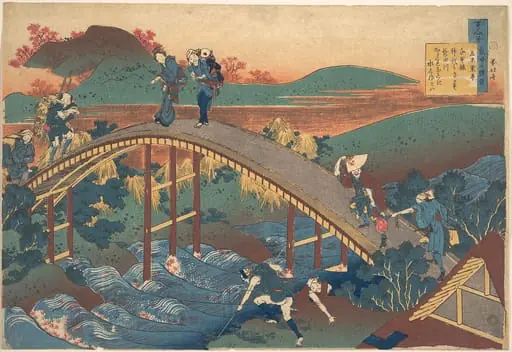 百人一首 乳母か縁説 在原業平|Poem by Ariwara no Narihira, from the series One Hundred Poems Explained by the Nurse (Hyakunin isshu uba ga etoki)
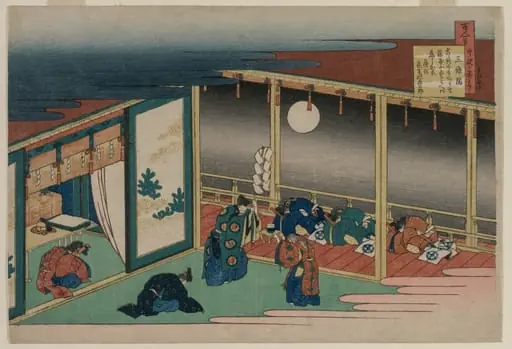 Poem by Emperor Sanjo, from the series One Hundred Poems by One Hundred Poets Explained by an Old Nurse