Artwork
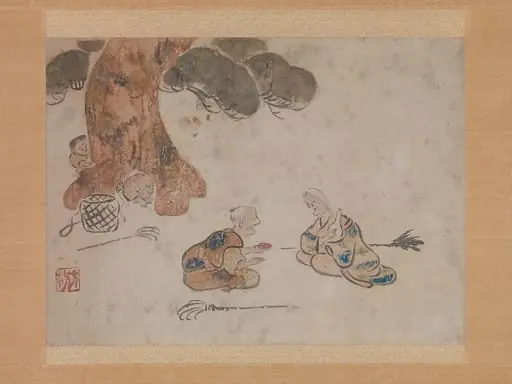
Shrine Attendant Raking Maple Leaves
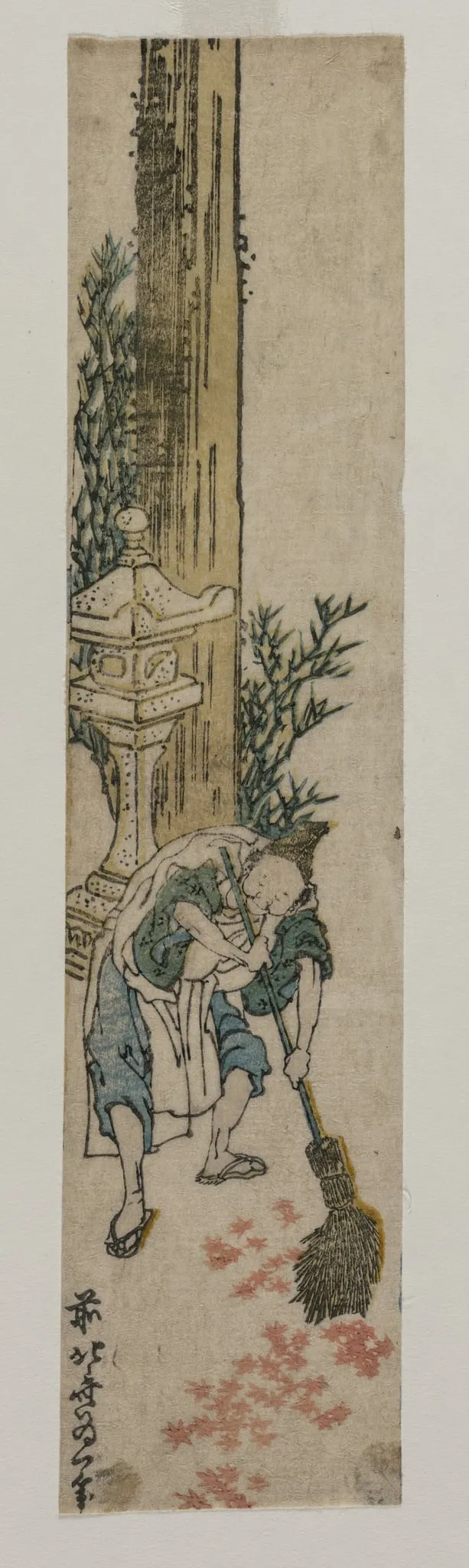
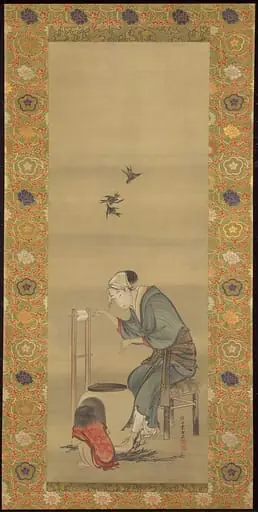
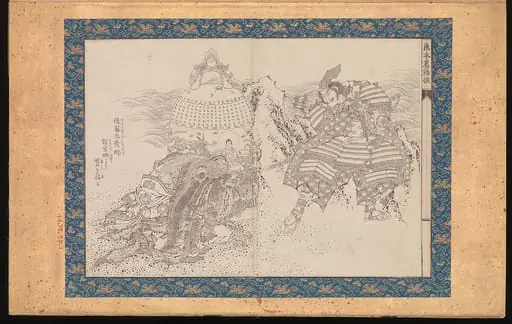
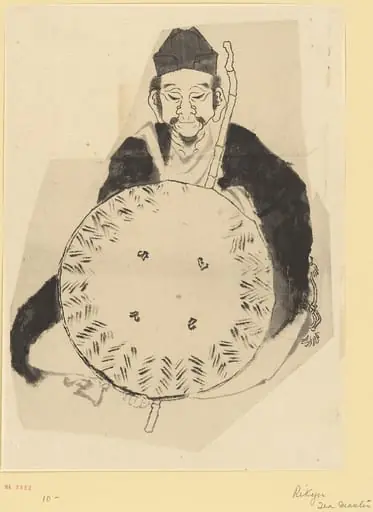
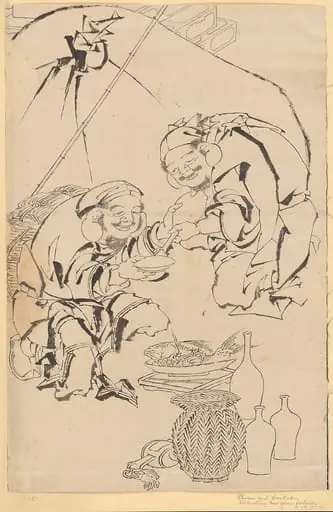
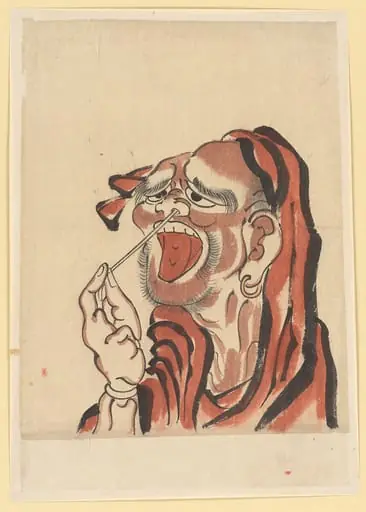
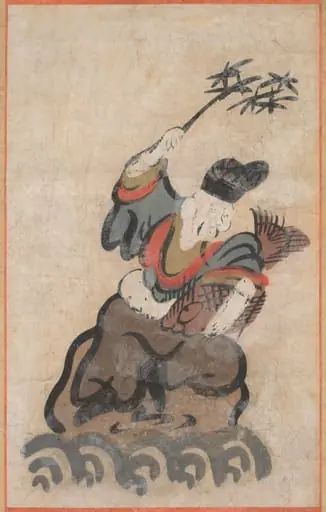
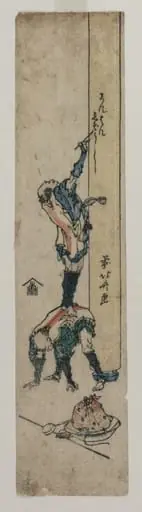
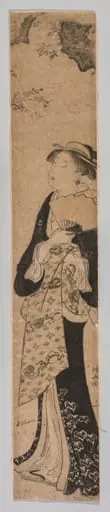
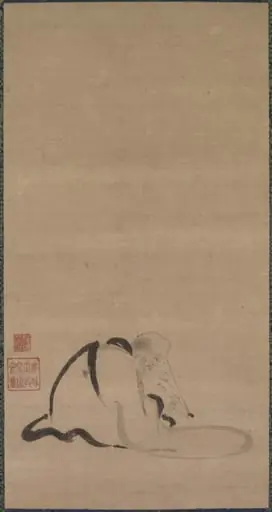
Shrine Attendant Raking Maple Leaves is a print by the Romanticist artist Katsushika Hokusai. It dates from 1834 and is held in the collection of the Cleveland Museum of Art.
About this work
Overview
Part of a series illustrating daily rituals at sacred sites, the work reflects Hokusai’s interest in ordinary moments infused with spiritual stillness.
Created around 1834 by Katsushika Hokusai, this woodblock print depicts a shrine attendant engaged in the quiet task of raking fallen maple leaves. Part of a series illustrating daily rituals at sacred sites, the work reflects Hokusai’s interest in ordinary moments infused with spiritual stillness. It is currently held in the collection of The Cleveland Museum of Art, where it is valued for its restrained composition and subtle tonality.
Subject & Meaning
The figure, dressed in a blue kimono and white outer robe, performs a routine act of maintenance at a shrine, suggesting devotion through labor. The stone lantern and sparse vegetation imply a sacred, secluded space. The scattered red leaves, carefully placed, evoke seasonal change and the transience of life—themes central to Japanese aesthetics. The attendant’s focused posture conveys mindfulness, transforming a mundane chore into a meditative act.
Technique & Style
Hokusai employed fine, controlled lines and muted pigments to achieve a serene atmosphere. The leaves are individually rendered with precision, yet the overall composition remains minimal. Soft gradations in the background and delicate shading on the garments avoid visual clutter. The print’s economy of form and emphasis on texture over color reflect the ukiyo-e tradition’s capacity for quiet elegance, prioritizing atmosphere over narrative drama.
History & Provenance
This print was produced during Hokusai’s later years, when he increasingly turned to themes of nature and ritual. It likely originated as part of a small series documenting shrine attendants at work, though few examples survive. The Cleveland Museum of Art acquired the print in the 20th century, where it has been studied for its technical refinement and cultural insight into Edo-period religious practices.
Context
In early 19th-century Japan, ukiyo-e prints often depicted scenes of daily life, including religious and seasonal rituals. Hokusai’s focus on shrine attendants aligns with a broader interest in the quiet dignity of service. Unlike theatrical subjects common in earlier prints, this work emphasizes solitude and routine, reflecting a shift in artistic priorities toward introspection and natural harmony during the late Edo period.
Legacy
Though not widely exhibited, this print exemplifies Hokusai’s later stylistic maturity and his ability to elevate the ordinary. Its influence is seen in 20th-century modernist printmakers who admired its restraint and compositional clarity. The work remains a quiet reference point in studies of Japanese visual culture, valued for its understated emotional resonance rather than dramatic impact.
Artist & collection

Artist
Katsushika Hokusai spent his life in Edo, now Tokyo, where he drew and carved prints for a living.