Artwork
Traveler Inscribing a Temple Pillar
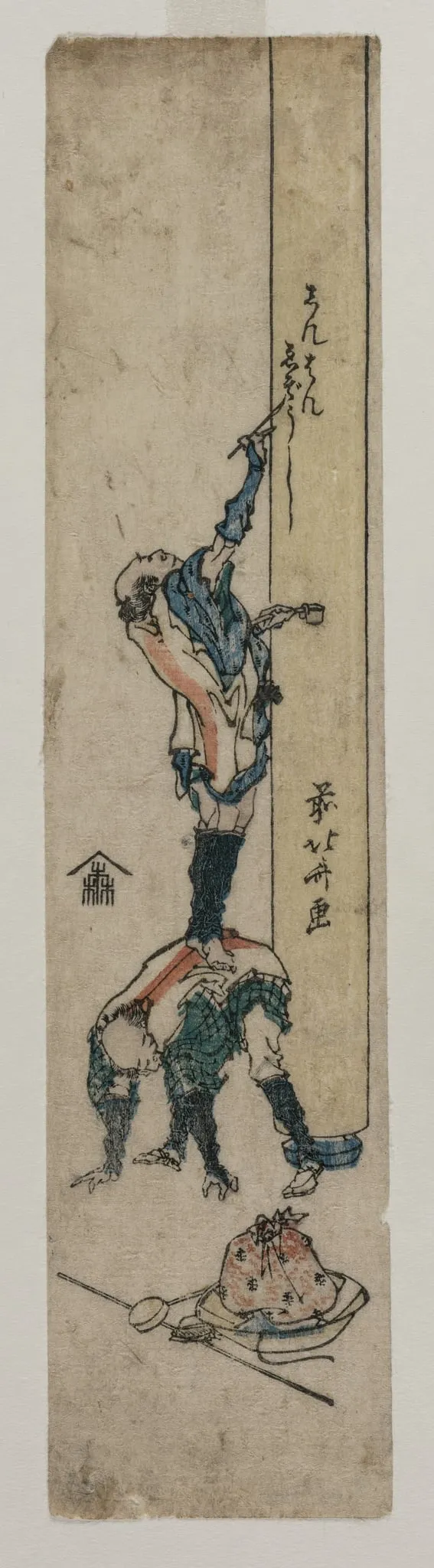
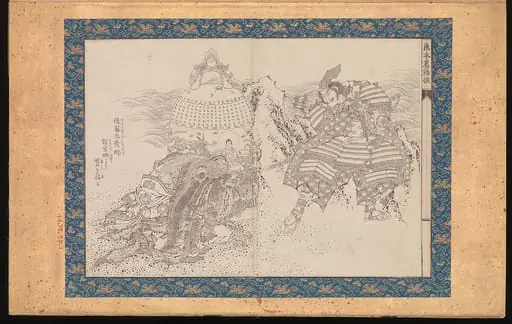
Traveler Inscribing a Temple Pillar is a print by the Romanticist artist Katsushika Hokusai. It dates from 1834 and is held in the collection of the Cleveland Museum of Art.
About this work
Overview
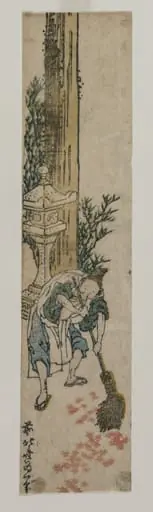
Created around 1834 by Katsushika Hokusai, this print depicts a traveler performing an unusual act of inscription upon a temple pillar.
Created around 1834 by Katsushika Hokusai, this print depicts a traveler performing an unusual act of inscription upon a temple pillar. The work is part of a series exploring human interaction with sacred spaces. It resides in the collection of The Cleveland Museum of Art, where it is recognized for its distinctive composition and subtle humor. The image is rendered in ink and color on paper, characteristic of Hokusai’s later ukiyo-e style.
Subject & Meaning
The central figure, inverted and balancing on his head, writes on a vertical stone pillar, suggesting a playful challenge to conventional devotion. His posture may symbolize the absurdity or humility of human attempts to leave a mark on enduring monuments. A faint figure at the base hints at an observer, perhaps a witness to this eccentric ritual. The scene invites reflection on the tension between transience and permanence in cultural memory.
Technique & Style
Hokusai employs bold, clean outlines and flat areas of color to define form, typical of his mature ukiyo-e technique. The traveler’s blue robe and white undergarment contrast sharply against the pale background, drawing focus to the figure’s improbable stance. The pillar’s verticality reinforces the composition’s tension, while minimal detail in the background enhances the surreal focus on the act of inscription. Ink and pigment on paper allow for precise, expressive lines.
History & Provenance
The print was produced during Hokusai’s later years, a period marked by experimentation with unconventional subjects. It likely originated as part of a printed series, though the full context of its original publication remains unclear. Acquired by The Cleveland Museum of Art in the 20th century, it has since been studied as an example of Hokusai’s wit and technical mastery beyond his more famous landscapes.
Context
In early 19th-century Japan, temple pillars often bore inscriptions by pilgrims seeking spiritual merit. Hokusai’s depiction subverts this tradition by portraying an acrobatic, almost clownish figure performing the act. This reflects a broader trend in his late work: using humor and physical absurdity to question social norms. The image aligns with popular prints of the time that blended folklore, satire, and everyday observation.
Legacy
Though not among Hokusai’s most widely reproduced works, this print illustrates his enduring interest in human eccentricity and the boundaries of artistic representation. It contributes to scholarly understanding of how ukiyo-e artists engaged with themes of ritual, identity, and performance. Its presence in a major Western collection underscores its role in shaping international appreciation for Japanese printmaking’s narrative depth.
Artist & collection

Artist
Katsushika Hokusai spent his life in Edo, now Tokyo, where he drew and carved prints for a living.