Artwork
South Wind, Clear Sky, from Thirty-Six Views of Mount Fuji
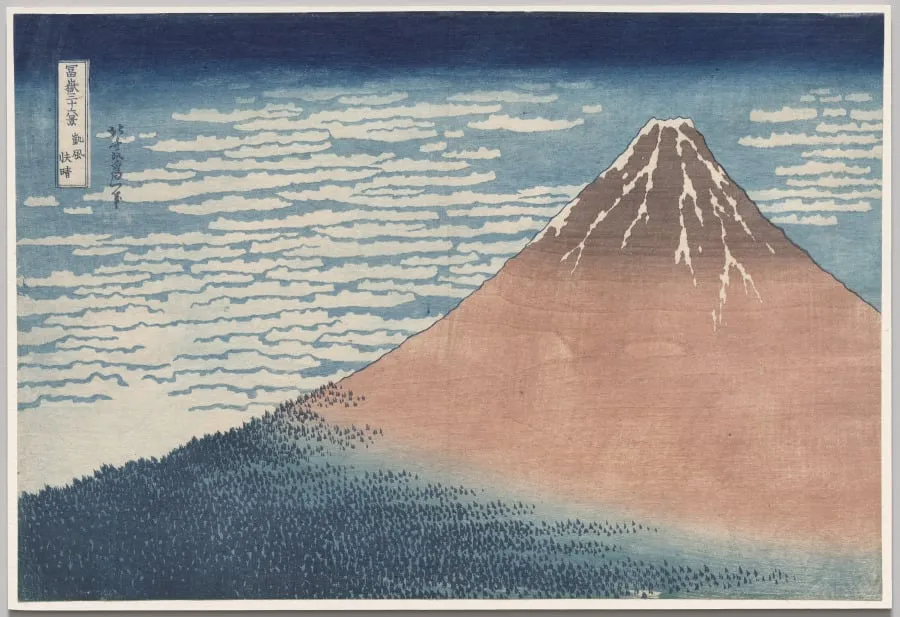
South Wind, Clear Sky, from Thirty-Six Views of Mount Fuji is a print by the Romanticist artist Katsushika Hokusai. It dates from 1834 and is held in the collection of the Cleveland Museum of Art.
About this work
The red tint comes from morning light in early autumn—something travelers at the time would recognize from guidebooks.
You see Mount Fuji rising alone, its slopes glowing red under a pale blue sky. Thin clouds streak the top like brushstrokes.
This print is part of a series showing the mountain from different angles and seasons. The red tint comes from morning light in early autumn—something travelers at the time would recognize from guidebooks.
To see how other artists painted Japan’s landscapes, look up the subject *japan, edo period (1615–1868)*.
Overview
South Wind, Clear Sky, from Thirty-Six Views of Mount Fuji, is a woodblock print by Hokusai, created between 1829 and 1833. It depicts Mount Fuji in a distinctive reddish hue, set against a pale blue sky with streaked clouds.
Subject & Meaning
The print captures Mount Fuji during the transitional season between late summer and early autumn, when the mountain naturally takes on a reddish cast due to the morning light of the season, a phenomenon familiar to travelers through contemporary guidebooks.
Technique & Style
Characterized by Hokusai's distinctive woodblock print technique, the piece features bold, simplified forms and a limited color palette, emphasizing the contrast between the reddish mountain slopes and the serene blue sky with expressive, brushstroke-like cloud streaks.
History & Provenance
Part of Hokusai's seminal Thirty-Six Views of Mount Fuji series, this print was designed to appeal to the growing interest in Japan's iconic landscapes among both domestic travelers and the broader population, reflecting the cultural significance of Mt. Fuji.
Context
Created during the Edo period (1615–1868), the print reflects the era's fascination with Mt. Fuji, often depicted in travel literature and maps. It aligns with the period's ukiyo-e woodblock print tradition, which frequently captured landscapes and everyday life.
Legacy
This print, also known as 'Red Fuji,' contributes to Hokusai's influence on Western artists, particularly in the development of Impressionism and beyond, while remaining an iconic representation of Japanese cultural heritage.
Artist & collection

Artist
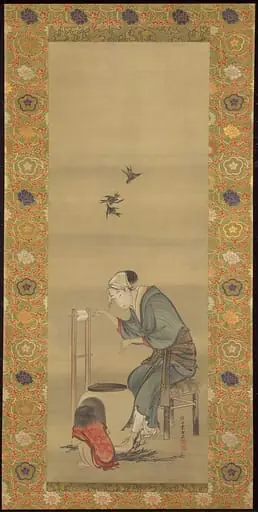
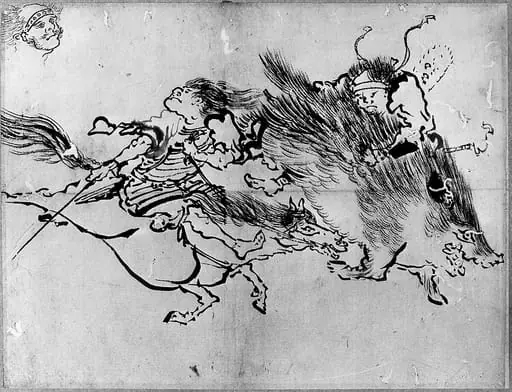
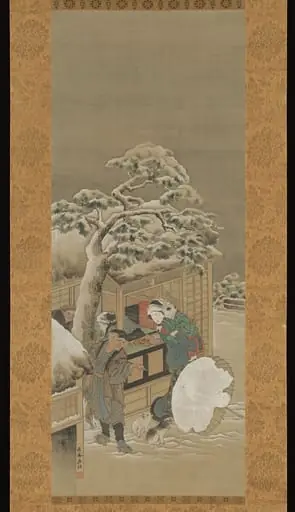
Katsushika Hokusai spent his life in Edo, now Tokyo, where he drew and carved prints for a living.

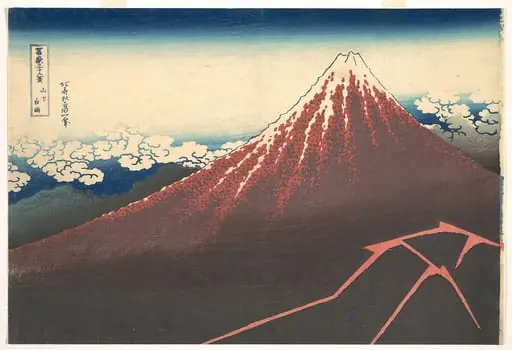 冨嶽三十六景 山下白雨|Storm below Mount Fuji (Sanka no haku u), from the series Thirty-six Views of Mount Fuji (Fugaku sanjūrokkei)
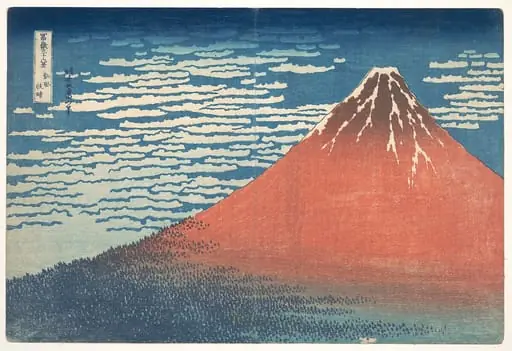 冨嶽三十六景 凱風快晴|South Wind, Clear Sky (Gaifū kaisei), also known as Red Fuji, from the series Thirty-six Views of Mount Fuji (Fugaku sanjūrokkei)
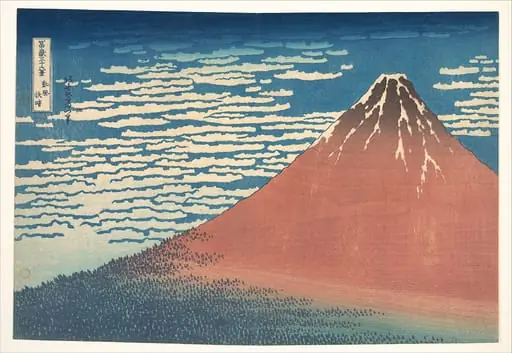 「富嶽三十六景 凱風快晴」|South Wind, Clear Sky (Gaifū kaisei), also known as Red Fuji, from the series Thirty-six Views of Mount Fuji (Fugaku sanjūrokkei)
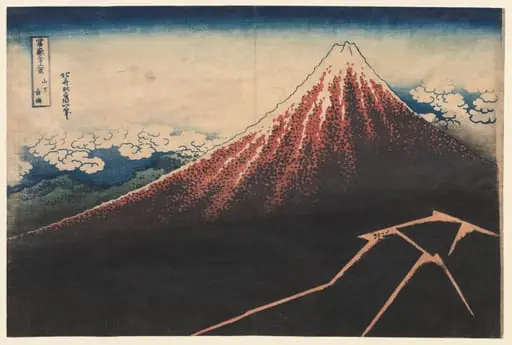 Rain Below the Mountain (from the series Thirty-six Views of Mt. Fuji)
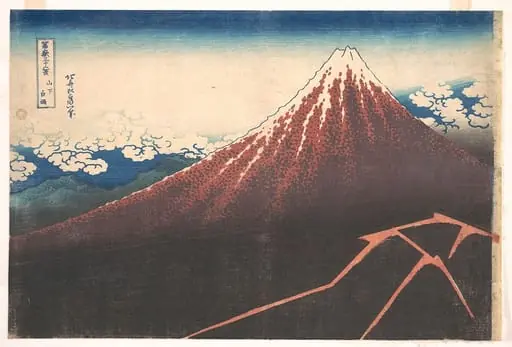 冨嶽三十六景 山下白雨|Storm below Mount Fuji (Sanka no haku u), from the series Thirty-six Views of Mount Fuji (Fugaku sanjūrokkei)
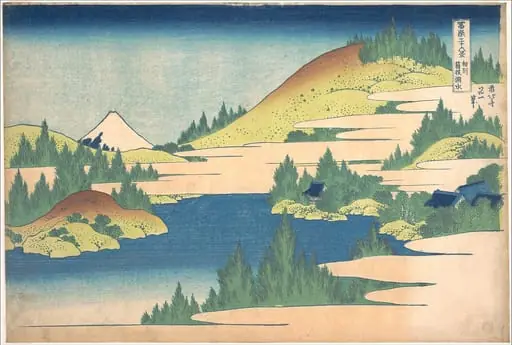 冨嶽三十六景 相州箱根湖水|The Lake at Hakone in Sagami Province (Sōshū Hakone kosui), from the series Thirty-six Views of Mount Fuji (Fugaku sanjūrokkei)
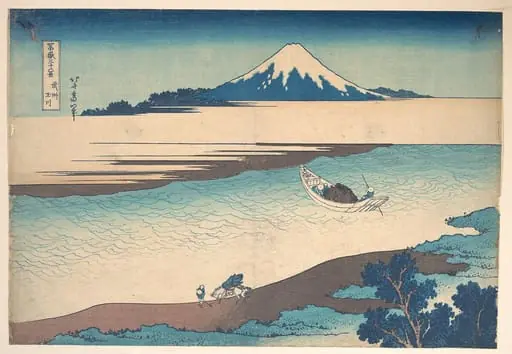 冨嶽三十六景 武州玉川|Fuji—The Tama River, Musashi Province, from the series Thirty-six Views of Mount Fuji (Fugaku sanjūrokkei)
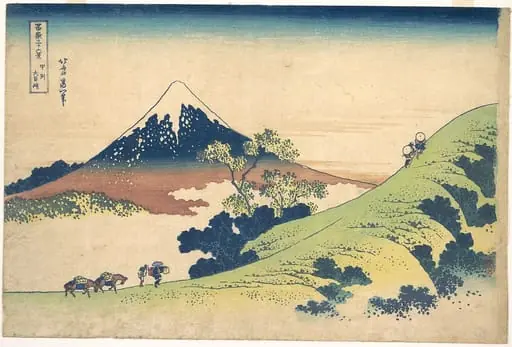 冨嶽三十六景 甲州犬目峠|The Inume Pass in Kai Province (Kōshū Inume tōge), from the series Thirty-six Views of Mount Fuji (Fugaku sanjūrokkei)
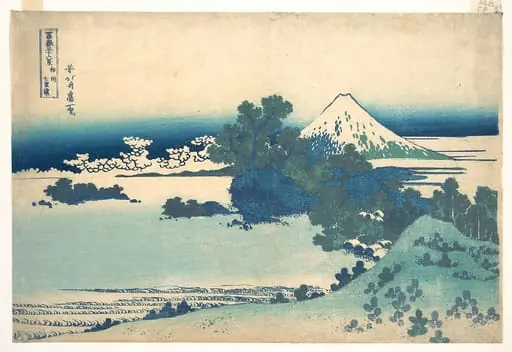 冨嶽三十六景 相州七里浜|Shichirigahama in Sagami Province (Sōshū Shichirigahama), from the series Thirty-six Views of Mount Fuji (Fugaku sanjūrokkei)
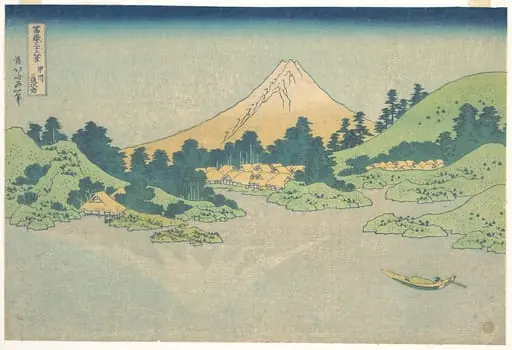 冨嶽三十六景 甲州三坂水面|Reflection in Lake at Misaka in Kai Province (Kōshū Misaka suimen), from the series Thirty-six Views of Mount Fuji (Fugaku sanjūrokkei)
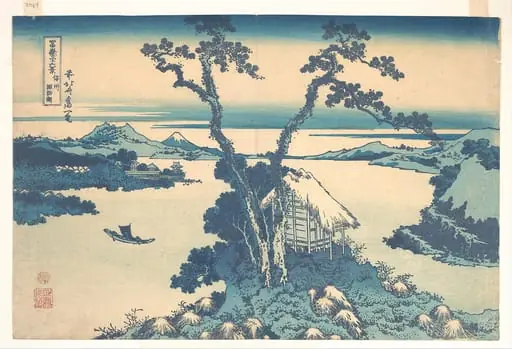 冨嶽三十六景 信州諏訪湖|Lake Suwa in Shinano Province (Shinshū Suwako), from the series Thirty-six Views of Mount Fuji (Fugaku sanjūrokkei)