Artwork
冨嶽三十六景 山下白雨|Storm below Mount Fuji (Sanka no haku u), from the series Thirty-six Views of Mount Fuji (Fugaku sanjūrokkei)
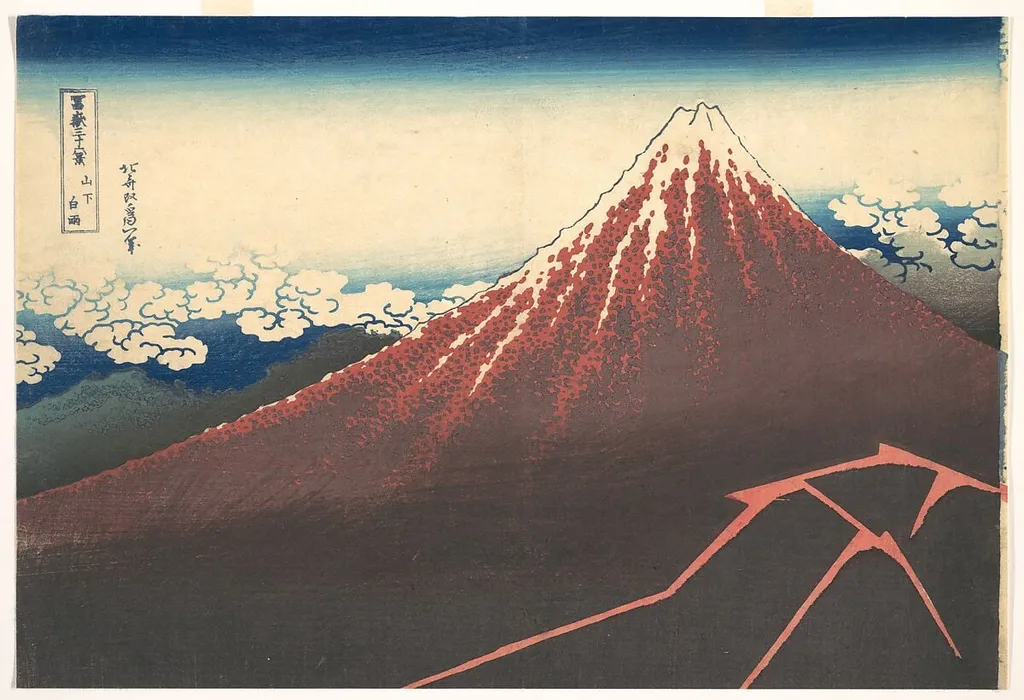
冨嶽三十六景 山下白雨|Storm below Mount Fuji (Sanka no haku u), from the series Thirty-six Views of Mount Fuji (Fugaku sanjūrokkei) is an ink print by the Japonisme artist Katsushika Hokusai. It dates from 1831 and is held in the collection of the Metropolitan Museum of Art.
About this work
Overview
Created around 1831, this woodblock print is part of Katsushika Hokusai’s series Thirty-six Views of Mount Fuji. It depicts a storm approaching the mountain from the lower slopes, rendered in ink and color on paper. The print is held in the collection of The Metropolitan Museum of Art and exemplifies the ukiyo-e tradition of landscape printing during Japan’s Edo period.
Subject & Meaning
The scene captures Mount Fuji as a silent, enduring presence amid a brewing storm. Dark clouds gather at its base, while snow still crowns its summit, contrasting the violence of the weather below with the mountain’s timeless stillness. The empty path and sparse trees suggest human insignificance before nature’s forces, a recurring theme in Hokusai’s work.
Technique & Style
Hokusai employed precise woodblock carving to achieve sharp outlines and layered color gradients. The mountain’s slopes use subtle transitions between red, brown, and white, while the sky and clouds are built with flat, bold planes. The texture of the storm is implied through rhythmic lines and minimal detail, emphasizing atmosphere over realism.
History & Provenance
Produced during the peak of Hokusai’s career, this print was part of a commercially successful series that circulated widely in Edo. The Metropolitan Museum of Art acquired its copy through established collecting channels in the early 20th century. Original impressions from this series are rare, and this example retains much of its original pigment and paper integrity.
Context
The Thirty-six Views of Mount Fuji emerged as Japan opened to greater domestic tourism and print consumption. Hokusai’s focus on everyday landscapes, rather than courtly or theatrical subjects, reflected shifting cultural interests. The series also benefited from newly available Prussian blue pigment, which allowed for dramatic skies and atmospheric depth.
Legacy
This print, like others in the series, influenced Western artists in the late 19th century, particularly in its flattened perspective and emphasis on natural forms. Its compositional clarity and emotional restraint helped redefine landscape representation beyond European conventions, leaving a lasting imprint on modern art movements.
Artist & collection

Artist
Katsushika Hokusai spent his life in Edo, now Tokyo, where he drew and carved prints for a living.

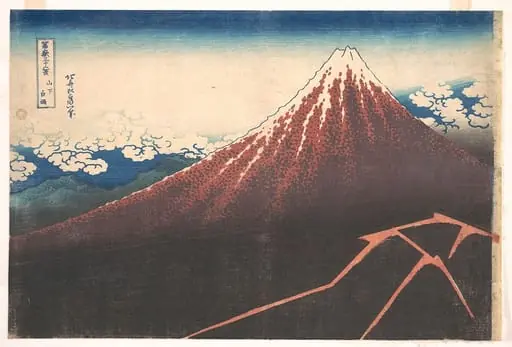 冨嶽三十六景 山下白雨|Storm below Mount Fuji (Sanka no haku u), from the series Thirty-six Views of Mount Fuji (Fugaku sanjūrokkei)
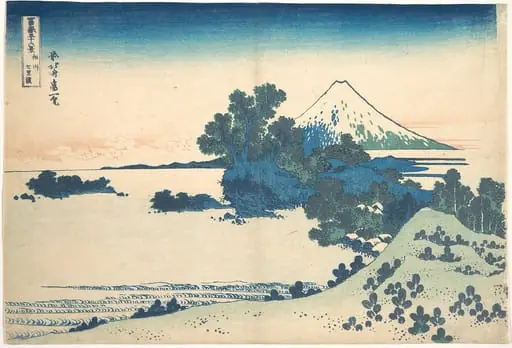 冨嶽三十六景 相州七里浜|Shichirigahama in Sagami Province (Sōshū Shichirigahama), from the series Thirty-six Views of Mount Fuji (Fugaku sanjūrokkei)
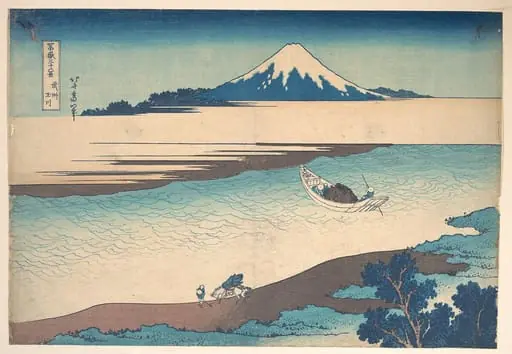 冨嶽三十六景 武州玉川|Fuji—The Tama River, Musashi Province, from the series Thirty-six Views of Mount Fuji (Fugaku sanjūrokkei)
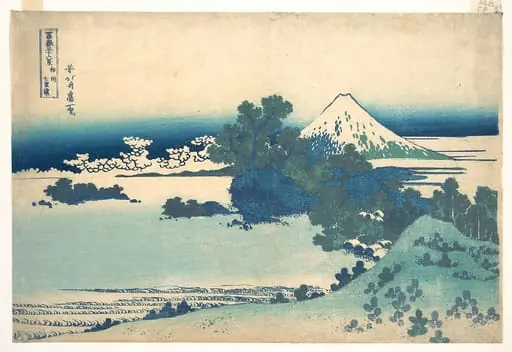 冨嶽三十六景 相州七里浜|Shichirigahama in Sagami Province (Sōshū Shichirigahama), from the series Thirty-six Views of Mount Fuji (Fugaku sanjūrokkei)
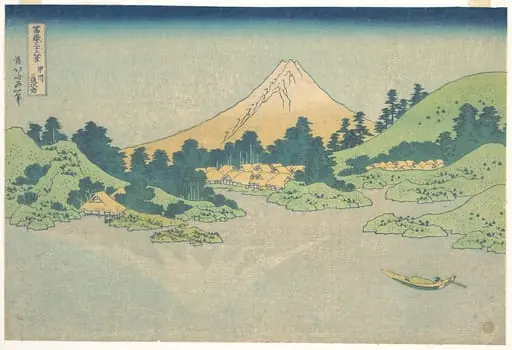 冨嶽三十六景 甲州三坂水面|Reflection in Lake at Misaka in Kai Province (Kōshū Misaka suimen), from the series Thirty-six Views of Mount Fuji (Fugaku sanjūrokkei)
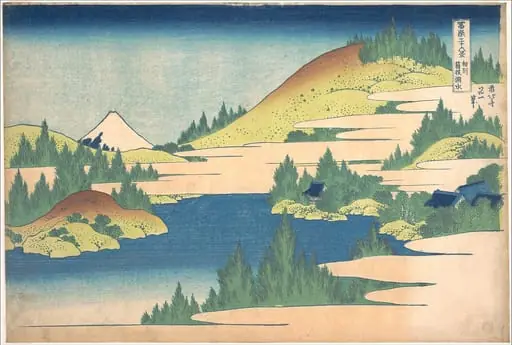 冨嶽三十六景 相州箱根湖水|The Lake at Hakone in Sagami Province (Sōshū Hakone kosui), from the series Thirty-six Views of Mount Fuji (Fugaku sanjūrokkei)
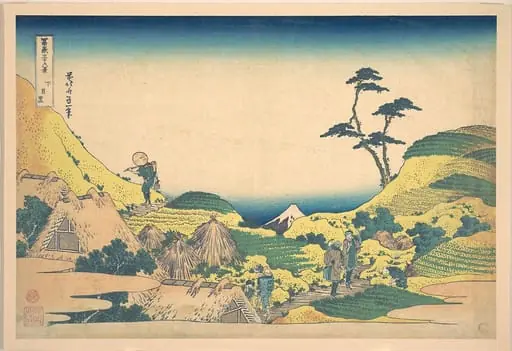 冨嶽三十六景 下目黒|Lower Meguro (Shimo Meguro), from the series Thirty-six Views of Mount Fuji (Fugaku sanjūrokkei)
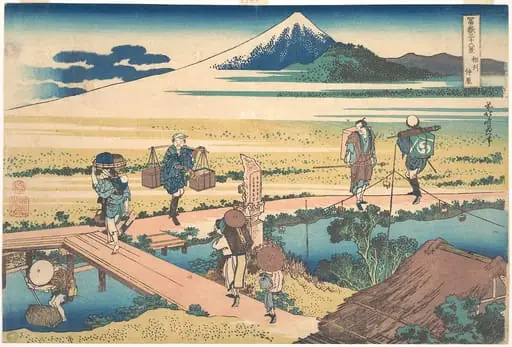 冨嶽三十六景 相州仲原|Nakahara in Sagami Province (Sōshū Nakahara), from the series Thirty-six Views of Mount Fuji (Fugaku sanjūrokkei)
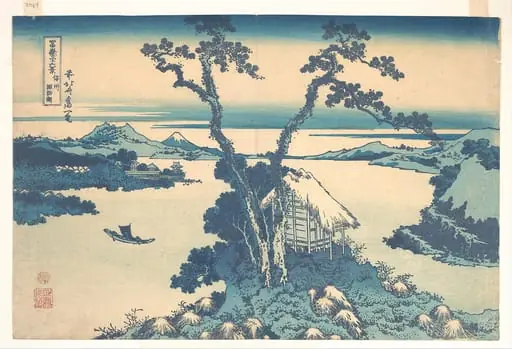 冨嶽三十六景 信州諏訪湖|Lake Suwa in Shinano Province (Shinshū Suwako), from the series Thirty-six Views of Mount Fuji (Fugaku sanjūrokkei)