Artwork
冨嶽三十六景 凱風快晴|South Wind, Clear Sky (Gaifū kaisei), also known as Red Fuji, from the series Thirty-six Views of Mount Fuji (Fugaku sanjūrokkei)
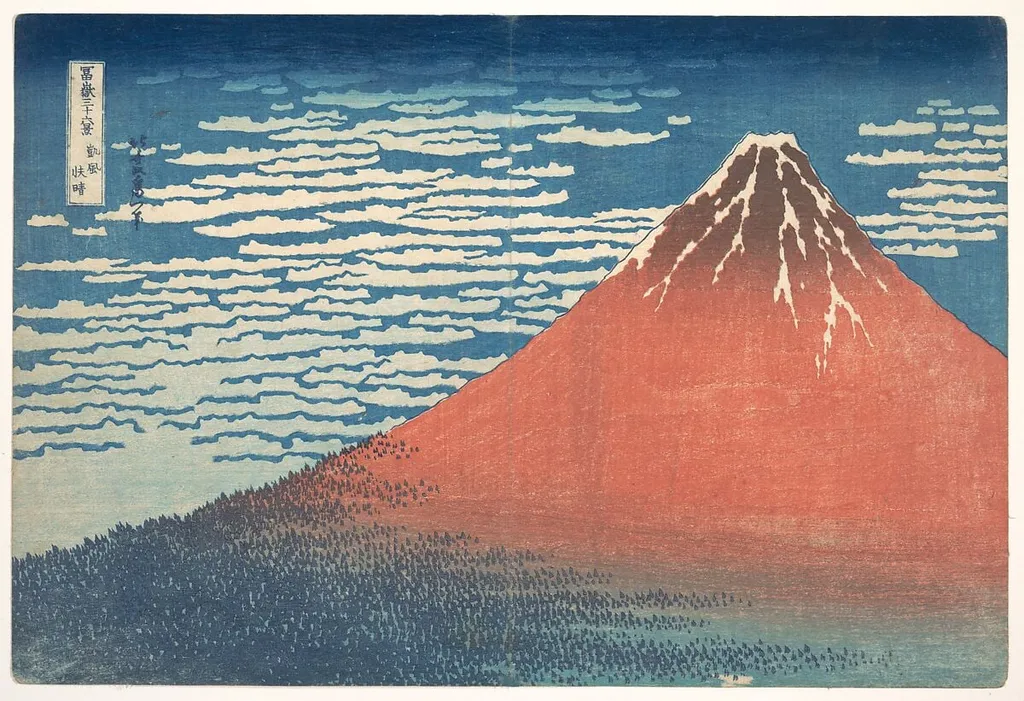
冨嶽三十六景 凱風快晴|South Wind, Clear Sky (Gaifū kaisei), also known as Red Fuji, from the series Thirty-six Views of Mount Fuji (Fugaku sanjūrokkei) is an ink print by the Japonisme artist Katsushika Hokusai. It dates from 1831 and is held in the collection of the Metropolitan Museum of Art.
About this work
Overview
Created around 1831, this woodblock print is part of Katsushika Hokusai’s series Thirty-six Views of Mount Fuji. It depicts Mount Fuji under a clear sky, rendered in bold, flat areas of color with minimal detail. The composition emphasizes the mountain’s imposing form against a simplified landscape, reflecting the artist’s interest in natural grandeur and everyday Japanese scenery.
Subject & Meaning
The print captures Mount Fuji in a rare moment of stillness, its snow-capped peak glowing red under the morning sun. This phenomenon, known locally as 'Red Fuji,' occurs when the mountain is illuminated by low-angle sunlight. The absence of human figures and the quiet landscape suggest reverence for nature, aligning with cultural attitudes toward Fuji as a sacred, enduring presence.
Technique & Style
The red of the mountain was printed with a rare and expensive pigment, Prussian blue mixed with red lead, creating its distinctive hue.
Hokusai employed traditional ukiyo-e woodblock methods, using precise carving and layered printing to achieve vivid contrasts. The red of the mountain was printed with a rare and expensive pigment, Prussian blue mixed with red lead, creating its distinctive hue. Subtle cross-hatching defines the texture of trees at the base, while the sky’s wavy clouds are rendered with soft, flowing lines that enhance the sense of calm.
History & Provenance
The print was produced during the peak of Hokusai’s career, as part of a commercially successful series that circulated widely in Edo-period Japan. The Metropolitan Museum of Art acquired its copy in the 20th century, among many other impressions held in global collections. Original printings are rare due to the fragile nature of paper and the mass production process, making surviving examples historically significant.
Context
The Thirty-six Views series emerged during a time of growing domestic tourism and rising interest in regional landmarks. Mount Fuji, a symbol of national identity, was increasingly depicted in popular art. Hokusai’s approach—focusing on atmospheric conditions and seasonal changes—broke from static, idealized portrayals, offering instead dynamic, observational perspectives rooted in real experience.
Legacy
This print influenced Western artists in the late 19th century, contributing to the Japonisme movement. Its flattened perspective, bold color blocks, and emphasis on natural forms resonated with Impressionists and Post-Impressionists. Today, it remains one of the most recognized Japanese prints globally, valued for its quiet power and technical innovation rather than its decorative appeal.
Artist & collection

Artist
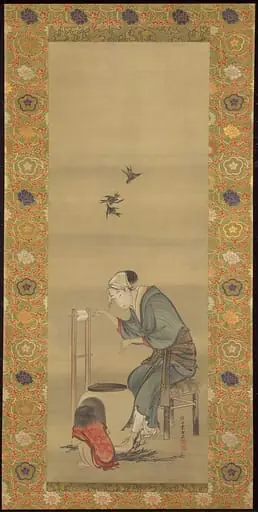
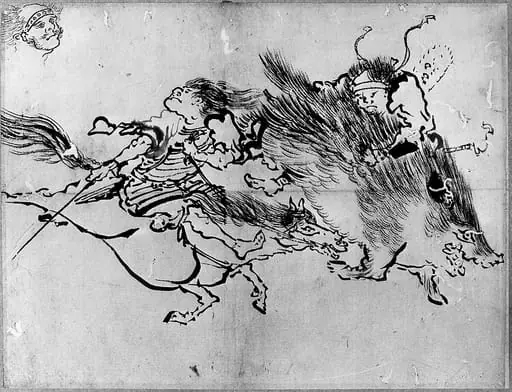
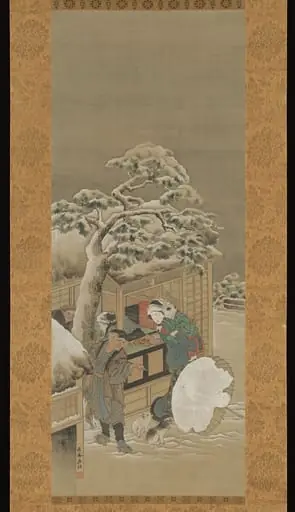
Katsushika Hokusai spent his life in Edo, now Tokyo, where he drew and carved prints for a living.

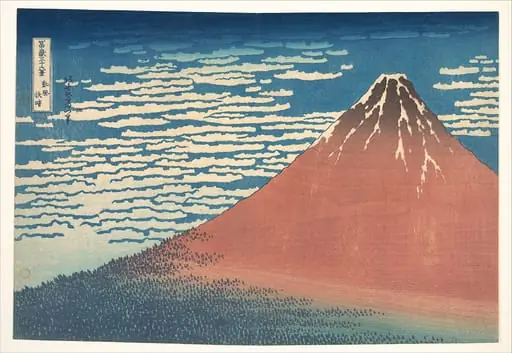 「富嶽三十六景 凱風快晴」|South Wind, Clear Sky (Gaifū kaisei), also known as Red Fuji, from the series Thirty-six Views of Mount Fuji (Fugaku sanjūrokkei)
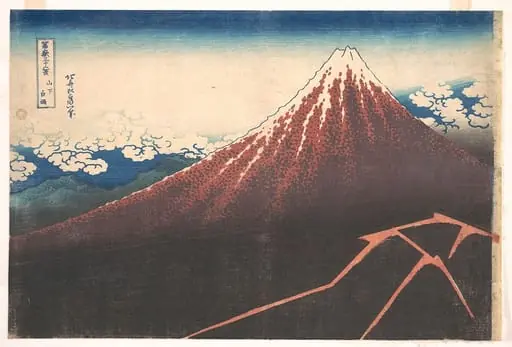 冨嶽三十六景 山下白雨|Storm below Mount Fuji (Sanka no haku u), from the series Thirty-six Views of Mount Fuji (Fugaku sanjūrokkei)
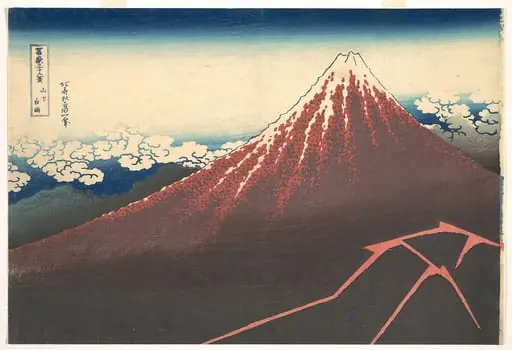 冨嶽三十六景 山下白雨|Storm below Mount Fuji (Sanka no haku u), from the series Thirty-six Views of Mount Fuji (Fugaku sanjūrokkei)
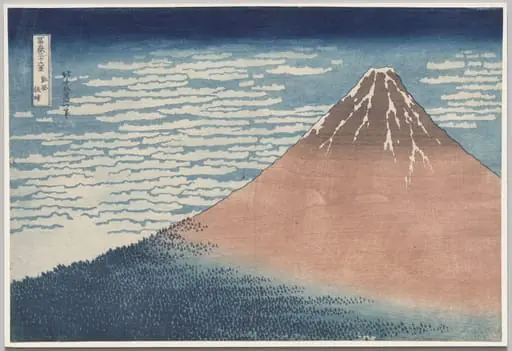 South Wind, Clear Sky, from Thirty-Six Views of Mount Fuji
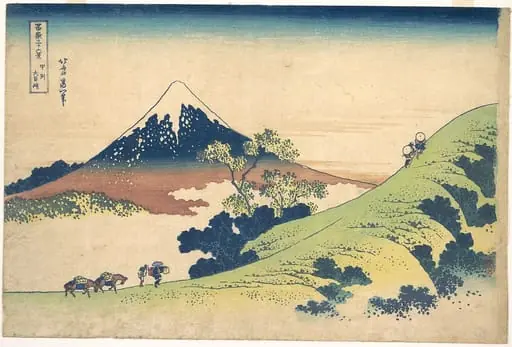 冨嶽三十六景 甲州犬目峠|The Inume Pass in Kai Province (Kōshū Inume tōge), from the series Thirty-six Views of Mount Fuji (Fugaku sanjūrokkei)
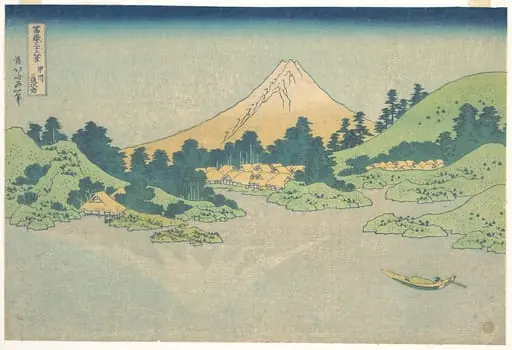 冨嶽三十六景 甲州三坂水面|Reflection in Lake at Misaka in Kai Province (Kōshū Misaka suimen), from the series Thirty-six Views of Mount Fuji (Fugaku sanjūrokkei)
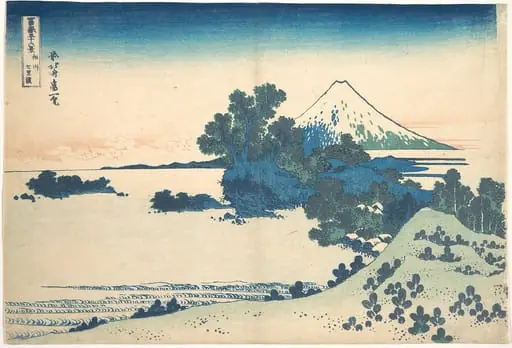 冨嶽三十六景 相州七里浜|Shichirigahama in Sagami Province (Sōshū Shichirigahama), from the series Thirty-six Views of Mount Fuji (Fugaku sanjūrokkei)
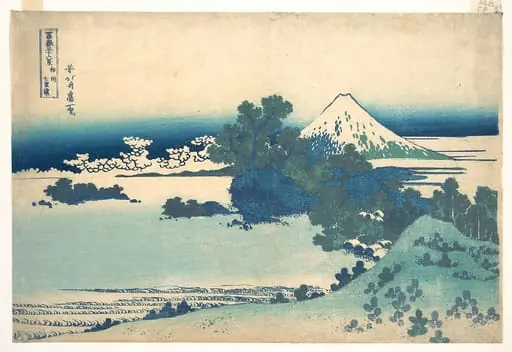 冨嶽三十六景 相州七里浜|Shichirigahama in Sagami Province (Sōshū Shichirigahama), from the series Thirty-six Views of Mount Fuji (Fugaku sanjūrokkei)
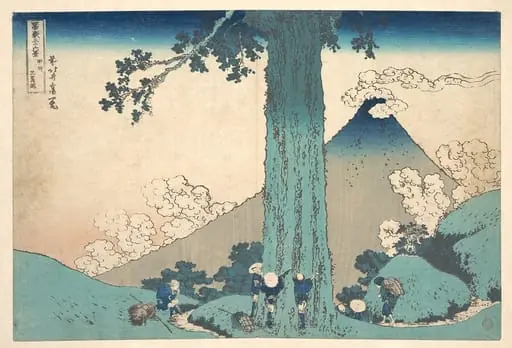 冨嶽三十六景 甲州三島越|Mishima Pass in Kai Province (Kōshū Mishima goe), from the series Thirty-six Views of Mount Fuji (Fugaku sanjūrokkei)
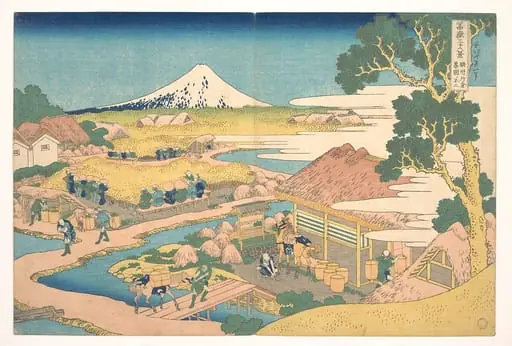 冨嶽三十六景 駿州片倉茶園の不二|Fuji from the Katakura Tea Fields in Suruga (Sunshū Katakura chaen no Fuji), from the series Thirty-six Views of Mount Fuji (Fugaku sanjūrokkei)
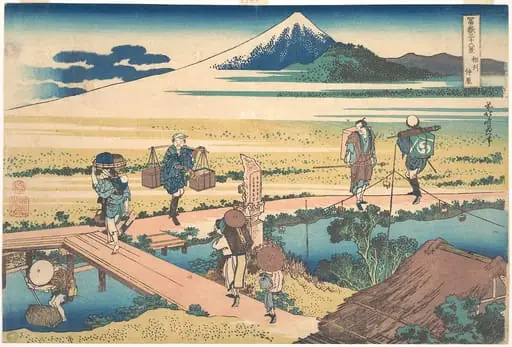 冨嶽三十六景 相州仲原|Nakahara in Sagami Province (Sōshū Nakahara), from the series Thirty-six Views of Mount Fuji (Fugaku sanjūrokkei)
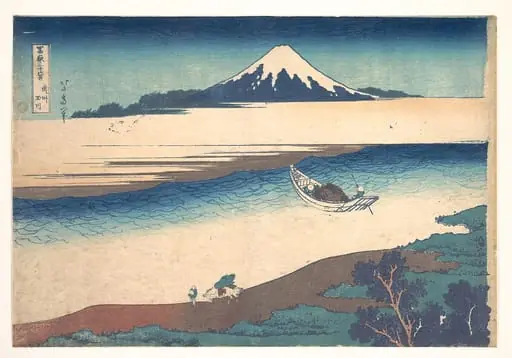 冨嶽三十六景 武州玉川|Tama River in Musashi Province (Bushū Tamagawa), from the series Thirty-six Views of Mount Fuji (Fugaku sanjūrokkei)