Artwork
冨嶽三十六景 相州七里浜|Shichirigahama in Sagami Province (Sōshū Shichirigahama), from the series Thirty-six Views of Mount Fuji (Fugaku sanjūrokkei)
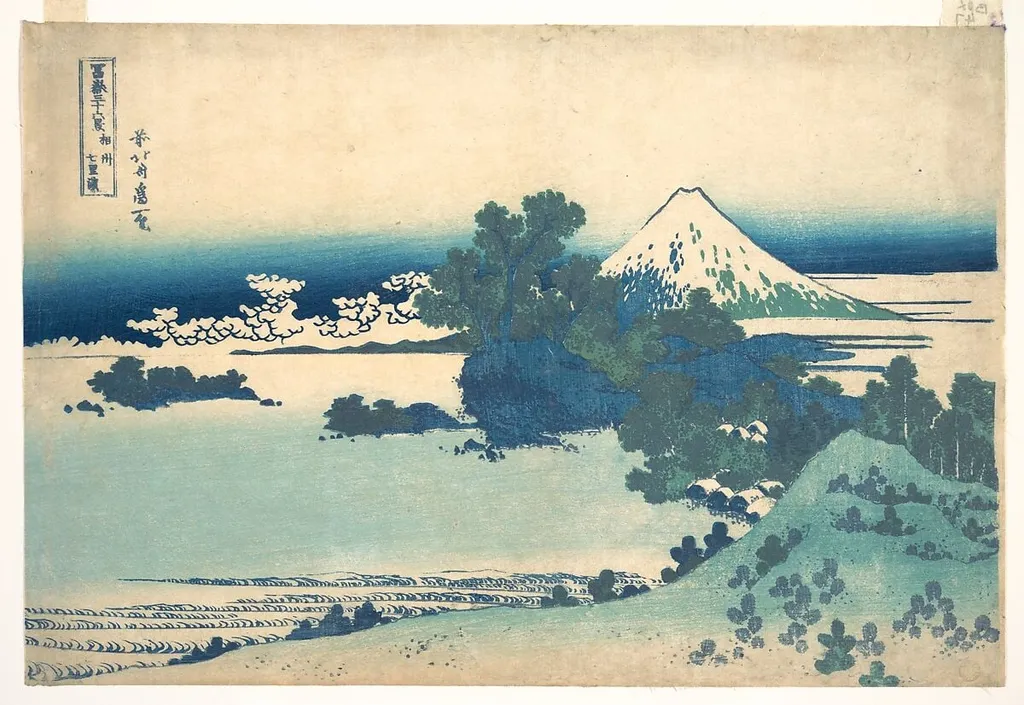
冨嶽三十六景 相州七里浜|Shichirigahama in Sagami Province (Sōshū Shichirigahama), from the series Thirty-six Views of Mount Fuji (Fugaku sanjūrokkei) is an ink print by the Japonisme artist Katsushika Hokusai. It dates from 1831 and is held in the collection of the Metropolitan Museum of Art.
About this work
Overview
Printed in ink and color on paper, it reflects the ukiyo-e tradition of capturing everyday landscapes through mass-produced imagery.
Created around 1831, this woodblock print is part of Katsushika Hokusai’s series Thirty-six Views of Mount Fuji. It depicts a coastal scene in Sagami Province, now part of modern Kanagawa Prefecture. The composition balances natural elements—sea, shore, and distant peak—with minimal human presence. Printed in ink and color on paper, it reflects the ukiyo-e tradition of capturing everyday landscapes through mass-produced imagery.
Subject & Meaning
The scene centers on a small island with a solitary pine, its roots clinging to rocky soil as waves gently break nearby. A narrow path winds toward the horizon, guiding the eye to Mount Fuji, faintly visible under a pale sky. The mountain, though distant, dominates the composition as a quiet, enduring presence. The image evokes stillness and solitude, suggesting harmony between nature and the human observer.
Technique & Style
Hokusai employed flat areas of color and clean, controlled lines typical of ukiyo-e printing. Deep blues and greens define the sea and foliage, while the sky is rendered in muted tones to enhance atmospheric depth. Shadows are suggested through subtle cross-hatching, not heavy modeling. The print’s simplicity and deliberate lack of detail create a meditative quality, emphasizing form over realism.
History & Provenance
The print was produced during the peak of Hokusai’s career, when the Thirty-six Views series gained widespread popularity. It entered The Metropolitan Museum of Art’s collection through documented acquisitions in the early 20th century. As part of a commercially printed series, original impressions were widely distributed, though surviving examples remain rare due to the fragility of paper and pigment.
Context
This work emerged during Japan’s Edo period, when travel became more accessible and landscape imagery appealed to urban audiences. Mount Fuji, a sacred and symbolic peak, was a recurring subject in art and literature. Hokusai’s series responded to this cultural fascination, blending local geography with spiritual resonance, and helped redefine the role of nature in Japanese visual culture.
Legacy
Hokusai’s approach to landscape, with its flattened perspective and emphasis on natural rhythm, influenced later Western artists, including Impressionists and Art Nouveau designers. The print’s quiet composition and restrained palette continue to be studied for their emotional clarity. As one of the most reproduced images from the series, it remains a touchstone for understanding the aesthetic values of 19th-century Japanese printmaking.
Artist & collection

Artist
Katsushika Hokusai spent his life in Edo, now Tokyo, where he drew and carved prints for a living.

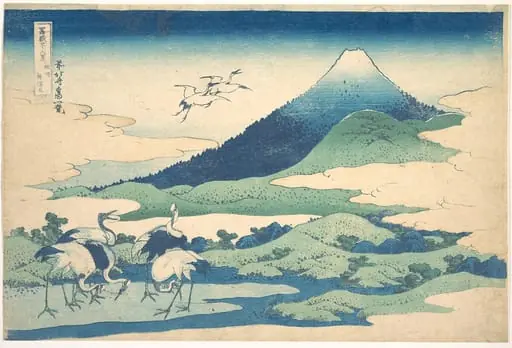 冨嶽三十六景 相州梅沢左|Umezawa Manor in Sagami Province (Sōshū Umezawa zai), from the series Thirty-six Views of Mount Fuji (Fugaku sanjūrokkei)
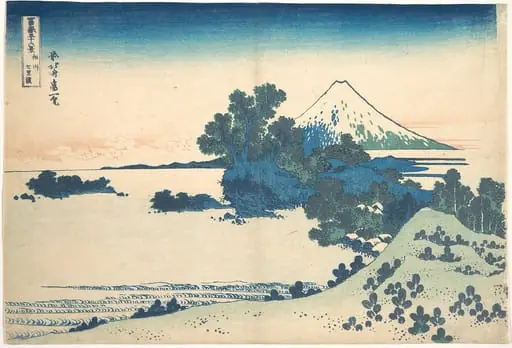 冨嶽三十六景 相州七里浜|Shichirigahama in Sagami Province (Sōshū Shichirigahama), from the series Thirty-six Views of Mount Fuji (Fugaku sanjūrokkei)
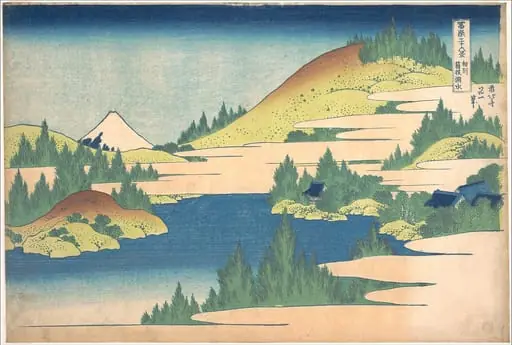 冨嶽三十六景 相州箱根湖水|The Lake at Hakone in Sagami Province (Sōshū Hakone kosui), from the series Thirty-six Views of Mount Fuji (Fugaku sanjūrokkei)
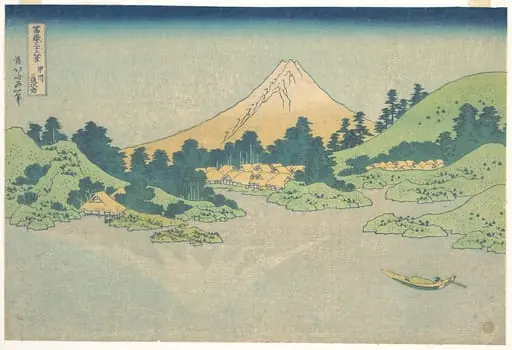 冨嶽三十六景 甲州三坂水面|Reflection in Lake at Misaka in Kai Province (Kōshū Misaka suimen), from the series Thirty-six Views of Mount Fuji (Fugaku sanjūrokkei)
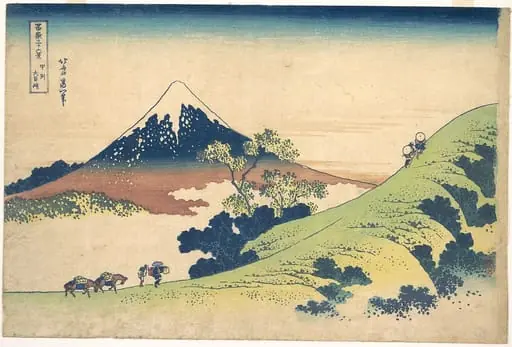 冨嶽三十六景 甲州犬目峠|The Inume Pass in Kai Province (Kōshū Inume tōge), from the series Thirty-six Views of Mount Fuji (Fugaku sanjūrokkei)
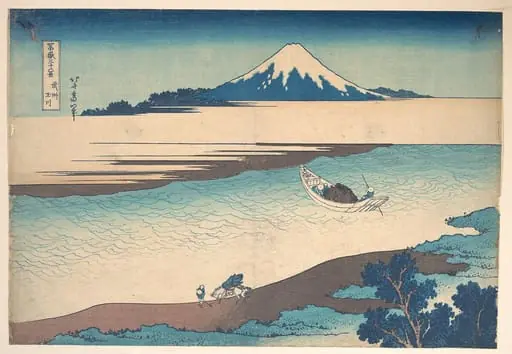 冨嶽三十六景 武州玉川|Fuji—The Tama River, Musashi Province, from the series Thirty-six Views of Mount Fuji (Fugaku sanjūrokkei)
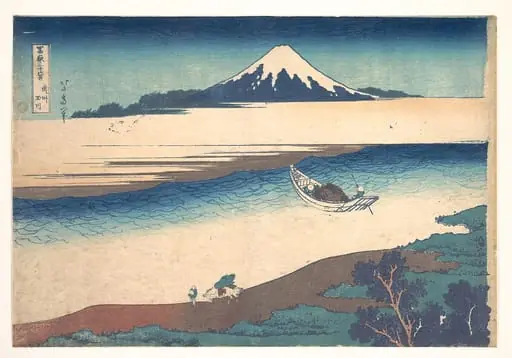 冨嶽三十六景 武州玉川|Tama River in Musashi Province (Bushū Tamagawa), from the series Thirty-six Views of Mount Fuji (Fugaku sanjūrokkei)
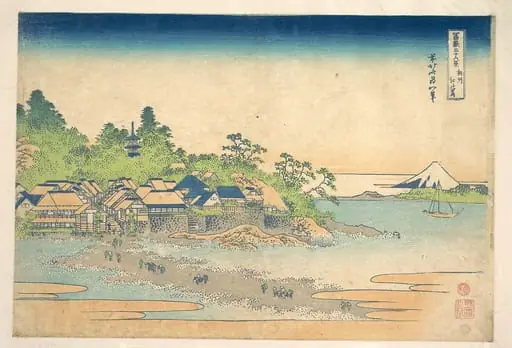 冨嶽三十六景 相州江の島|Enoshima in Sagami Province (Sōshū Enoshima), from the series Thirty-six Views of Mount Fuji (Fugaku sanjūrokkei)
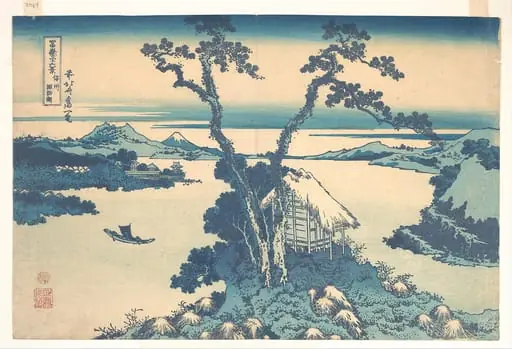 冨嶽三十六景 信州諏訪湖|Lake Suwa in Shinano Province (Shinshū Suwako), from the series Thirty-six Views of Mount Fuji (Fugaku sanjūrokkei)
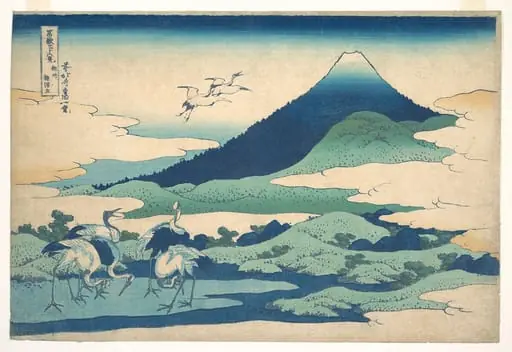 「冨嶽三十六景 相州梅沢左」|“Umezawa Manor in Sagami Province,” from the series Thirty-six Views of Mount Fuji (Fugaku sanjūrokkei, Sōshū Umezawa zai)
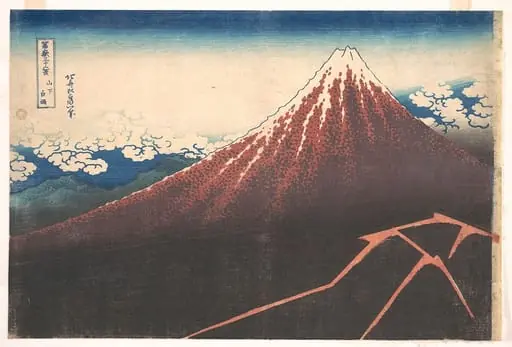 冨嶽三十六景 山下白雨|Storm below Mount Fuji (Sanka no haku u), from the series Thirty-six Views of Mount Fuji (Fugaku sanjūrokkei)
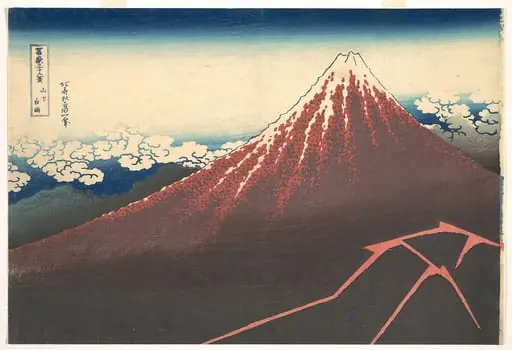 冨嶽三十六景 山下白雨|Storm below Mount Fuji (Sanka no haku u), from the series Thirty-six Views of Mount Fuji (Fugaku sanjūrokkei)