Artwork
冨嶽三十六景 登戸浦|Noboto Bay (Noboto no ura), from the series Thirty-six Views of Mount Fuji (Fugaku sanjūrokkei)
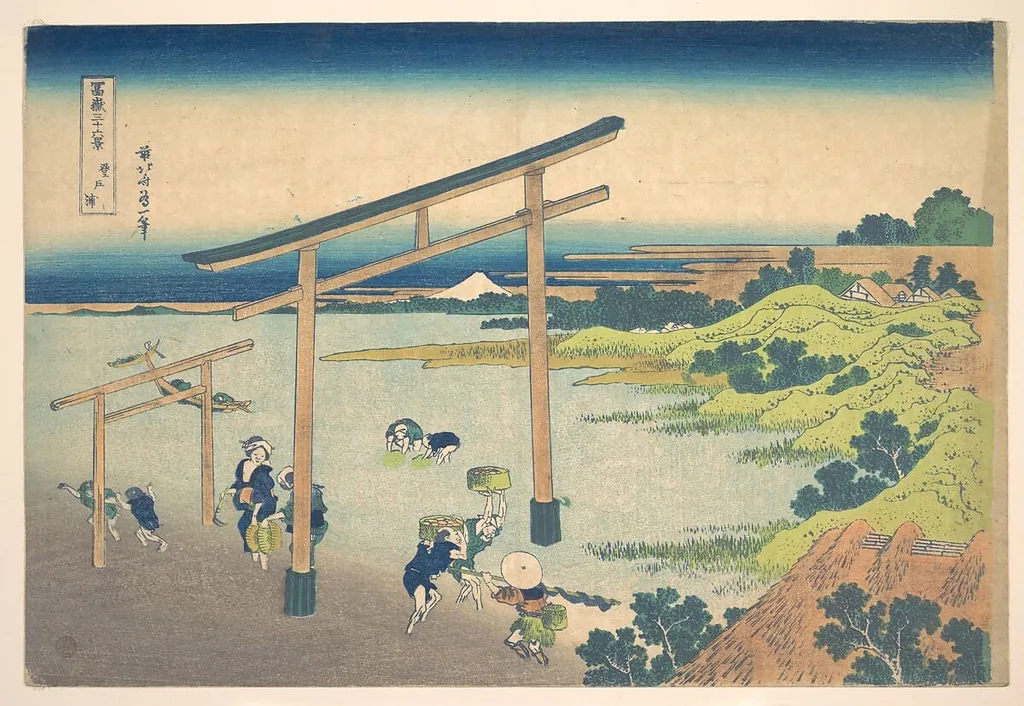
冨嶽三十六景 登戸浦|Noboto Bay (Noboto no ura), from the series Thirty-six Views of Mount Fuji (Fugaku sanjūrokkei) is an ink print by the Japonisme artist Katsushika Hokusai. It dates from 1831 and is held in the collection of the Metropolitan Museum of Art.
About this work
Overview
Noboto Bay (Noboto no ura) is a woodblock print from Katsushika Hokusai's series Thirty-six Views of Mount Fuji, dating to circa 1831. It is part of The Metropolitan Museum of Art's collection.
Subject & Meaning
The print captures a tranquil moment in Noboto Bay, with figures carrying goods along a waterside path flanked by two large torii gates, set against a distant, majestic mountain backdrop.
Technique & Style
Characterized by bold lines, vibrant colors, and intricate details, the work showcases Hokusai's mastery of composition and perspective, creating depth and guiding the viewer's eye through the scene.
History & Provenance
Created around 1831, the print is now held in the collection of The Metropolitan Museum of Art.
Context
While often associated with Japanese Ukiyo-e, the print's emphasis on natural beauty and emotional resonance also aligns with aspects of the broader Romanticism movement, though it remains distinctly Japanese in style.
Legacy
As part of Hokusai's renowned series, Noboto Bay contributes to the enduring influence of Japanese woodblock printing on global art, particularly in its depiction of Mount Fuji and everyday life.
Artist & collection

Artist
Katsushika Hokusai spent his life in Edo, now Tokyo, where he drew and carved prints for a living.

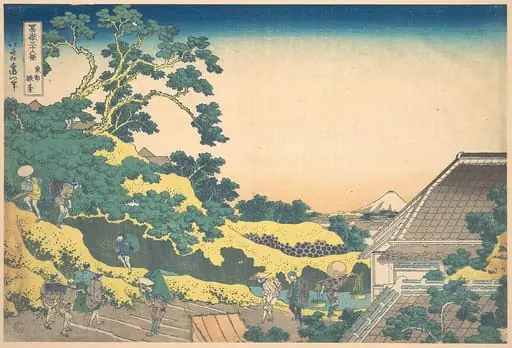 冨嶽三十六景 東都駿台|Surugadai in Edo (Tōto Sundai), from the series Thirty-six Views of Mount Fuji (Fugaku sanjūrokkei)
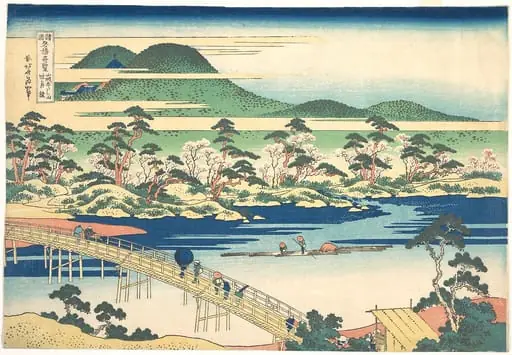 諸國名橋奇覧 山城あらし山吐月橋 |Togetsu Bridge at Arashiyama in Yamashiro, from the series Remarkable Views of Bridges in Various Provinces (Shokoku meikyō kiran)
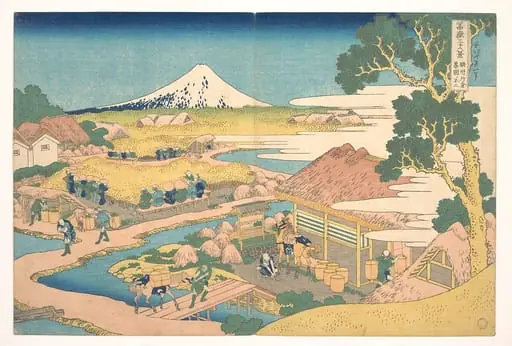 冨嶽三十六景 駿州片倉茶園の不二|Fuji from the Katakura Tea Fields in Suruga (Sunshū Katakura chaen no Fuji), from the series Thirty-six Views of Mount Fuji (Fugaku sanjūrokkei)
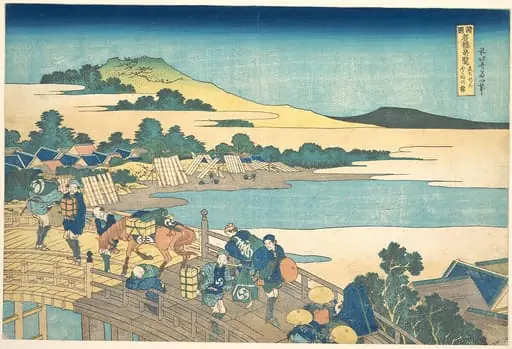 諸國名橋奇覧 ゑちぜんふくゐの橋|Fukui Bridge in Echizen Province (Echizen Fukui no hashi), from the series Remarkable Views of Bridges in Various Provinces (Shokoku meikyō kiran)
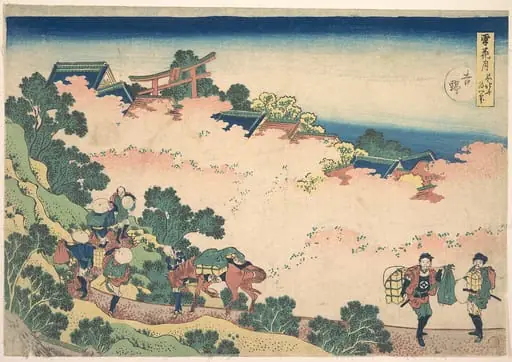 雪月花 吉野|Cherry Blossoms at Yoshino (Yoshino), from the series Snow, Moon, and Flowers (Setsugekka)
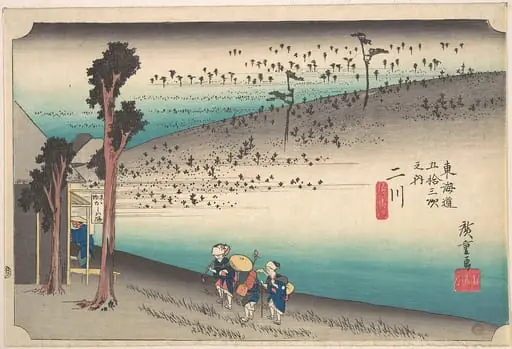 東海道五十三次之内 二川 猿ヶ馬場|Futagawa, Saru ga Baba
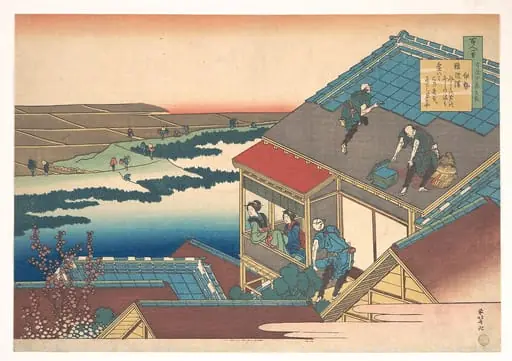 百人一首 うばがゑとき 伊勢|Poem by Ise, from the series One Hundred Poems Explained by the Nurse (Hyakunin isshu uba ga etoki)
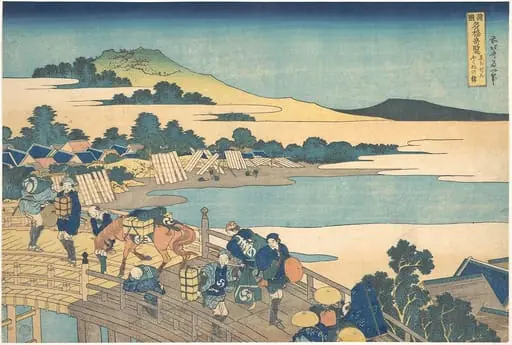 諸國名橋奇覧 ゑちぜんふくゐの橋|Fukui Bridge in Echizen Province (Echizen Fukui no hashi), from the series Remarkable Views of Bridges in Various Provinces (Shokoku meikyō kiran)