Artwork
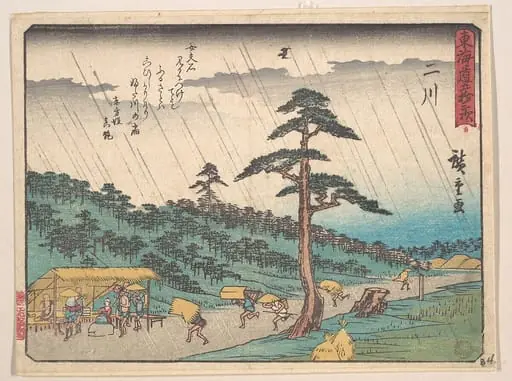
東海道五十三次之内 二川 猿ヶ馬場|Futagawa, Saru ga Baba
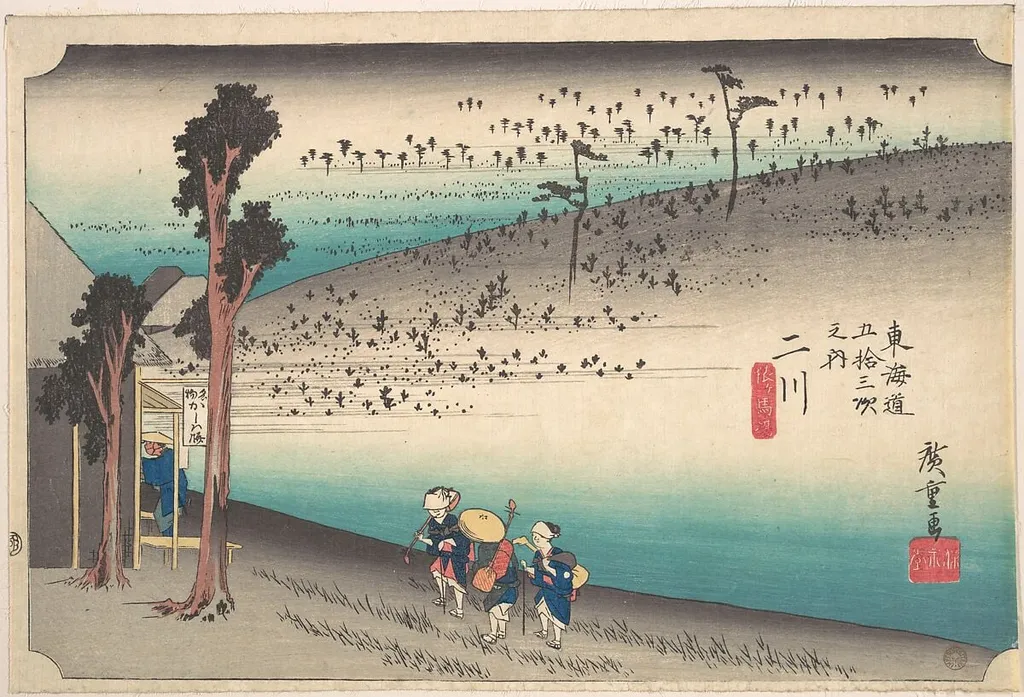
東海道五十三次之内 二川 猿ヶ馬場|Futagawa, Saru ga Baba is an ink print by the Romanticist artist Utagawa Hiroshige. It dates from 1834 and is held in the collection of the Metropolitan Museum of Art.
About this work
Overview
Utagawa Hiroshige’s woodblock print *Futagawa, Saru ga Baba* dates to about 1834 and belongs to his celebrated series *The Fifty‑three Stations of the Tōkaidō*. Executed with ink and color on paper, the image records a brief pause on the historic Tōkaidō highway, illustrating the everyday travel scene that the series documents.
Subject & Meaning
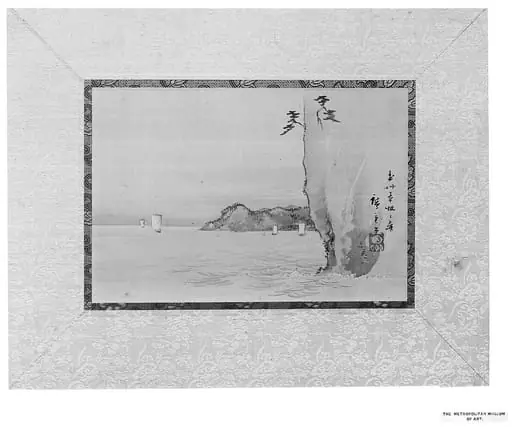
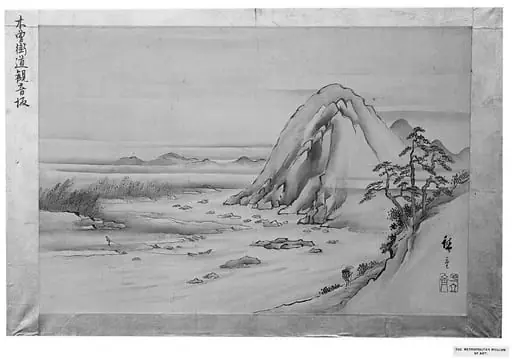
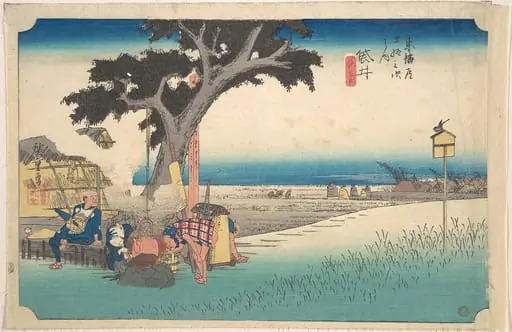
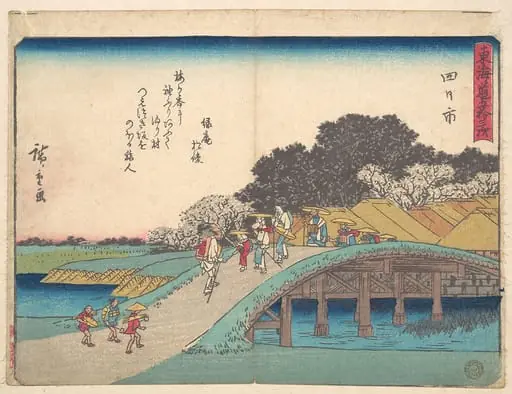
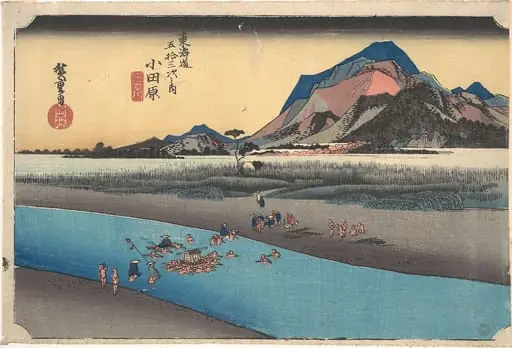
The composition shows a quiet riverside setting where three travelers move along a narrow path, each bearing personal belongings. A prominent tree on the left anchors the scene, while the distant water and hillside suggest a moment of rest and contemplation amid the journey.
Technique & Style
Hiroshige employs the ukiyo‑e woodblock method, using muted blues, greys and browns to convey atmospheric depth. The delicate line work outlines the figures and foliage, while layered color blocks create a sense of distance, characteristic of his approach to landscape rendering.
History & Provenance
Created during the Edo period, the print was part of a commercial series intended for a broad audience of travelers and collectors. It circulated as a multicolored nishiki-e, contributing to Hiroshige’s reputation as a leading landscape artist of his time.
Context
The Tōkaidō series marked a shift in ukiyo‑e from urban pleasure districts to the natural world, reflecting growing interest in travel and the countryside. Hiroshige’s focus on weather, light and seasonal change helped define this new direction in Japanese printmaking.
Artist & collection
Artist
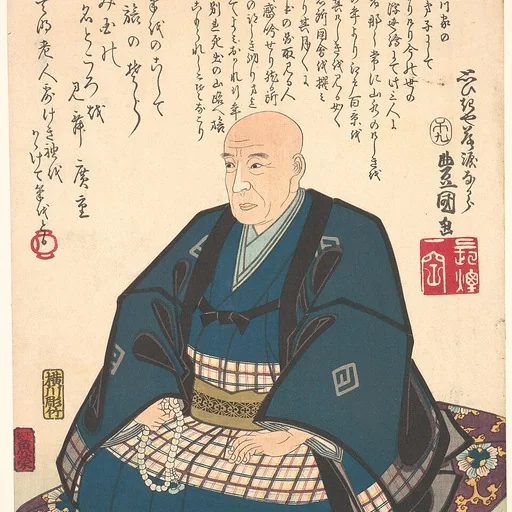
Utagawa Hiroshige (歌川 広重) or Andō Hiroshige (安藤 広重), born Andō Tokutarō (安藤 徳太郎; 1797 – 12 October 1858), was a Japanese ukiyo-e artist, considered the last great master of that tradition.