Artwork
冨嶽三十六景 相州七里浜|Shichirigahama in Sagami Province (Sōshū Shichirigahama), from the series Thirty-six Views of Mount Fuji (Fugaku sanjūrokkei)
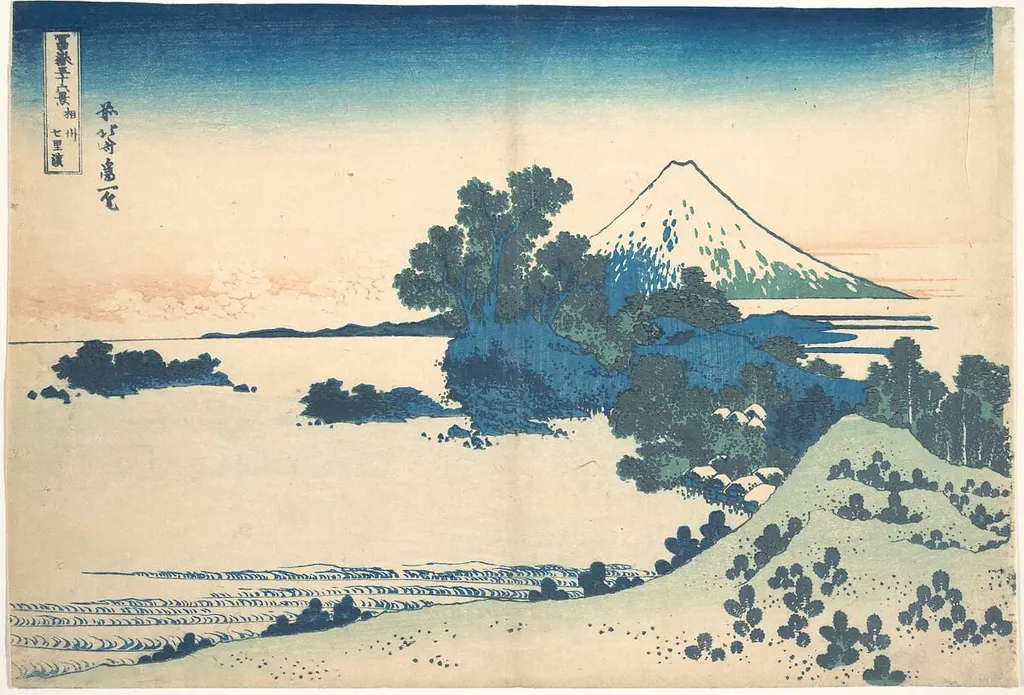
冨嶽三十六景 相州七里浜|Shichirigahama in Sagami Province (Sōshū Shichirigahama), from the series Thirty-six Views of Mount Fuji (Fugaku sanjūrokkei) is an ink print by the Japonisme artist Katsushika Hokusai. It dates from 1831 and is held in the collection of the Metropolitan Museum of Art.
About this work
Overview
The print is held in the collection of The Metropolitan Museum of Art, where it exemplifies the ukiyo-e tradition’s integration of landscape and everyday life.
Created around 1831, this woodblock print is part of Katsushika Hokusai’s series Thirty-six Views of Mount Fuji. It depicts the coastal area of Shichirigahama in Sagami Province, now part of Kanagawa Prefecture. The composition balances natural elements with human presence, rendered in ink and color on paper. The print is held in the collection of The Metropolitan Museum of Art, where it exemplifies the ukiyo-e tradition’s integration of landscape and everyday life.
Subject & Meaning
The scene captures a quiet stretch of coastline with Mount Fuji rising in the distance, its snow-capped peak a constant presence in the Japanese visual imagination. Foreground vegetation and modest buildings suggest a humble coastal settlement, while a lone boat on the water implies quiet human activity. The image conveys harmony between nature and human habitation, reflecting a cultural reverence for Fuji as both a physical landmark and spiritual symbol.
Technique & Style
Hokusai employed precise linework and layered color blocks to achieve subtle atmospheric effects. The sky transitions from pale blue to warm orange, suggesting dawn or dusk without overt detail. The mountain is rendered with minimal shading, its form defined by clean contours. The water and foliage use delicate gradations, enhancing the calm mood. This approach reflects the mature ukiyo-e technique, where simplicity and suggestion replace realism.
History & Provenance
Produced during the peak of Hokusai’s career, the print was part of a commercially successful series published by Nishimura Yohachi. Original impressions were widely distributed across Japan. The Metropolitan Museum of Art’s copy entered its collection through documented acquisitions in the 20th century, preserving its condition and historical context among other prints from the same edition.
Context
This print emerged during a period of growing interest in travel and landscape imagery among Japan’s urban middle class. Mount Fuji, visible from many regions, became a unifying motif in art and literature. Hokusai’s series responded to this trend by presenting the mountain from varied perspectives and seasons, blending topographical accuracy with poetic abstraction.
Legacy
The Thirty-six Views of Mount Fuji series influenced later generations of artists, both in Japan and abroad, particularly in the development of Western landscape painting and printmaking. Shichirigahama’s restrained composition and atmospheric tone contributed to the global recognition of Japanese woodblock prints as a refined visual language, valued for their emotional resonance over literal representation.
Artist & collection

Artist
Katsushika Hokusai spent his life in Edo, now Tokyo, where he drew and carved prints for a living.

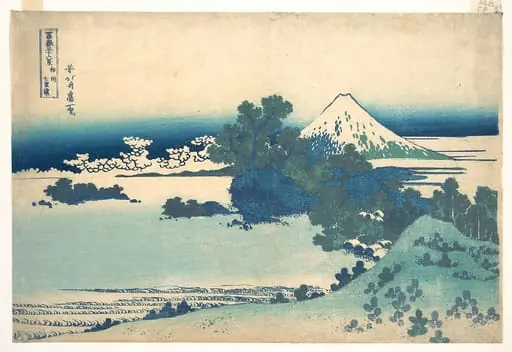 冨嶽三十六景 相州七里浜|Shichirigahama in Sagami Province (Sōshū Shichirigahama), from the series Thirty-six Views of Mount Fuji (Fugaku sanjūrokkei)
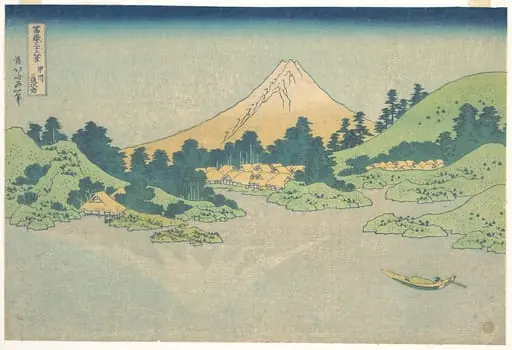 冨嶽三十六景 甲州三坂水面|Reflection in Lake at Misaka in Kai Province (Kōshū Misaka suimen), from the series Thirty-six Views of Mount Fuji (Fugaku sanjūrokkei)
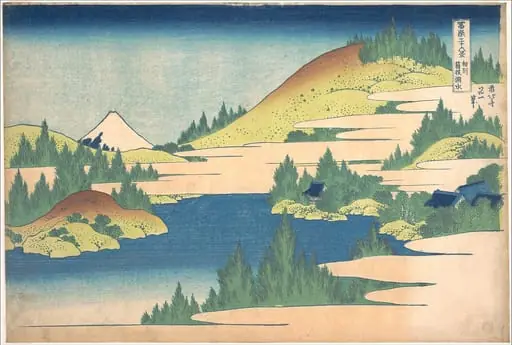 冨嶽三十六景 相州箱根湖水|The Lake at Hakone in Sagami Province (Sōshū Hakone kosui), from the series Thirty-six Views of Mount Fuji (Fugaku sanjūrokkei)
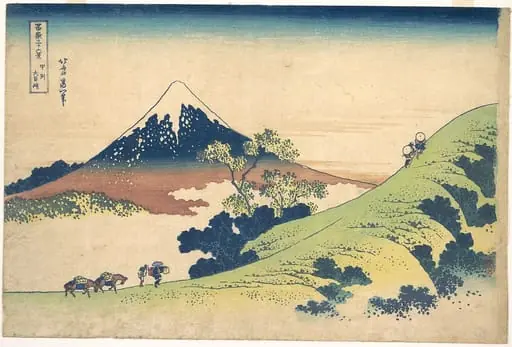 冨嶽三十六景 甲州犬目峠|The Inume Pass in Kai Province (Kōshū Inume tōge), from the series Thirty-six Views of Mount Fuji (Fugaku sanjūrokkei)
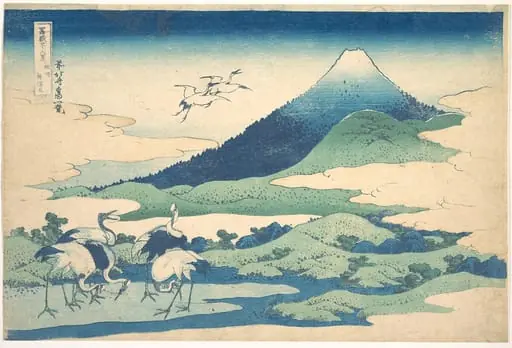 冨嶽三十六景 相州梅沢左|Umezawa Manor in Sagami Province (Sōshū Umezawa zai), from the series Thirty-six Views of Mount Fuji (Fugaku sanjūrokkei)
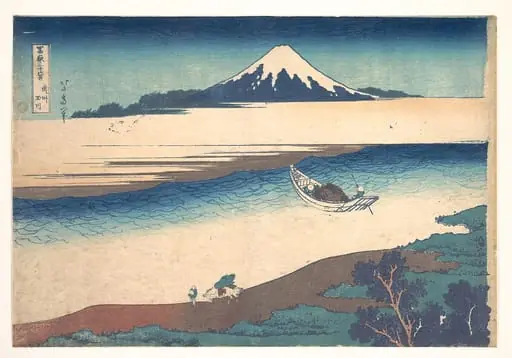 冨嶽三十六景 武州玉川|Tama River in Musashi Province (Bushū Tamagawa), from the series Thirty-six Views of Mount Fuji (Fugaku sanjūrokkei)
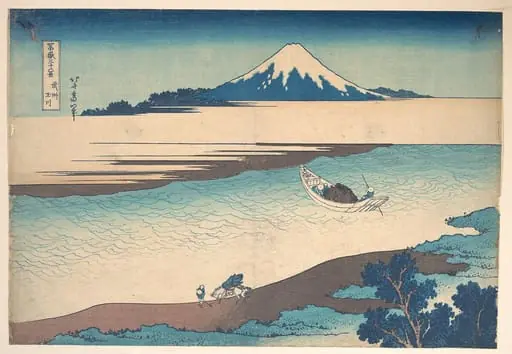 冨嶽三十六景 武州玉川|Fuji—The Tama River, Musashi Province, from the series Thirty-six Views of Mount Fuji (Fugaku sanjūrokkei)
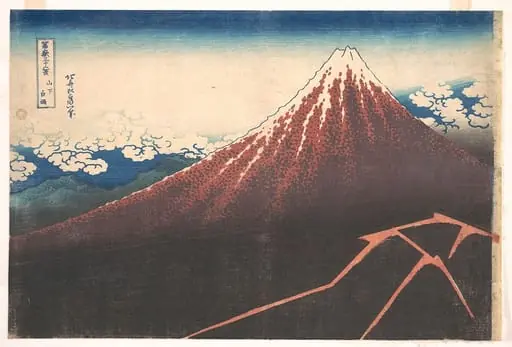 冨嶽三十六景 山下白雨|Storm below Mount Fuji (Sanka no haku u), from the series Thirty-six Views of Mount Fuji (Fugaku sanjūrokkei)
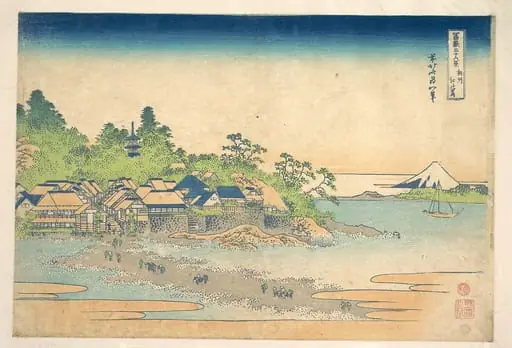 冨嶽三十六景 相州江の島|Enoshima in Sagami Province (Sōshū Enoshima), from the series Thirty-six Views of Mount Fuji (Fugaku sanjūrokkei)
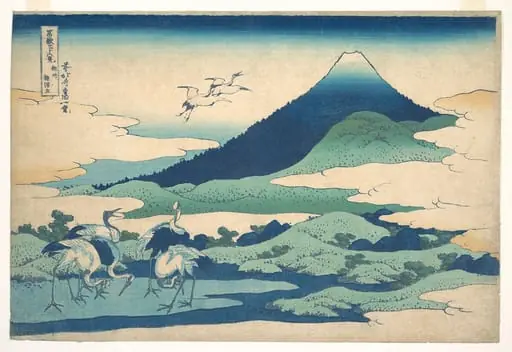 「冨嶽三十六景 相州梅沢左」|“Umezawa Manor in Sagami Province,” from the series Thirty-six Views of Mount Fuji (Fugaku sanjūrokkei, Sōshū Umezawa zai)
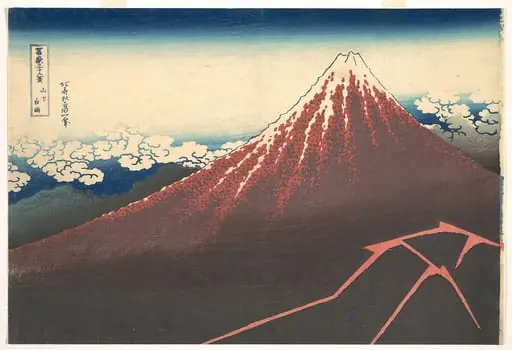 冨嶽三十六景 山下白雨|Storm below Mount Fuji (Sanka no haku u), from the series Thirty-six Views of Mount Fuji (Fugaku sanjūrokkei)
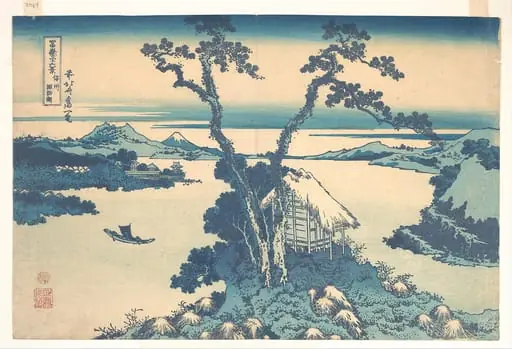 冨嶽三十六景 信州諏訪湖|Lake Suwa in Shinano Province (Shinshū Suwako), from the series Thirty-six Views of Mount Fuji (Fugaku sanjūrokkei)