Artwork
冨嶽三十六景 本所立川|Tatekawa in Honjō (Honjō Tatekawa), from the series Thirty-six Views of Mount Fuji (Fugaku sanjūrokkei)
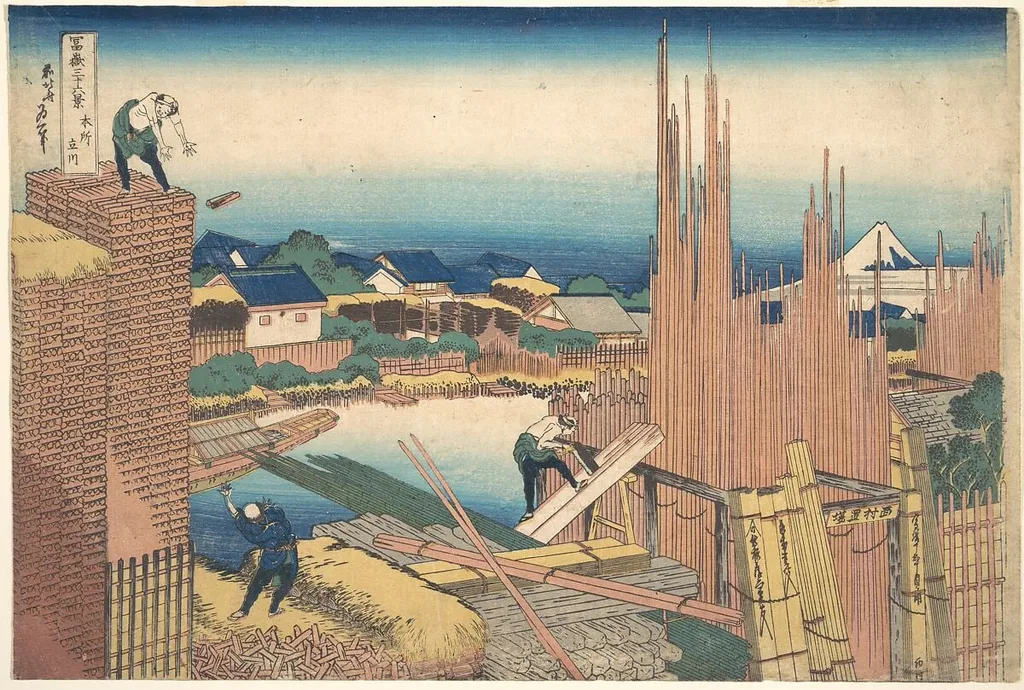
冨嶽三十六景 本所立川|Tatekawa in Honjō (Honjō Tatekawa), from the series Thirty-six Views of Mount Fuji (Fugaku sanjūrokkei) is an ink print by the Japonisme artist Katsushika Hokusai. It dates from 1831 and is held in the collection of the Metropolitan Museum of Art.
About this work
Overview
Created around 1831 by the Japanese printmaker Katsushika Hokusai, this woodblock print belongs to his celebrated series Thirty‑six Views of Mount Fuji. Executed with ink and color on paper, the image depicts a bustling riverside in Honjō, where laborers are engaged in construction or repair work. The composition is held in the collection of the Metropolitan Museum of Art.
Subject & Meaning
The scene captures a group of workers along a calm riverbank, some perched on rooftops with tools, others handling long wooden beams. Tall bamboo fences line the right edge, while modest tiled‑roof houses line the water’s edge. In the distant background, Mount Fuji rises faintly beneath a pale sky, juxtaposing human activity with the enduring natural landmark.
Technique & Style
Hokusai employs crisp, decisive line work to delineate figures and architectural elements, while flat areas of muted color convey the quiet atmosphere. The contrast between the dynamic poses of the laborers and the still water creates a visual tension. The print’s limited palette and strong outlines are characteristic of ukiyo‑e woodblock production in the early nineteenth century.
History & Provenance
First issued as part of the Thirty‑six Views of Mount Fuji series, the print circulated widely in Edo‑period Japan. It entered the Metropolitan Museum of Art’s collection through a 20th‑century acquisition, where it has been conserved and displayed as part of the museum’s Asian art holdings.
Context
The work reflects Hokusai’s interest in everyday urban life and the integration of landscape with human industry. During the Edo period, riverbanks were common sites for construction and transport, and the inclusion of Mount Fuji underscores its cultural significance as a symbol of permanence amid the transitory activities of the city.
Artist & collection

Artist
Katsushika Hokusai spent his life in Edo, now Tokyo, where he drew and carved prints for a living.

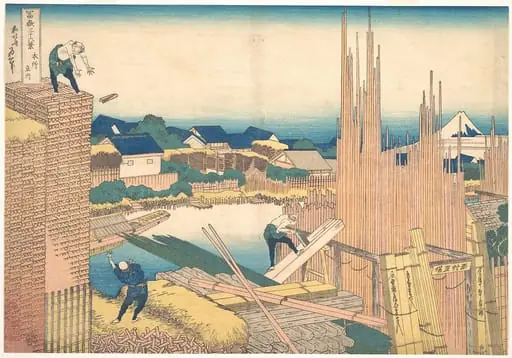 冨嶽三十六景 本所立川|Tatekawa in Honjō (Honjō Tatekawa), from the series Thirty-six Views of Mount Fuji (Fugaku sanjūrokkei)
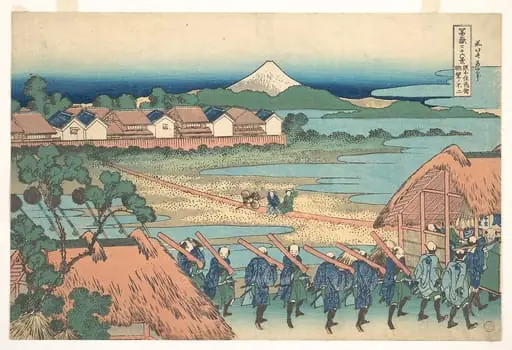 冨嶽三十六景 従千住花街眺望の不二|Fuji Seen in the Distance from Senju Pleasure Quarter (Senju kagai yori chōbō no Fuji), from the series Thirty-six Views of Mount Fuji (Fugaku sanjūrokkei)
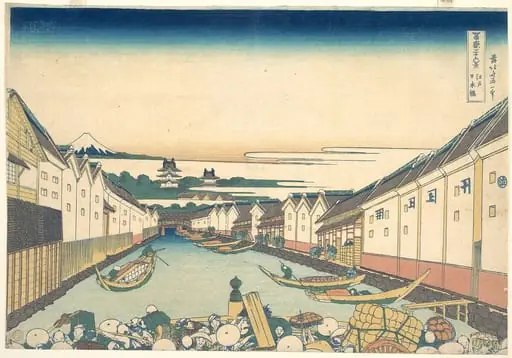 冨嶽三十六景 江戸日本橋|Nihonbashi in Edo (Edo Nihonbashi), from the series Thirty-six Views of Mount Fuji (Fugaku sanjūrokkei)
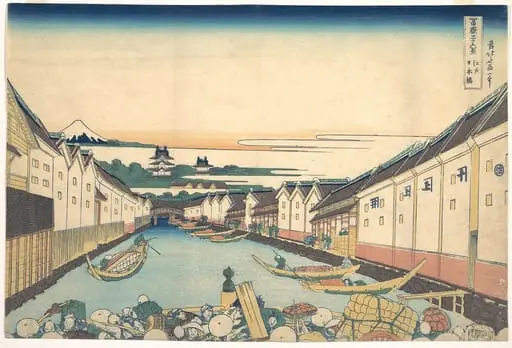 冨嶽三十六景 江戸日本橋|Nihonbashi in Edo (Edo Nihonbashi), from the series Thirty-six Views of Mount Fuji (Fugaku sanjūrokkei)
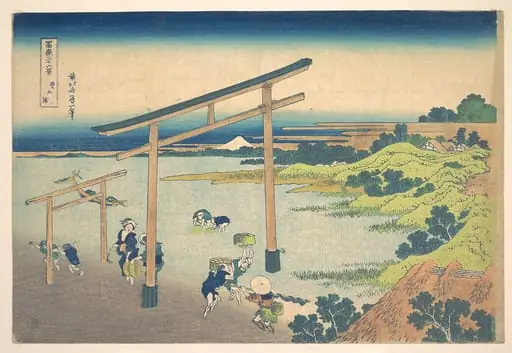 冨嶽三十六景 登戸浦|Noboto Bay (Noboto no ura), from the series Thirty-six Views of Mount Fuji (Fugaku sanjūrokkei)
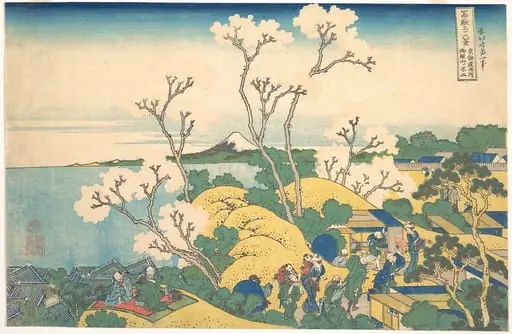 冨嶽三十六景 東海道品川御殿山の不二|Fuji from Gotenyama at Shinagawa on the Tōkaidō (Tōkaidō Shinagawa Gotenyama no Fuji), from the series Thirty-six Views of Mount Fuji (Fugaku sanjūrokkei)
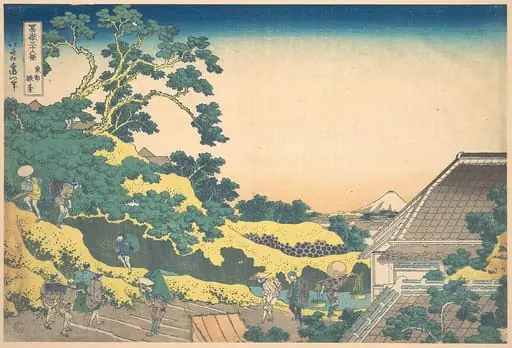 冨嶽三十六景 東都駿台|Surugadai in Edo (Tōto Sundai), from the series Thirty-six Views of Mount Fuji (Fugaku sanjūrokkei)