Artwork
Untitled
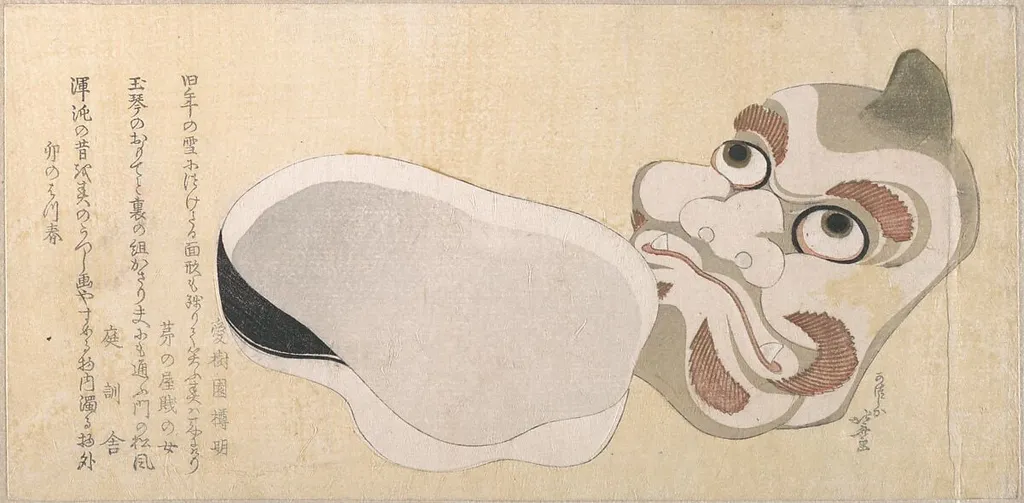
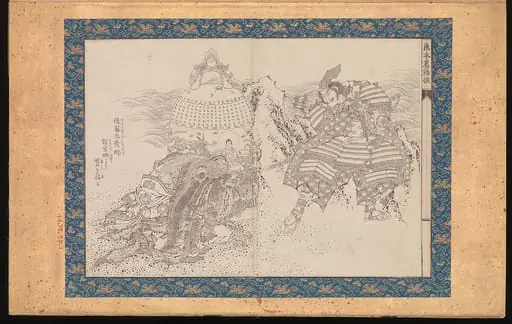
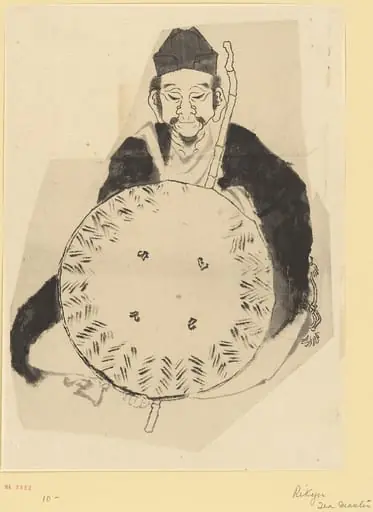
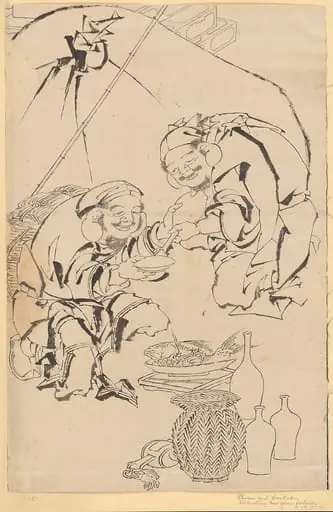
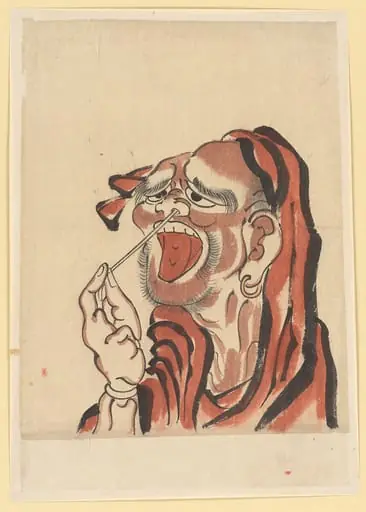
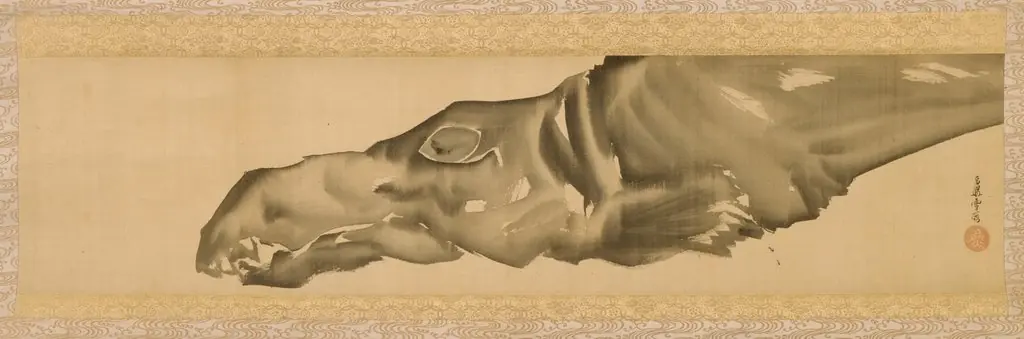
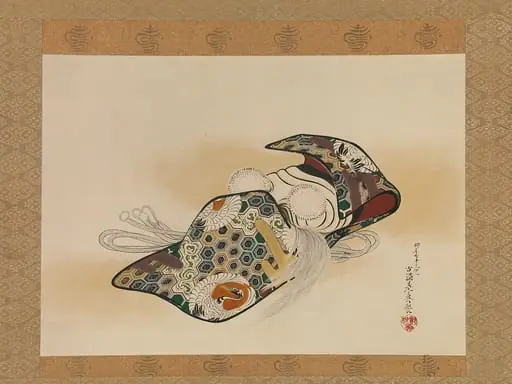
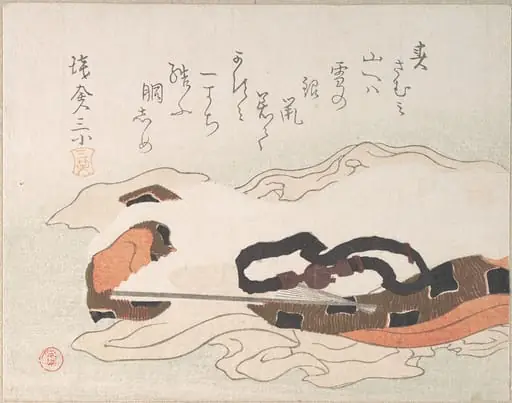
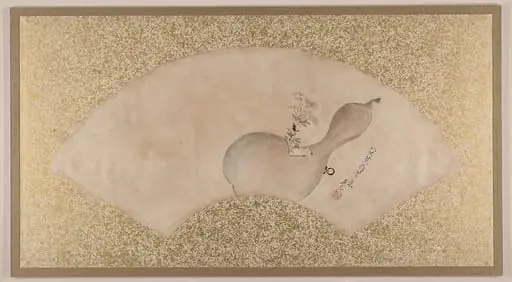
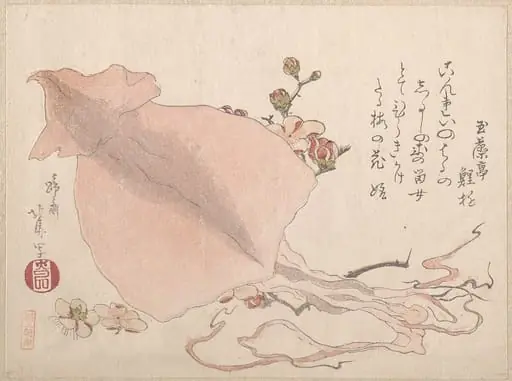
Untitled is an ink print by the Japonisme artist Katsushika Hokusai. It dates from 1807 and is held in the collection of the Metropolitan Museum of Art. This woodblock print, dated around 1807, is a surimono—a privately commissioned print often used for special occasions.
About this work
Overview
This woodblock print, dated around 1807, is a surimono—a privately commissioned print often used for special occasions. Attributed to Katsushika Hokusai, it features an unusual feline figure rendered in ink and color on paper. Unlike commercial ukiyo-e, surimono were produced in small editions for niche audiences, emphasizing poetic or whimsical themes over mass appeal.
Subject & Meaning
The accompanying Japanese text, though illegible here, likely contains a pun or verse typical of surimono, linking the image to seasonal or literary allusions.
The print depicts a large, pale cat with exaggerated human-like features—broad ears, a wide mouth, and enormous eyes—suggesting a supernatural or symbolic presence. Beside it, a dark, ambiguous form may represent a hat or shadow, possibly hinting at disguise or transformation. The accompanying Japanese text, though illegible here, likely contains a pun or verse typical of surimono, linking the image to seasonal or literary allusions.
Technique & Style
Hokusai employed bold, simplified contours and flat areas of color, characteristic of his illustrative approach. The print’s graphic quality, with minimal shading and strong outlines, prioritizes visual impact over naturalism. The cat’s form is stylized, almost cartoonish, reflecting a playful sensibility common in surimono, where artistic freedom allowed for imaginative departures from conventional subjects.
History & Provenance
The work entered the collection of The Metropolitan Museum of Art as part of its broader holdings of Japanese prints. While its original commissioning patron is unknown, surimono like this were typically produced for literary circles or New Year’s greetings. Its survival in good condition reflects its careful preservation by collectors who valued the genre’s intimacy and artistic experimentation.
Context
In early 19th-century Japan, surimono flourished as a refined subgenre of printmaking, often created by established artists for elite patrons. Hokusai, already renowned for his landscapes and illustrations, used these small-format prints to explore fantasy, humor, and wordplay. This piece aligns with a broader trend of anthropomorphizing animals in Edo-period visual culture, blending folklore with literary wit.
Legacy
Though not widely exhibited, this print exemplifies Hokusai’s versatility beyond his famous landscapes. It contributes to understanding his engagement with private, poetic forms of printmaking and his willingness to experiment with surreal imagery. Scholars recognize such works as vital to appreciating the full scope of his artistic range and the cultural richness of Edo-era print culture.
Artist & collection

Artist
Katsushika Hokusai spent his life in Edo, now Tokyo, where he drew and carved prints for a living.