Artwork
冨嶽三十六景 常州牛掘|Ushibori in Hitachi Province (Jōshū Ushibori), from the series Thirty-six Views of Mount Fuji (Fugaku sanjūrokkei)
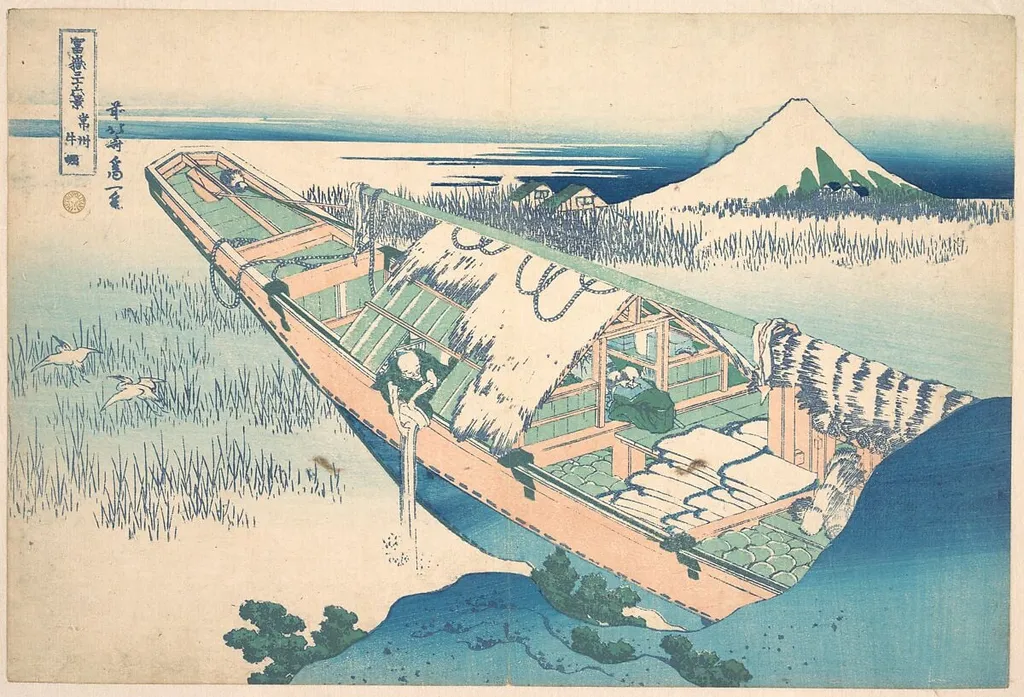
冨嶽三十六景 常州牛掘|Ushibori in Hitachi Province (Jōshū Ushibori), from the series Thirty-six Views of Mount Fuji (Fugaku sanjūrokkei) is an ink print by the Japonisme artist Katsushika Hokusai. It dates from 1831 and is held in the collection of the Metropolitan Museum of Art.
About this work
Overview
The print combines natural elements with human activity, reflecting the quiet rhythm of agricultural life in early 19th-century Japan.
Created around 1831, this woodblock print is part of Katsushika Hokusai’s series Thirty-six Views of Mount Fuji. It depicts a rural scene in the former Hitachi Province, now part of Ibaraki Prefecture. The composition centers on a slender boat named Ushibori, gliding through dense vegetation, with Mount Fuji visible on the horizon. The print combines natural elements with human activity, reflecting the quiet rhythm of agricultural life in early 19th-century Japan.
Subject & Meaning
The scene portrays laborers navigating a waterway surrounded by tall, green plants, likely rice paddies. One figure stands at the helm, another sits rowing, and a third walks along the boat’s side, suggesting coordinated work. Mount Fuji, though distant and small, anchors the composition symbolically, representing enduring presence amid daily toil. The title identifies the location, grounding the image in a specific place while inviting contemplation of humanity’s relationship with landscape.
Technique & Style
Hokusai employed fine, controlled lines and layered color washes to render texture and depth. The vegetation is suggested through rhythmic vertical strokes, while water and sky use subtle gradients. Cross-hatching defines shadows and form without heavy outlines. The print’s flat perspective and deliberate spatial arrangement reflect ukiyo-e conventions, yet the atmospheric distance to Mount Fuji introduces a poetic sense of scale rarely seen in earlier genre prints.
History & Provenance
Produced during the peak of Hokusai’s career, this print was part of a widely distributed series commissioned by publisher Nishimura Yohachi. Original impressions were printed in limited quantities and circulated among urban audiences. The Metropolitan Museum of Art’s copy is one of many surviving examples, preserved through private collections before entering public stewardship in the 20th century.
Context
The Thirty-six Views series emerged during a period of growing interest in travel and regional identity in Edo-period Japan. While Mount Fuji was a sacred and symbolic landmark, Hokusai depicted it in everyday settings—fishing villages, markets, and fields—to emphasize its presence in ordinary life. This print reflects the era’s fascination with local geography and the integration of nature into human routines.
Legacy
Hokusai’s series influenced both Japanese and Western artists by redefining landscape as a subject worthy of artistic focus. The use of perspective, color, and compositional balance in prints like Ushibori helped shape the aesthetic of modern printmaking. Today, these works remain key references in the study of Edo-period visual culture and the global reception of Japanese art.
Artist & collection

Artist
Katsushika Hokusai spent his life in Edo, now Tokyo, where he drew and carved prints for a living.

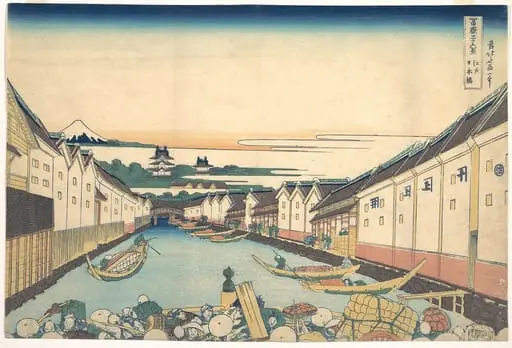 冨嶽三十六景 江戸日本橋|Nihonbashi in Edo (Edo Nihonbashi), from the series Thirty-six Views of Mount Fuji (Fugaku sanjūrokkei)
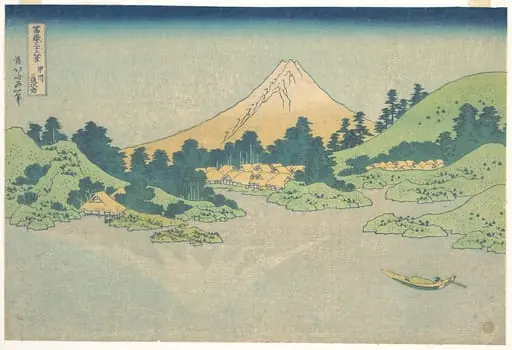 冨嶽三十六景 甲州三坂水面|Reflection in Lake at Misaka in Kai Province (Kōshū Misaka suimen), from the series Thirty-six Views of Mount Fuji (Fugaku sanjūrokkei)
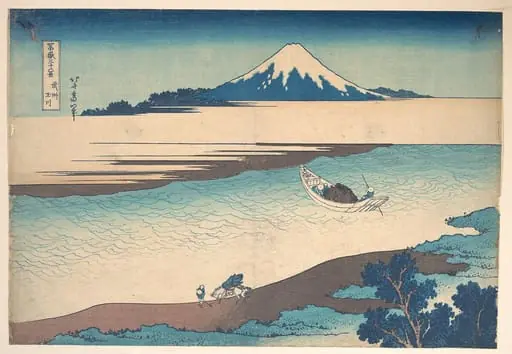 冨嶽三十六景 武州玉川|Fuji—The Tama River, Musashi Province, from the series Thirty-six Views of Mount Fuji (Fugaku sanjūrokkei)
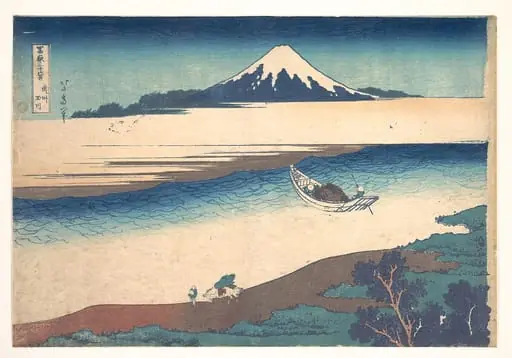 冨嶽三十六景 武州玉川|Tama River in Musashi Province (Bushū Tamagawa), from the series Thirty-six Views of Mount Fuji (Fugaku sanjūrokkei)
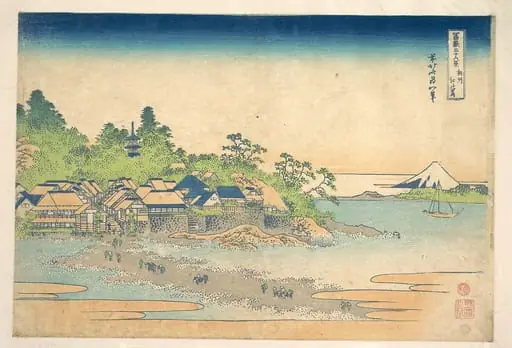 冨嶽三十六景 相州江の島|Enoshima in Sagami Province (Sōshū Enoshima), from the series Thirty-six Views of Mount Fuji (Fugaku sanjūrokkei)
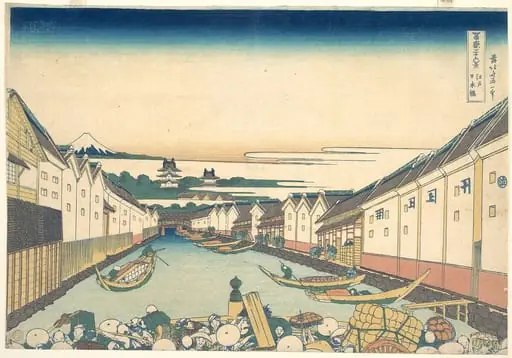 冨嶽三十六景 江戸日本橋|Nihonbashi in Edo (Edo Nihonbashi), from the series Thirty-six Views of Mount Fuji (Fugaku sanjūrokkei)
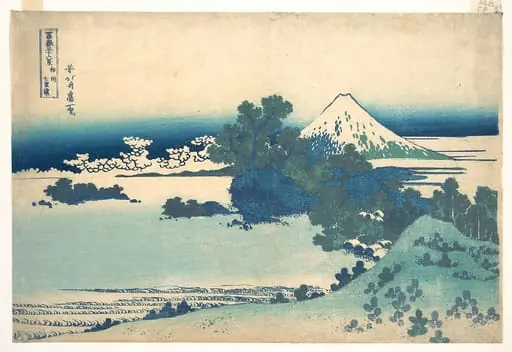 冨嶽三十六景 相州七里浜|Shichirigahama in Sagami Province (Sōshū Shichirigahama), from the series Thirty-six Views of Mount Fuji (Fugaku sanjūrokkei)
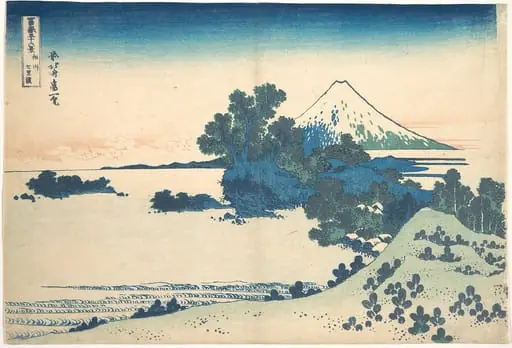 冨嶽三十六景 相州七里浜|Shichirigahama in Sagami Province (Sōshū Shichirigahama), from the series Thirty-six Views of Mount Fuji (Fugaku sanjūrokkei)
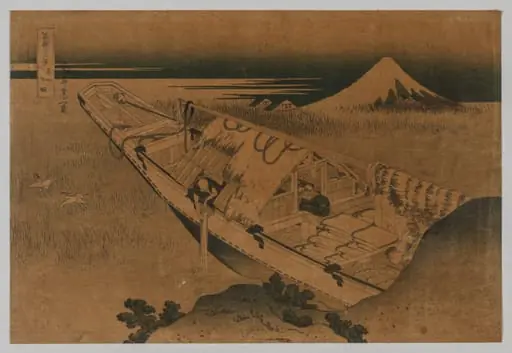 Fuji from Ushibori, Province of Hitachi
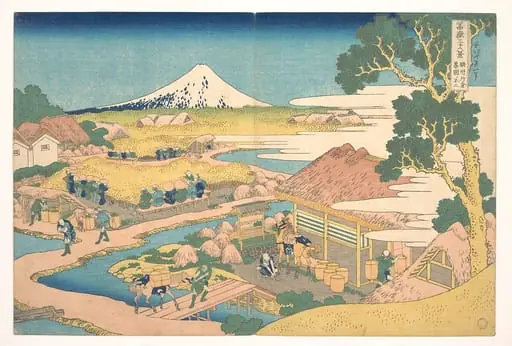 冨嶽三十六景 駿州片倉茶園の不二|Fuji from the Katakura Tea Fields in Suruga (Sunshū Katakura chaen no Fuji), from the series Thirty-six Views of Mount Fuji (Fugaku sanjūrokkei)
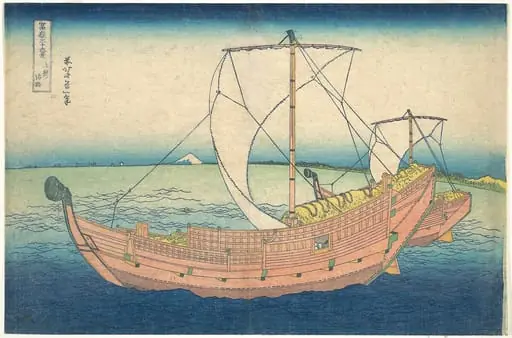 冨嶽三十六景 上総の海路|At Sea off Kazusa (Kazusa no kairo), from the series Thirty-six Views of Mount Fuji (Fugaku sanjūrokkei)