Artwork
Carp and Waterweeds
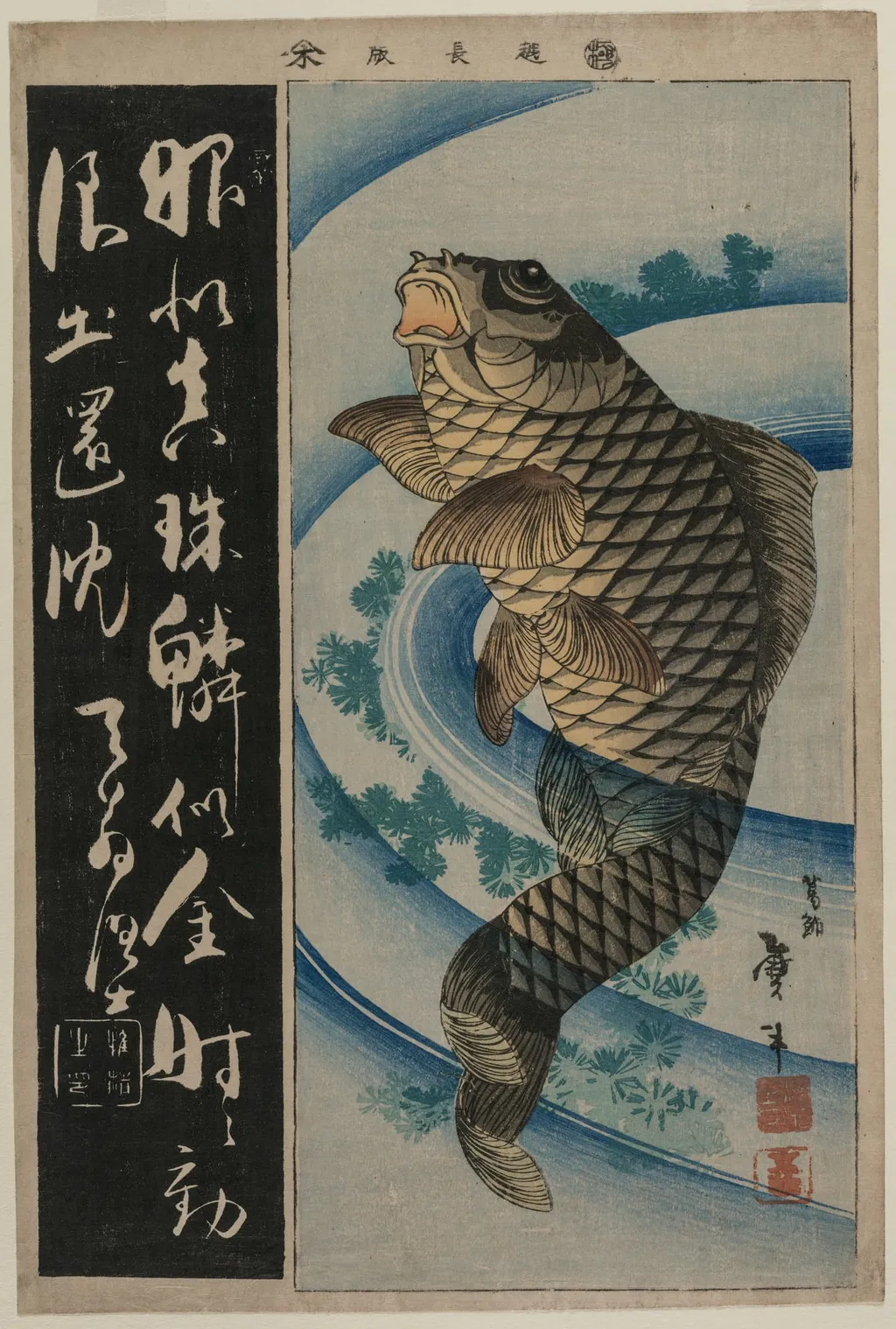
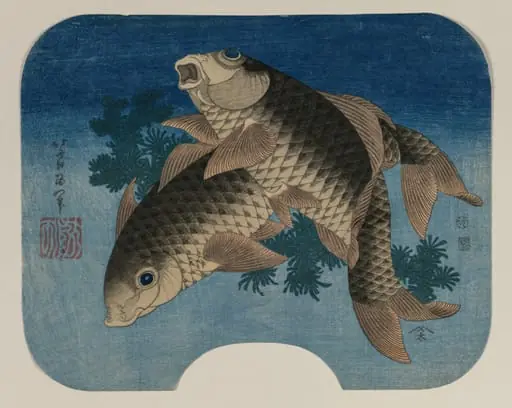
Carp and Waterweeds is a print by the Romanticist artist Katsushika Taito II. It dates from 1834 and is held in the collection of the Cleveland Museum of Art.
About this work
Overview
The work is part of the collection at The Cleveland Museum of Art, where it is preserved as an example of early 19th-century Japanese printmaking.
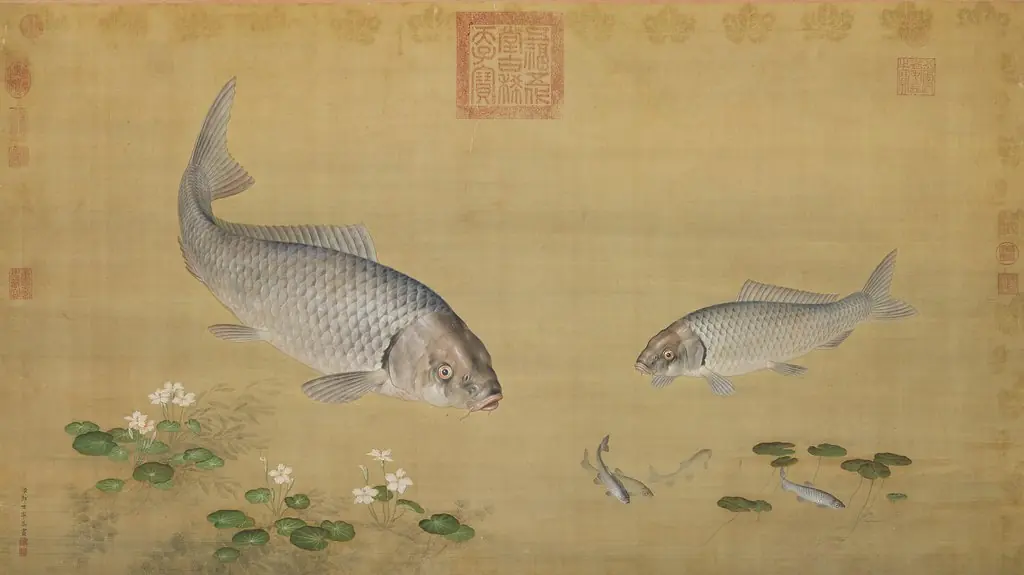
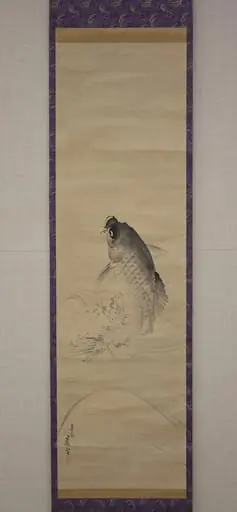
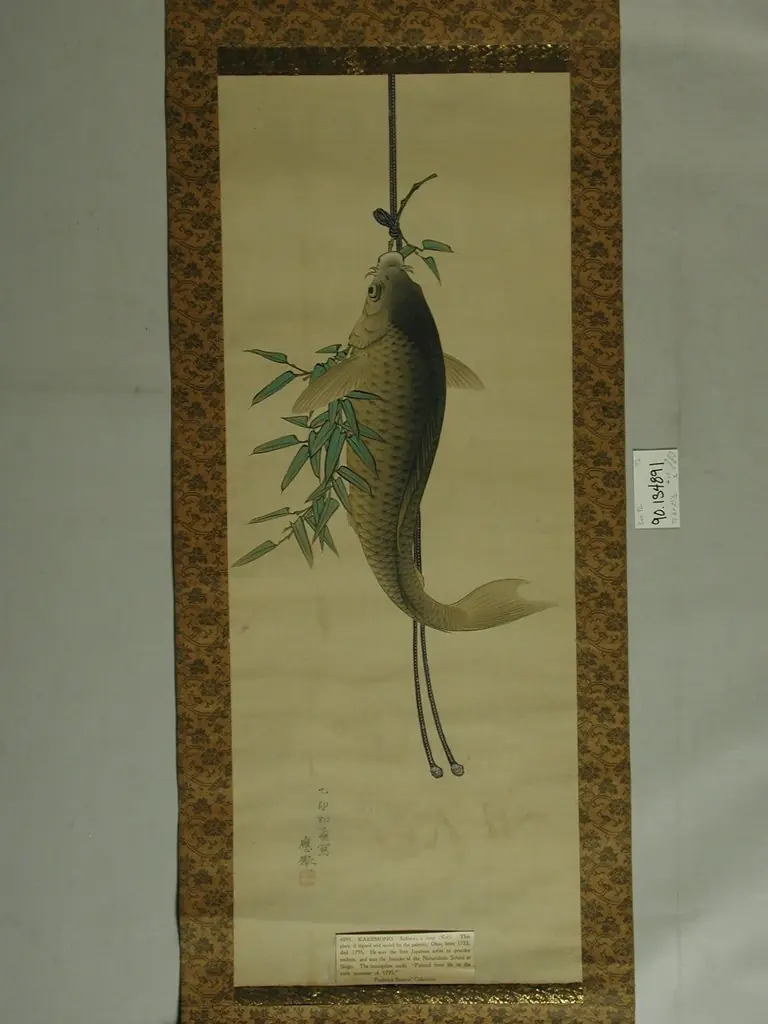
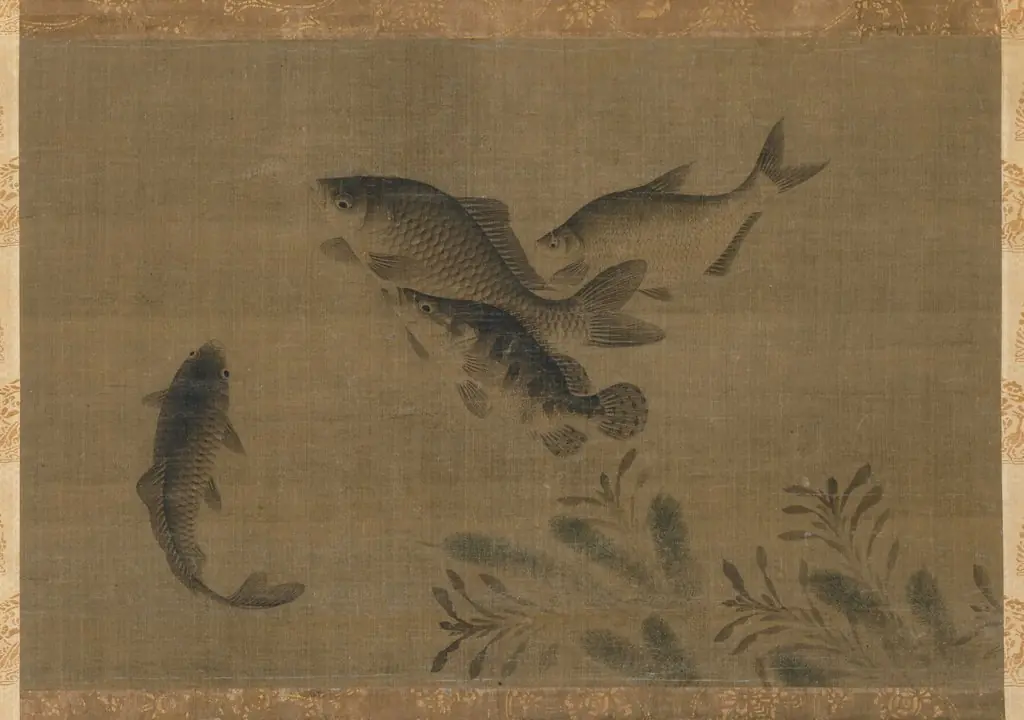
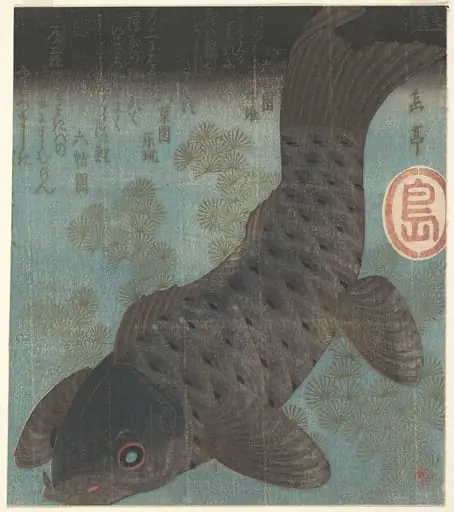
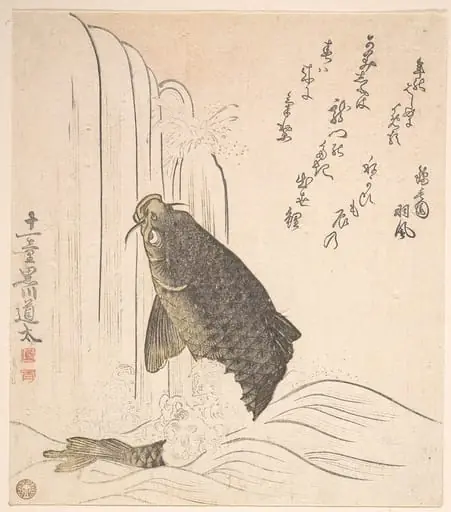
Carp and Waterweeds is a woodblock print produced around 1834 by Katsushika Taito II, a lesser-known artist of the Utagawa school. The work is part of the collection at The Cleveland Museum of Art, where it is preserved as an example of early 19th-century Japanese printmaking. Its composition centers on a single carp in motion, rendered with precision and dynamism against a backdrop of aquatic flora.
Subject & Meaning
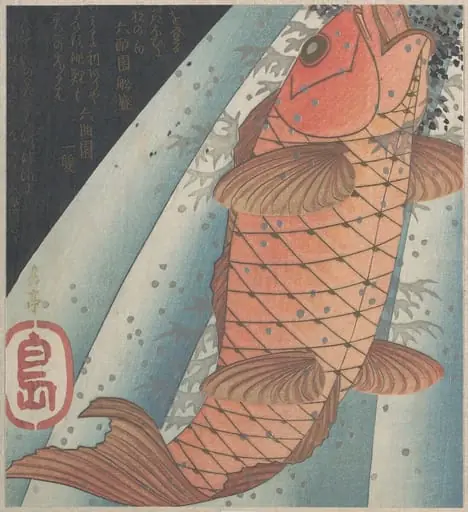
The carp, a symbol of perseverance in East Asian culture, is depicted mid-leap, suspended above swirling water. This moment captures strength and determination, aligning with traditional narratives of the fish overcoming obstacles to reach the Dragon Gate. The surrounding waterweeds and fluid lines suggest a natural, unguarded environment, reinforcing the carp’s solitary struggle and vitality without overt symbolism.
Technique & Style
Taito employed sharp, clean lines to define the carp’s scales and fins, contrasting with the soft, blended washes of blue and white used for the water. The background features muted green foliage, subtly integrated to avoid distraction. The print’s bold tonal contrast and asymmetrical composition reflect the influence of earlier ukiyo-e traditions, while the dynamic pose suggests an interest in capturing transient motion.
History & Provenance
The print was created during the late Edo period, a time when woodblock prints flourished as affordable art for urban audiences. It entered the Cleveland Museum of Art’s collection through documented acquisitions in the 20th century, likely as part of a broader effort to expand holdings of Japanese prints. Its condition remains well-preserved, with minimal fading or damage to the ink and paper.
Context
Taito II worked within a tradition of nature-focused prints that celebrated animals and seasonal themes. While his name is less prominent than contemporaries like Hokusai or Hiroshige, his works reflect the widespread popularity of aquatic subjects in Edo-period prints. Carp imagery, in particular, resonated with both aesthetic and moral ideals, appearing in screens, scrolls, and prints across social classes.
Legacy
Though not widely reproduced or studied today, Carp and Waterweeds exemplifies the technical refinement and thematic continuity of mid-Edo printmaking. Its preservation in a major Western institution underscores its role in cross-cultural appreciation of Japanese art. The print remains a quiet testament to the skill of artists who captured nature’s fleeting moments with clarity and restraint.
Own this work as a print
Artist & collection