Artwork
鯉の滝登り|Red Carp Ascending a Waterfall
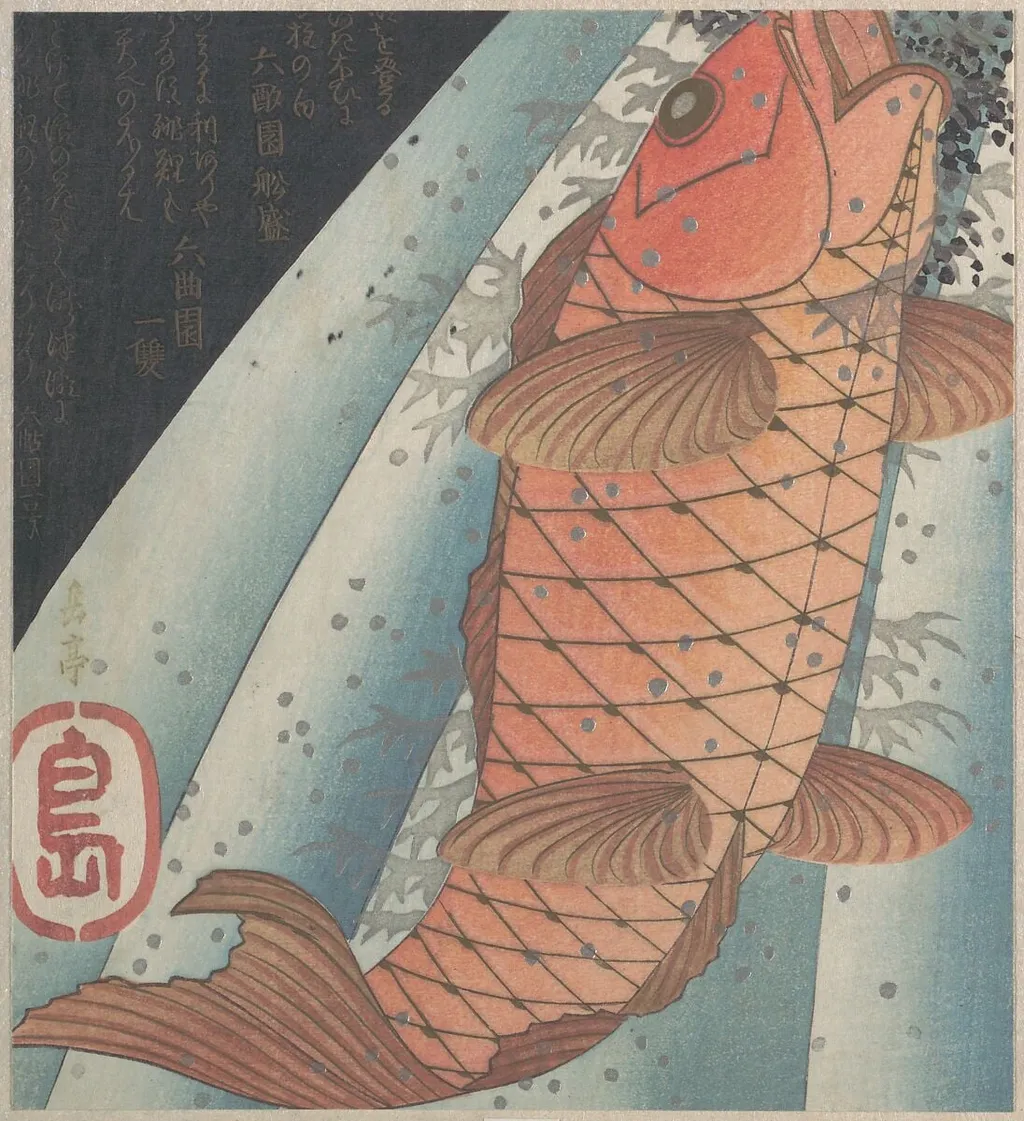
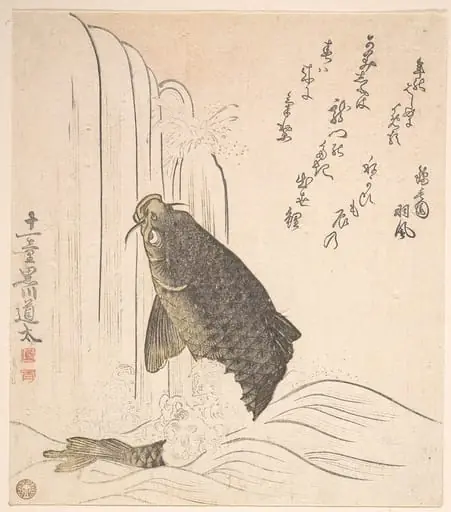
鯉の滝登り|Red Carp Ascending a Waterfall is an ink print by the Romanticist artist Yashima Gakutei. It dates from 1824 and is held in the collection of the Metropolitan Museum of Art.
About this work
Overview
Executed in ink and color on paper, it belongs to a refined genre not intended for mass sale but for intimate exchange among connoisseurs.
Created around 1824 by Yashima Gakutei, this woodblock print is one of a small series of surimono—privately commissioned prints made for literary and artistic circles. Executed in ink and color on paper, it belongs to a refined genre not intended for mass sale but for intimate exchange among connoisseurs. The composition centers on a single red carp in dynamic motion, rendered with precision and poetic restraint, reflecting the artist’s dual role as painter and kyōka poet.
Subject & Meaning
The carp ascending a waterfall draws from East Asian symbolism, where the fish’s struggle against strong currents represents perseverance and transformation. In Chinese and Japanese tradition, a carp that reaches the top of a waterfall becomes a dragon—a metaphor for scholarly achievement or personal transcendence. The open mouth and thrusting tail suggest effort and determination, while the minimalist background focuses attention on the fish’s resolve, reinforcing the theme without narrative clutter.
Technique & Style
Gakutei employed fine, controlled linework to define the carp’s scales and fins, using dense black strokes to create texture and volume. The red pigment stands out sharply against the pale blue wash, enhanced by delicate white dots suggesting spray and motion. The surrounding calligraphy, rendered in black ink, frames the image without overwhelming it. This restrained palette and emphasis on line reflect the surimono tradition’s focus on subtlety, craftsmanship, and poetic harmony.
History & Provenance
As a surimono, this print was likely produced in limited numbers for private distribution, possibly as a New Year’s gift or commemorative item among poets and artists. Gakutei, trained under Totoya Hokkei and influenced by Hokusai, was known for his elegant integration of visual art and verse. The red seal in the lower left confirms authorship and likely identifies the patron or publisher. Few such prints survive in original condition, making this a rare example of early 19th-century private print culture.
Context
Surimono emerged in the late Edo period as luxury prints for elite circles, distinct from commercial ukiyo-e. They often paired poetry with imagery, appealing to those versed in classical literature and aesthetics. Gakutei’s work reflects this milieu, where artistic skill was measured by restraint and allusion. The absence of elaborate scenery or figures underscores the print’s intellectual tone, aligning it with the values of literati culture rather than popular entertainment.
Legacy
Though not widely circulated, Gakutei’s surimono contributed to the evolution of Japanese printmaking by elevating technical precision and poetic suggestion. His approach influenced later artists who sought to merge literary themes with visual form. Today, such works are valued not for popularity but for their embodiment of a refined, intimate artistic practice—one that prioritized nuance, craftsmanship, and shared cultural knowledge over mass appeal.
Artist & collection
Artist
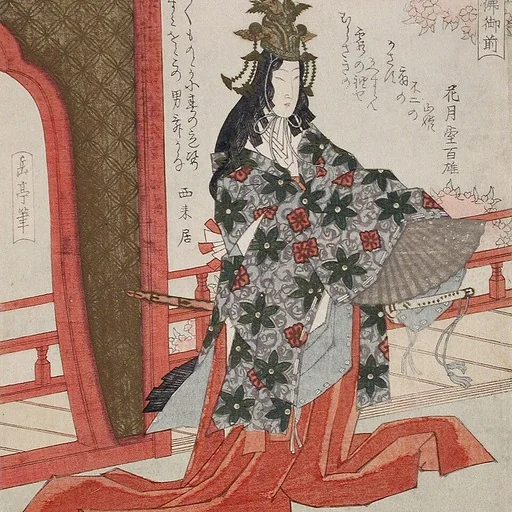
Yashima Gakutei (Japanese: 八島岳亭; c. 1786 – 1868) was a Japanese artist and poet who was a pupil of both Totoya Hokkei and Hokusai. Gakutei is best known for his kyōka poetry and surimono works.

 Untitled
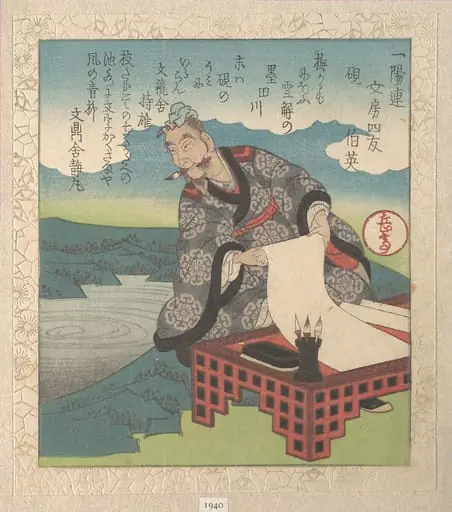 「一陽連文房四友 硯 伯英」『春雨集』 摺物帖|The Chinese Calligrapher Boying (Japanese: Hakuei; also known as the “Sage of Cursive Script”); “Inkstone” (Suzuri), from Four Friends of the Writing Table for the Ichiyō Poetry Circle (Ichiyō-ren Bunbō shiyū) From the Spring Rain Collection (Harusame shū), vol. 1
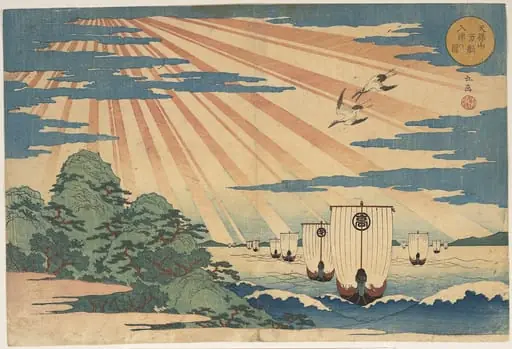 Untitled
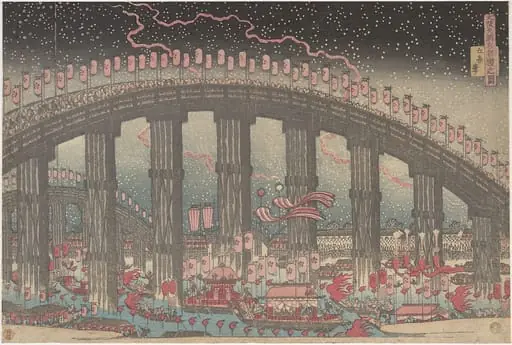 Osaka Tenmangu sairei no zu|The Tenmangu Festival at Osaka
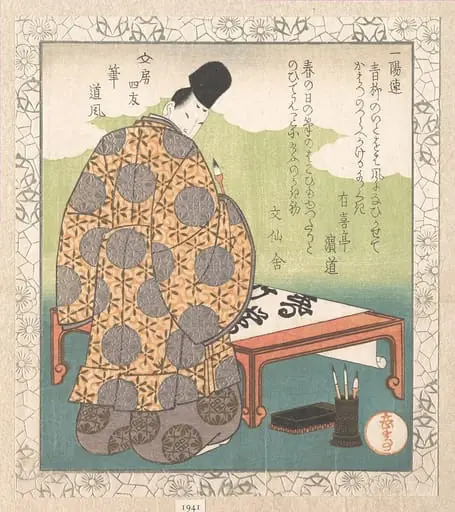 「一陽連文房四友 筆 道風」『春雨集』 摺物帖|The Heian Court Calligrapher Ono no Tōfū (894–966); “Calligraphy Brush” (Fude), from Four Friends of the Writing Table for the Ichiyō Poetry Circle (Ichiyō-ren Bunbō shiyū)From the Spring Rain Collection (Harusame shū), vol. 1
 Untitled
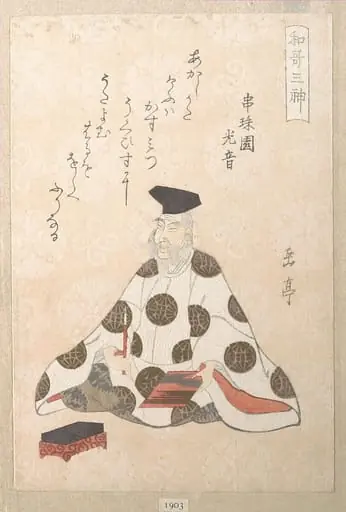 『和歌三神』 柿本人麻呂|Kakinomoto no Hitomaro (ca. 662–710), One of the Three Gods of PoetryFrom the Spring Rain Collection (Harusame shū), vol. 1
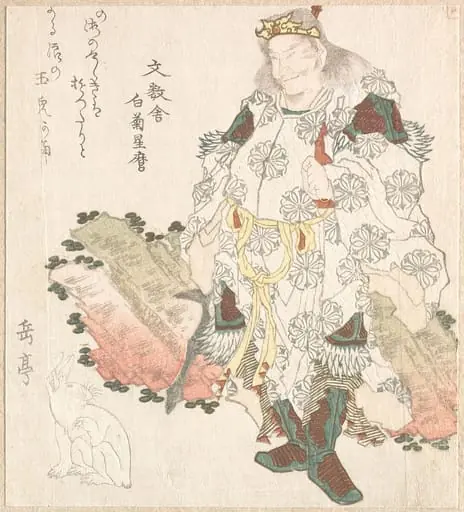 Untitled
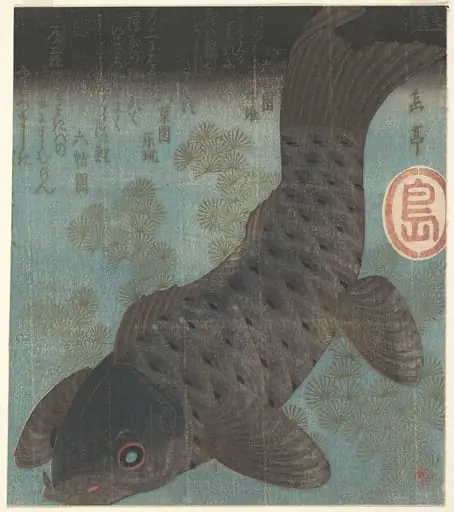
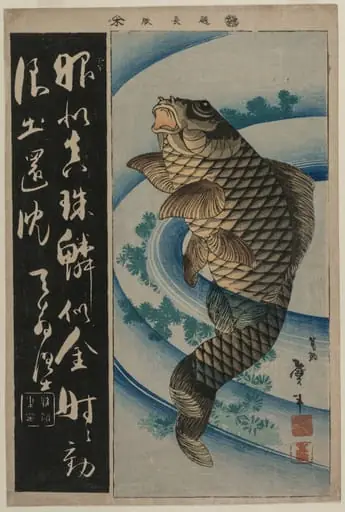 Carp and Waterweeds
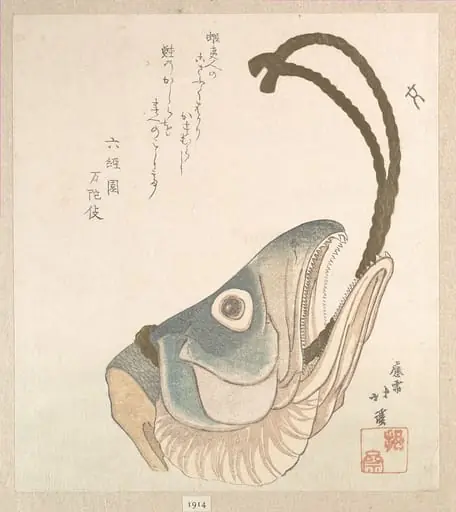 鮭頭|Head of a Salmon
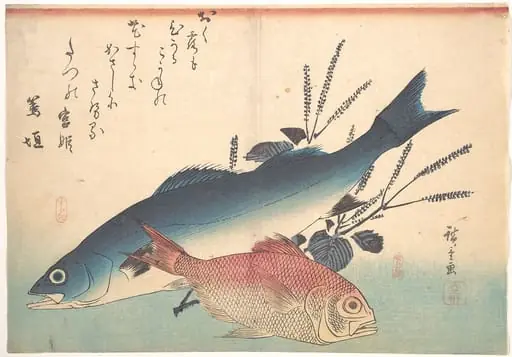 魚づくし いなだ ふぐに梅|Suzuki and Kinmedai Fish from the series Uozukushi (Every Variety of Fish)
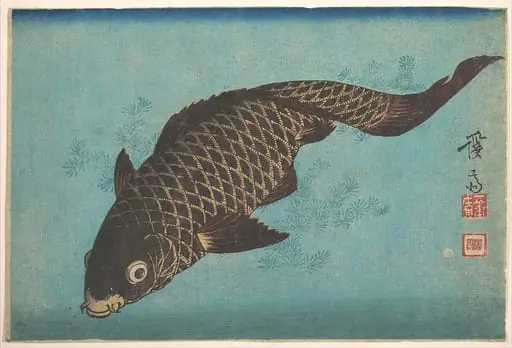 Untitled
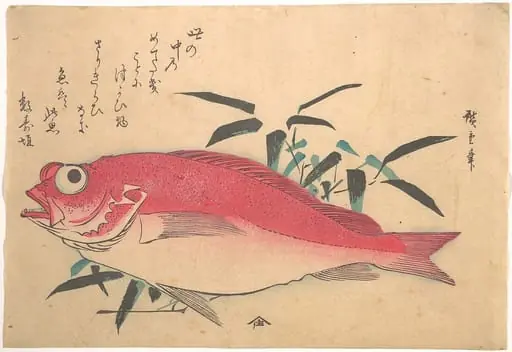 魚づくし|Medetai Fush and Sasaki Bamboo, from the series Uozukushi (Every Variety of Fish)
 Untitled
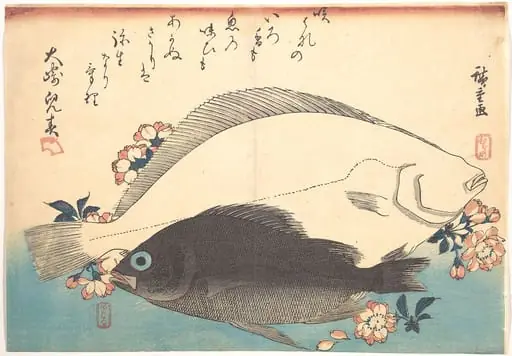 魚づくし ひらめ めばるに桜|Hirame and Mebaru Fish with Cherry Blossoms, from the series Uozukushi (Every Variety of Fish)
 Untitled