Artwork
狗児図|A Pair of Puppies
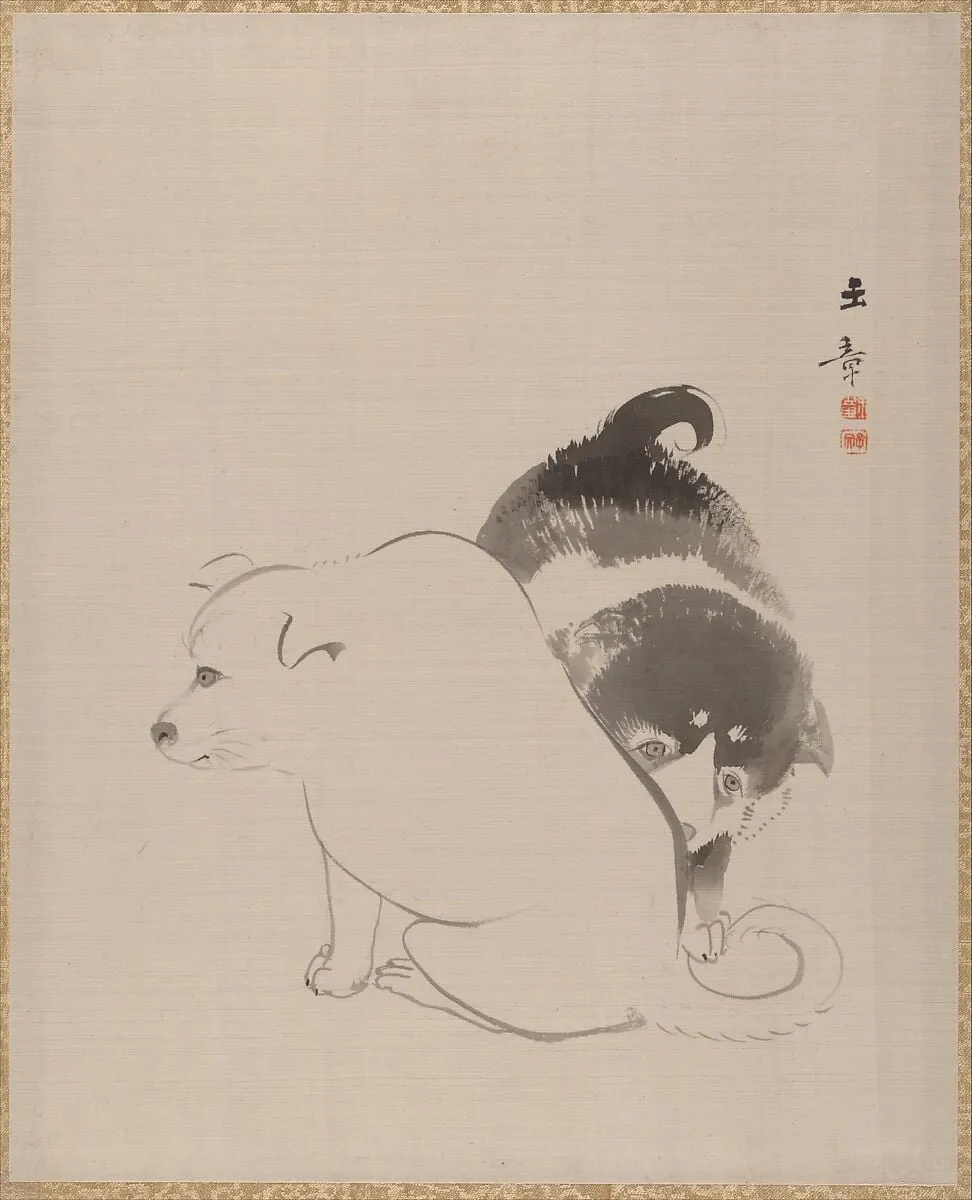
狗児図|A Pair of Puppies is an ink painting by the Impressionist artist Kawabata Gyokushō. It dates from 1890 and is held in the collection of the Metropolitan Museum of Art.
About this work
Overview
Created around 1890, this album leaf by Kawabata Gyokushō presents a pair of small dogs rendered in ink on silk. The composition is confined to a single sheet, the background left blank, allowing the two figures to dominate the visual field. The work belongs to the genre of Japanese ink paintings that were often compiled in portable albums for private viewing.
Subject & Meaning
The image shows two puppies, one black and one white, each wearing a tiny red collar. Their eyes are rendered with a lively sparkle, suggesting curiosity and playfulness. While the scene lacks narrative detail, the juxtaposition of contrasting colors and the intimate scale invite contemplation of companionship and the simple vitality of domestic animals.
Technique & Style
Gyokushō employed only black ink, applying swift, delicate brushstrokes to suggest the softness of fur and the texture of the dogs’ bodies. The minimal use of line and the absence of background detail focus attention on the gestural quality of the marks, a hallmark of late‑nineteenth‑century Japanese ink work that emphasizes spontaneity and immediacy.
Context
The painting dates to a period when Japan was increasingly exposed to Western artistic ideas following the Meiji Restoration. Though executed in a traditional medium, the work reflects a broader interest in realistic animal depiction and the incorporation of new visual sensibilities that were circulating among Japanese artists of the era.
Artist & collection