Artwork
Untitled
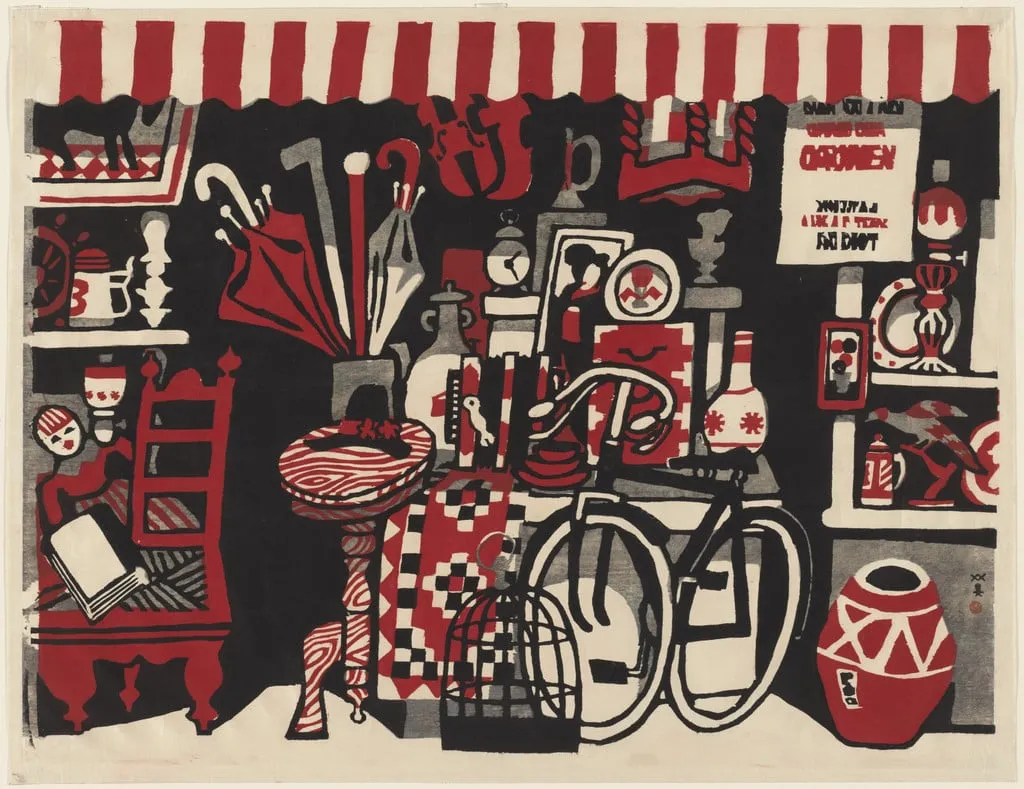
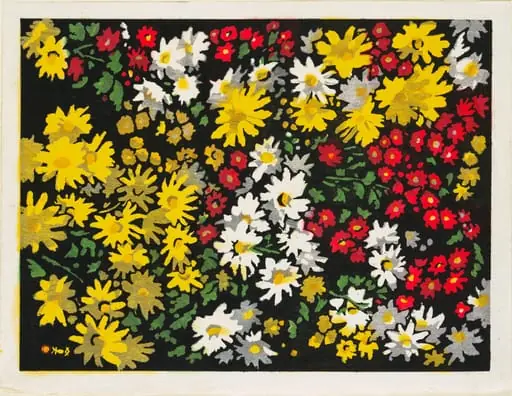
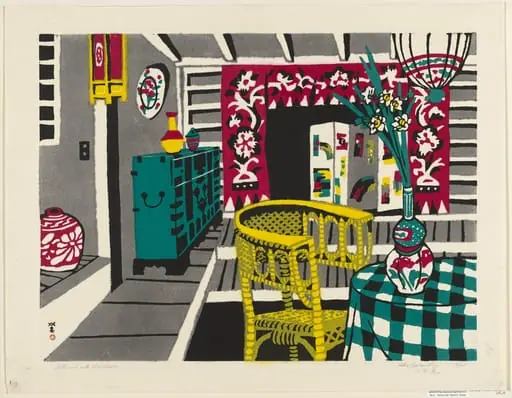
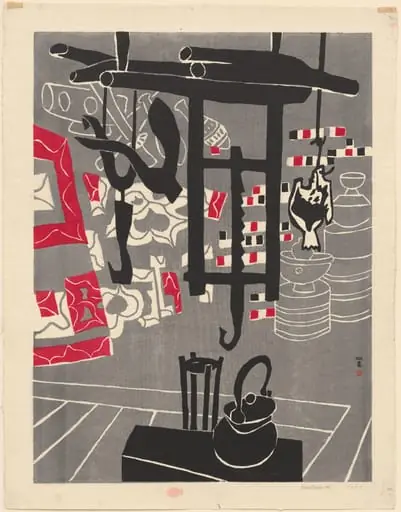
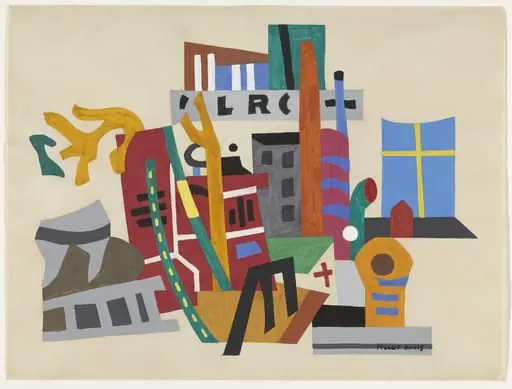
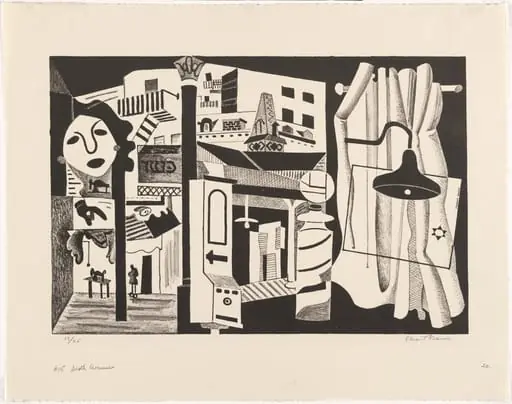
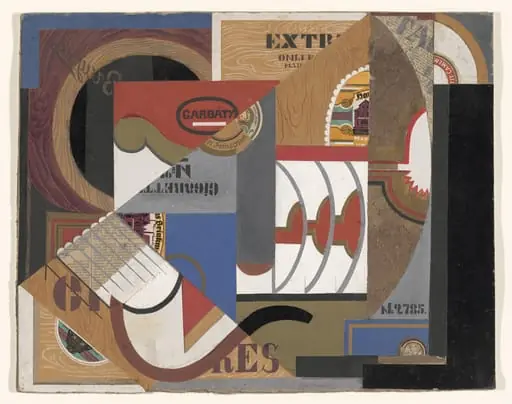
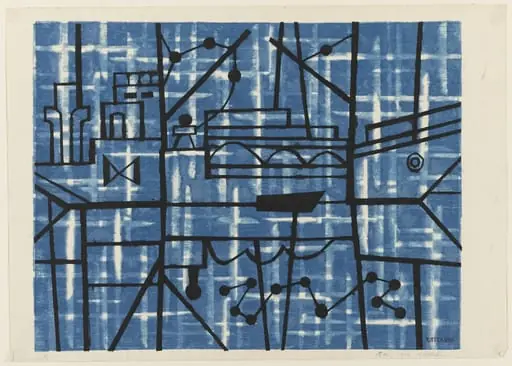
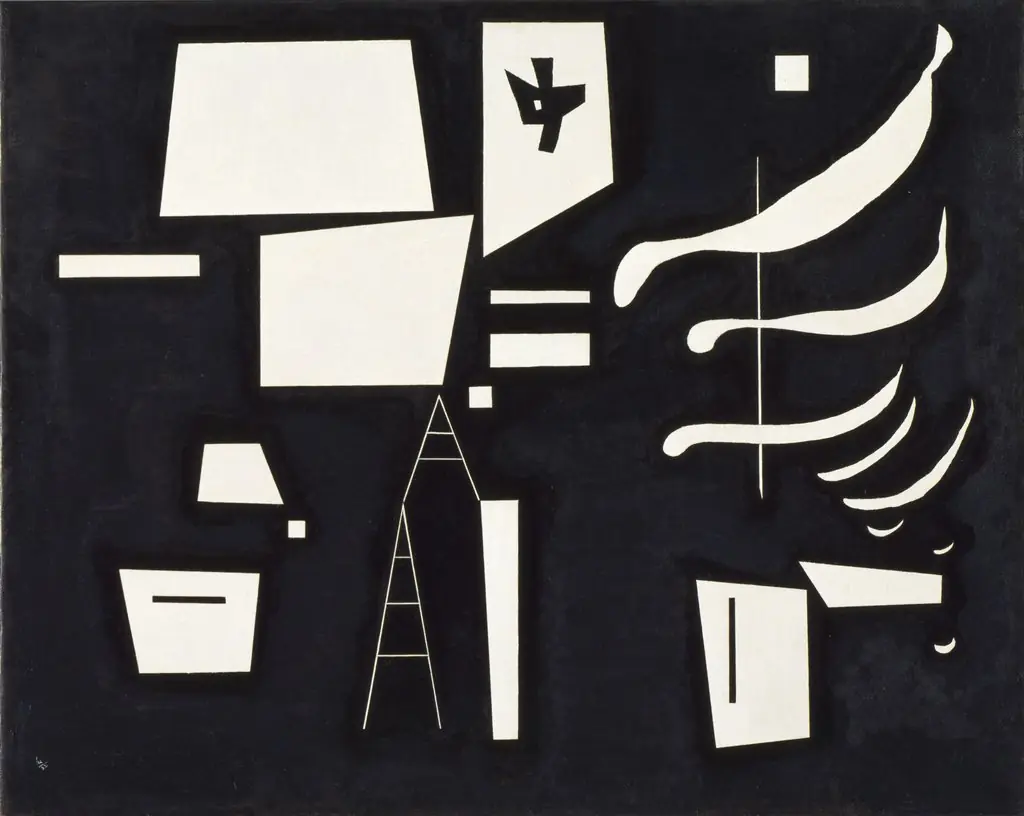
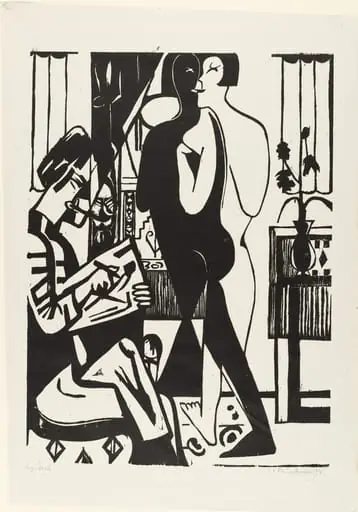
Untitled is an ink print by Kawanishi Hide. It dates from 1941 and is held in the collection of the Museum of Modern Art.
About this work
Overview
Created in 1941 by Japanese artist Kawanishi Hide, this woodcut is a dynamic composition in black, red, and white.
Created in 1941 by Japanese artist Kawanishi Hide, this woodcut is a dynamic composition in black, red, and white. It belongs to a body of work produced during a period of intense artistic experimentation in Japan. Kawanishi, known for his involvement in both painting and printmaking, used the woodcut medium to explore modernist forms while drawing on traditional Japanese techniques. The piece is part of The Museum of Modern Art’s collection.
Subject & Meaning
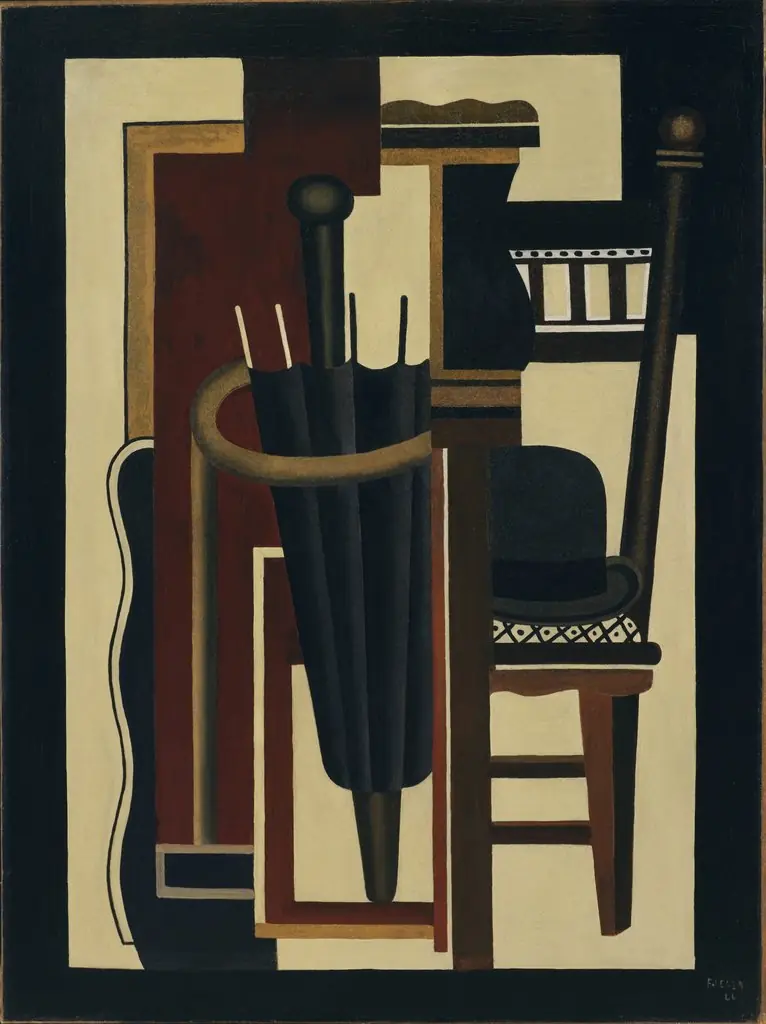
The composition includes a rooster, a vase, a book, and a seated figure beneath a striped awning, arranged without clear narrative logic. These objects, rendered in simplified forms, suggest symbolic or personal references rather than literal storytelling. The presence of handwritten text and a checkered cloth beneath the rooster adds an element of ambiguity, inviting interpretation without offering fixed meaning.
Technique & Style
Executed as a woodcut, the work relies on bold, carved lines and flat planes of color to create visual rhythm. Jagged edges and overlapping shapes generate a sense of compressed space, while the limited palette enhances graphic impact. The technique reflects both the precision of traditional Japanese printmaking and the expressive freedom of early 20th-century modernist aesthetics.
History & Provenance
Kawanishi Hide, born in 1894, was active in Japan’s art scene from the 1920s through the 1940s, participating in state-sponsored exhibitions and international events such as the 1932 Olympic art competition. This woodcut was produced during wartime Japan, a time when artists navigated state expectations and personal expression. The work entered The Museum of Modern Art’s collection in the postwar period, reflecting growing international interest in Japanese modern prints.
Context
In early 20th-century Japan, printmakers like Kawanishi bridged indigenous traditions and Western modernism. While ukiyo-e influenced composition and line, artists increasingly embraced abstraction and non-narrative structure. This woodcut emerged amid state promotion of cultural identity and rising interest in avant-garde forms, positioning Kawanishi within a generation redefining Japanese art beyond historical conventions.
Legacy
Kawanishi’s woodcuts, including this untitled work, contributed to the recognition of Japanese printmaking as a vital medium in modern art. Though less widely known than contemporaries like Hiroshi Yoshida, his integration of folk motifs with modernist abstraction influenced later generations of printmakers. The piece remains a quiet example of how traditional techniques could be reshaped to express complex, non-literal visions.
Artist & collection
Artist
Hide Kawanishi (川西 英, Kawanishi Hide; 9 July 1894 – 20 February 1965) was a Japanese painter. His work was part of the painting event in the art competition at the 1932 Summer Olympics.