Artwork
"Oh, Tax 'em by all means!"
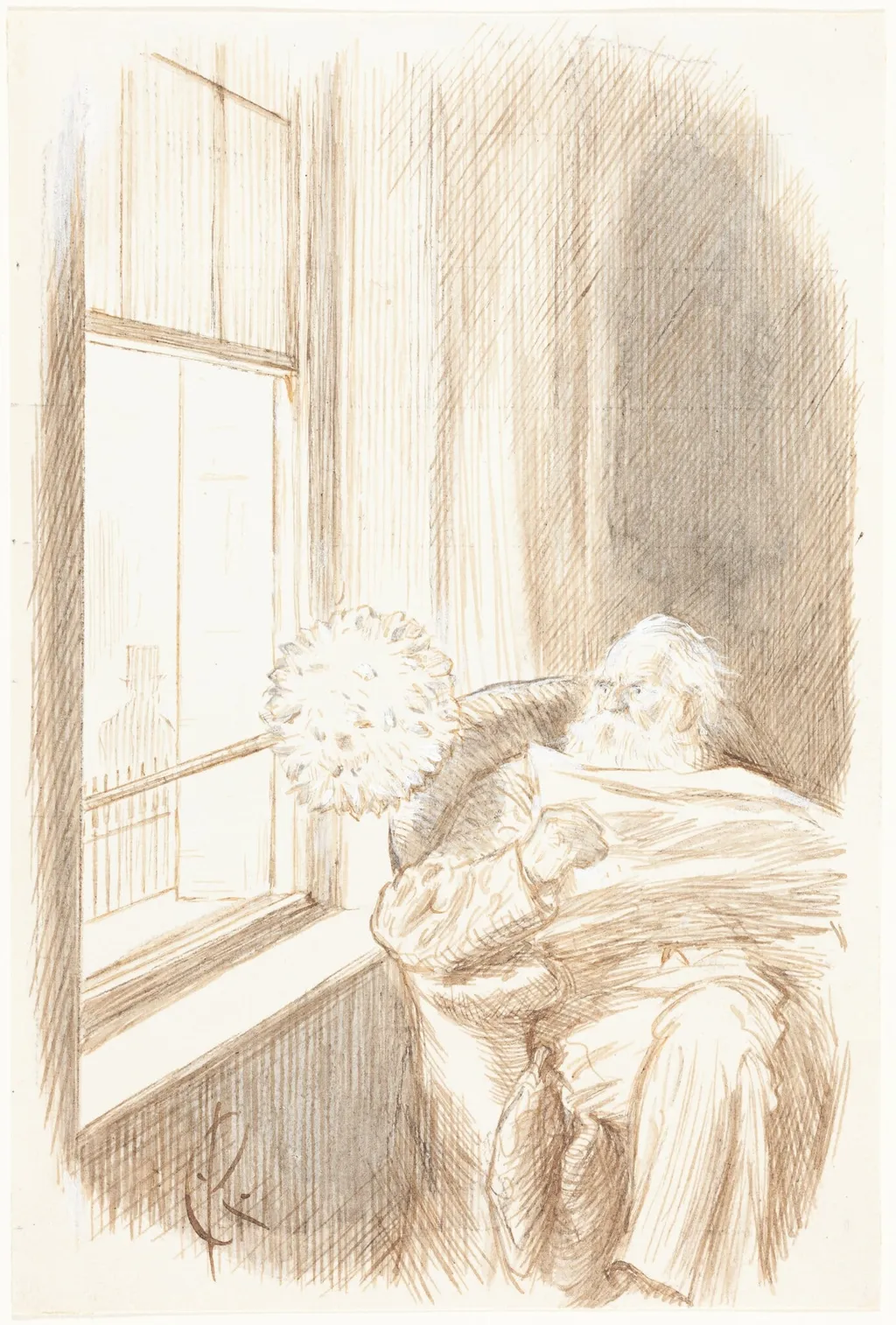
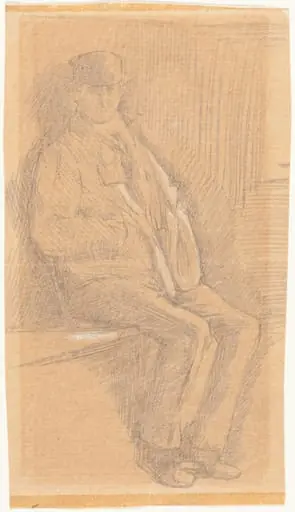
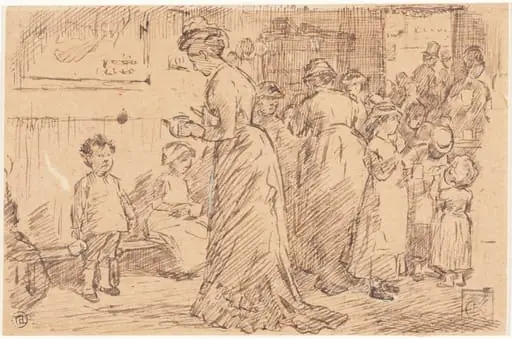
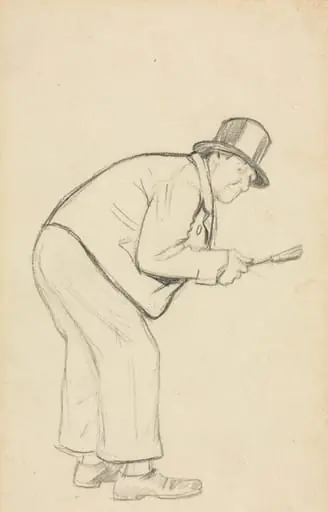
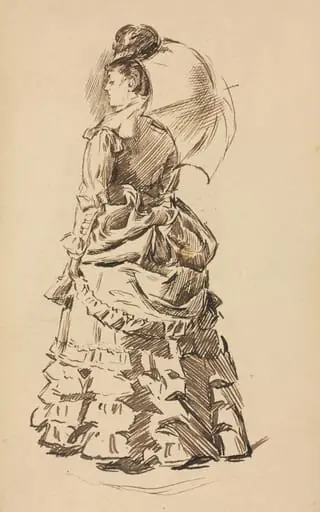
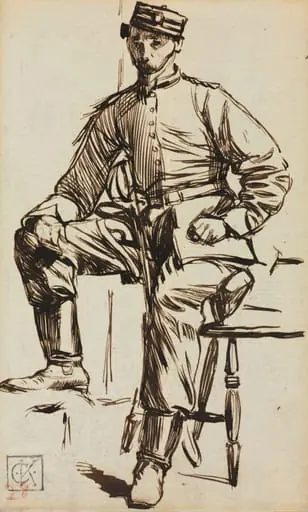
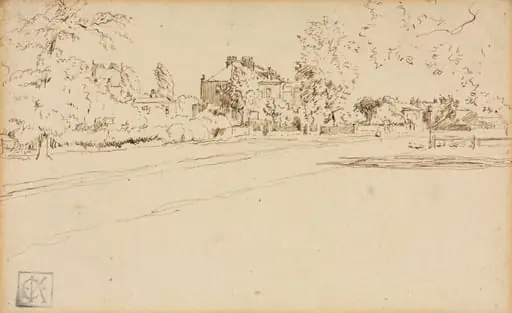
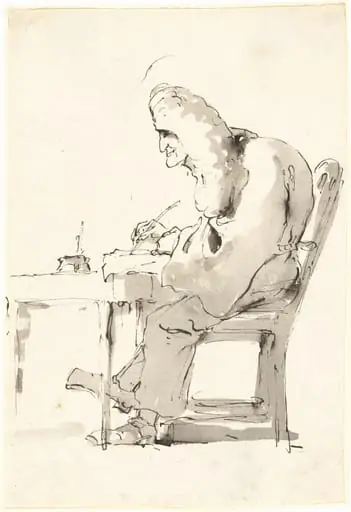
"Oh, Tax 'em by all means!" is an ink drawing by the Impressionist artist Charles Samuel Keene. It dates from 1888 and is held in the collection of the National Gallery of Art.
About this work
Overview
It is rendered on wove paper, a smooth, machine-made support common in 19th-century illustration.
Created in 1888 by Charles Samuel Keene, this drawing is executed in pen and brown ink with layered brown and gray washes, enhanced by white gouache over an underlying graphite sketch. It is rendered on wove paper, a smooth, machine-made support common in 19th-century illustration. The work belongs to a body of Keene’s graphic art that blends observational detail with subtle social commentary, though this piece leans toward quiet introspection rather than satire.
Subject & Meaning
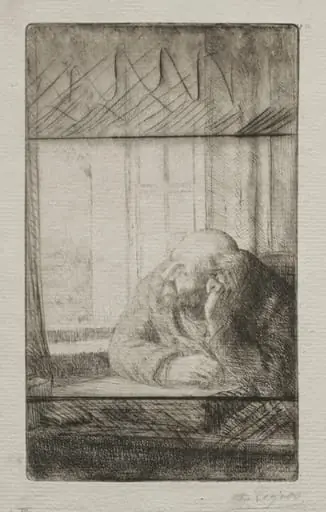
A solitary man sits by a window, holding a dandelion, his posture relaxed and expression unreadable. The absence of furniture or decorative elements isolates him in a sparse interior, emphasizing his inward focus. The dandelion, a common weed often associated with transience or childhood, may hint at fleeting thoughts or unspoken concerns. The scene resists clear narrative, inviting contemplation rather than interpretation.
Technique & Style
Keene employed ink for precise linework, washes to modulate tone, and white gouache to lift highlights and suggest ambient light. The contrast between the dim room and the window’s glow creates a quiet drama. The textured application of gouache adds subtle surface variation, enhancing the tactile quality of the man’s clothing and the softness of the light. The graphite underdrawing remains partially visible, revealing the drawing’s process.
History & Provenance
The work is part of Keene’s later output, produced after his long tenure as an illustrator for publications like Punch. Its survival as a standalone drawing—rather than a printed illustration—suggests it may have been a private study or personal exercise. No documented exhibition or ownership history prior to its current location is widely recorded, indicating it remained within private hands for much of its existence.
Context
In late 19th-century Britain, artists like Keene navigated the boundary between commercial illustration and fine art. While his published work often featured satirical scenes of urban life, this drawing departs from that mode, reflecting a broader trend among illustrators to explore quieter, more introspective subjects. The absence of social satire here aligns with a growing interest in psychological nuance within graphic art of the period.
Legacy
Though not among Keene’s most widely reproduced works, this drawing exemplifies his mastery of tonal control and understated emotion. It contributes to the recognition of 19th-century British graphic art as capable of nuanced expression beyond caricature. Its preservation offers insight into the private artistic practice of a prolific illustrator who helped shape the visual language of his era.
Artist & collection

Artist
Charles Samuel Keene (10 August 1823 – 4 January 1891) was an English artist and illustrator, who worked in black and white.