Artwork
A Station Buffet
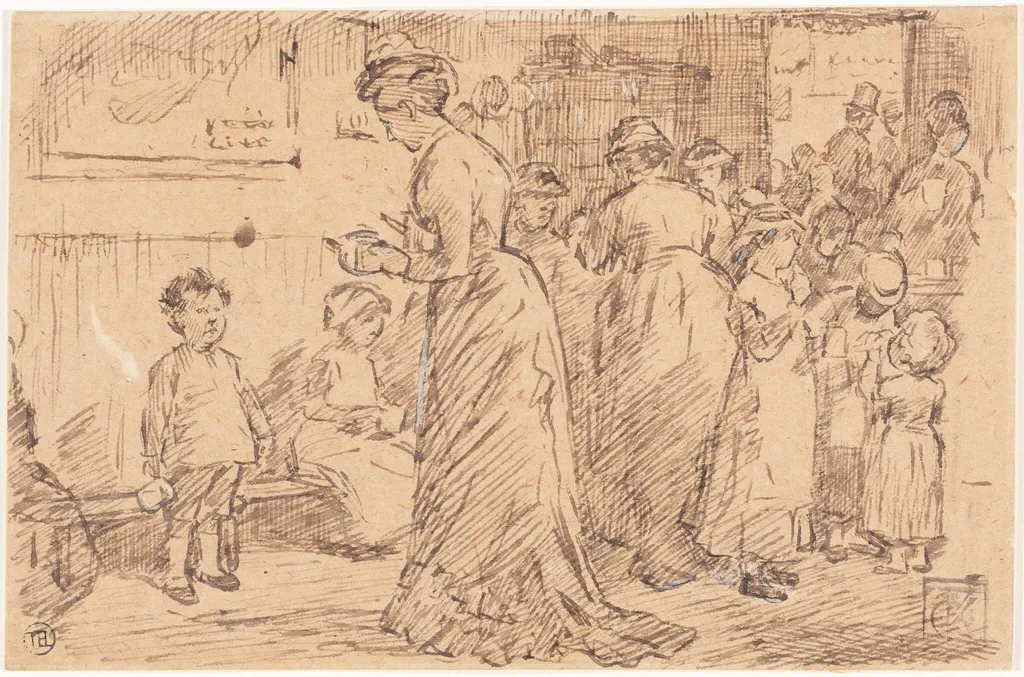
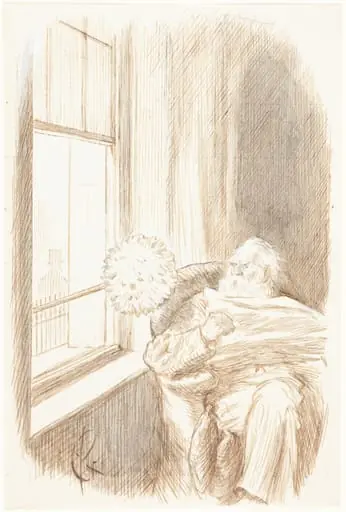
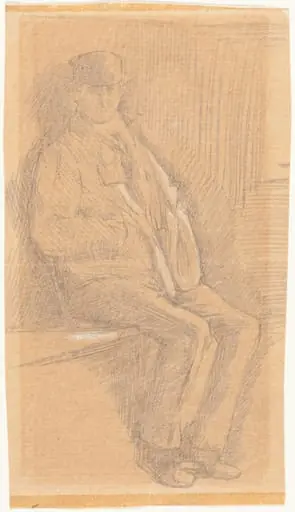
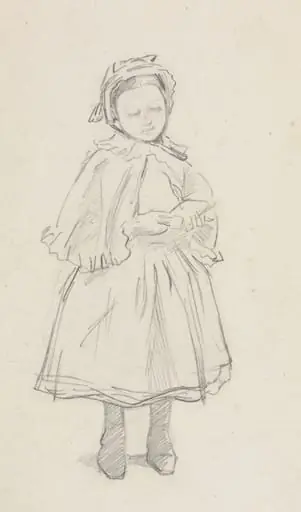
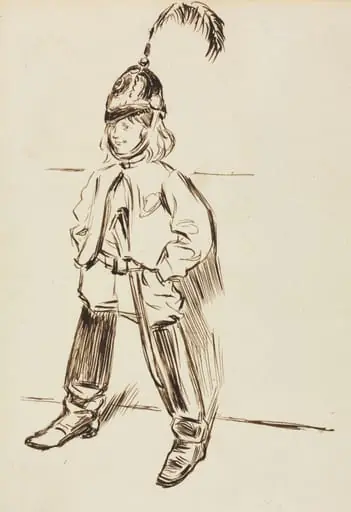
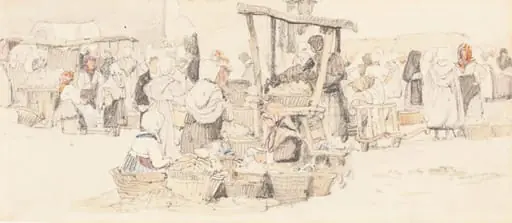
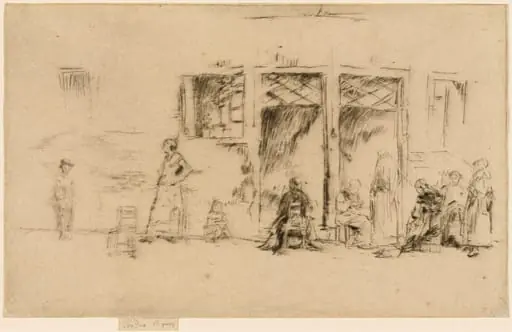
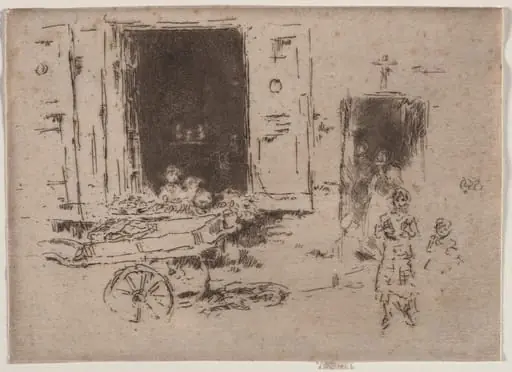
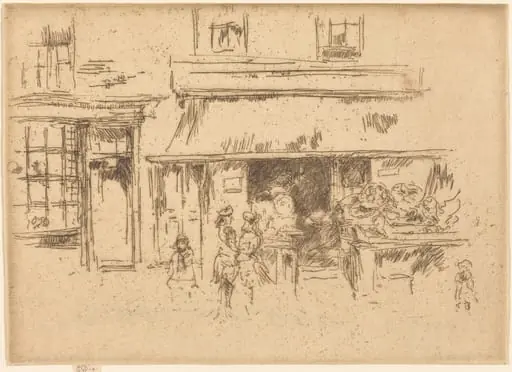
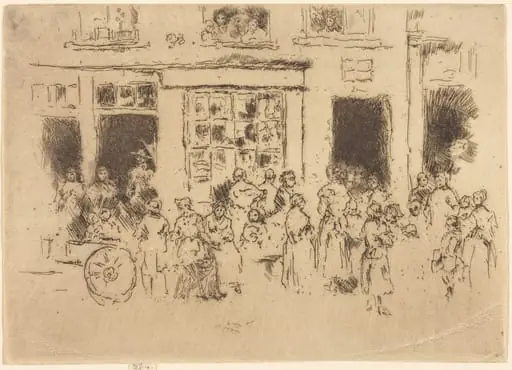
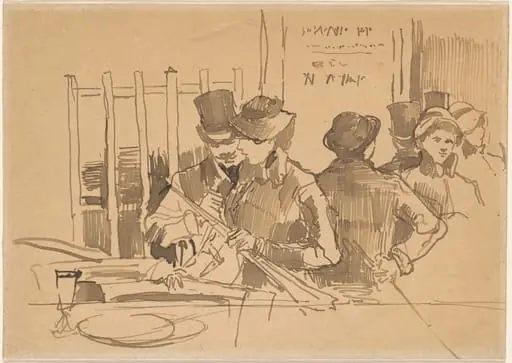
A Station Buffet is an ink drawing by the Romanticist artist Charles Samuel Keene. It dates from 1857 and is held in the collection of the National Gallery of Art.
About this work
Overview
The work exemplifies Keene’s mastery of monochromatic illustration, combining rapid linework with selective highlights to convey motion and atmosphere.
Created in 1857, this drawing by Charles Samuel Keene captures a moment in a railway station buffet using pen, brown ink, graphite, and touches of white gouache on brown wove paper. The work exemplifies Keene’s mastery of monochromatic illustration, combining rapid linework with selective highlights to convey motion and atmosphere. Its medium and scale reflect its origin as a preparatory or observational sketch rather than a finished exhibition piece.
Subject & Meaning
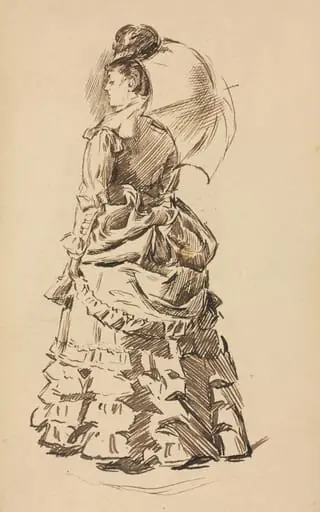
The scene portrays a crowded railway buffet, a space where travelers briefly pause amid the rhythms of Victorian rail travel. A woman in a long dress stands prominently in the foreground, her stillness contrasting with the bustling figures around her. The composition suggests fleeting human interactions—strangers passing, vendors serving, commuters waiting—offering a quiet commentary on the anonymity and transience of modern urban life.
Technique & Style
Keene employed swift, economical pen strokes to define forms, layered with graphite for subtle tonal gradations. White gouache was sparingly applied to suggest light reflecting off surfaces or fabric, enhancing spatial depth without obscuring the underlying sketch. The brown paper ground acts as a mid-tone, allowing the artist to build contrast through negative space and minimal highlights, creating a sense of immediacy and spontaneity.
History & Provenance
The drawing dates from Keene’s early career, shortly after he began contributing illustrations to periodicals like Punch. Its intimate scale and informal quality indicate it was likely made as a study or for personal reference, not for publication. The work remained in private hands until acquired by a public collection, preserving its original condition and material integrity.
Context
In the 1850s, Britain’s expanding railway network transformed public life, creating new social spaces like station buffets. Keene, like many illustrators of the time, turned to these everyday scenes as subjects, capturing the rhythms of a rapidly modernizing society. His drawings offered a visual record of middle-class travel habits and the quiet dramas of public spaces.
Legacy
Keene’s approach influenced later British illustrators who favored observational realism over idealized composition. This drawing exemplifies his ability to convey narrative and atmosphere with minimal means, establishing a precedent for the documentary potential of quick sketches. Though not widely exhibited in his lifetime, such works are now valued for their insight into Victorian daily life.
Artist & collection

Artist
Charles Samuel Keene (10 August 1823 – 4 January 1891) was an English artist and illustrator, who worked in black and white.