Artwork
Auguste Rodin
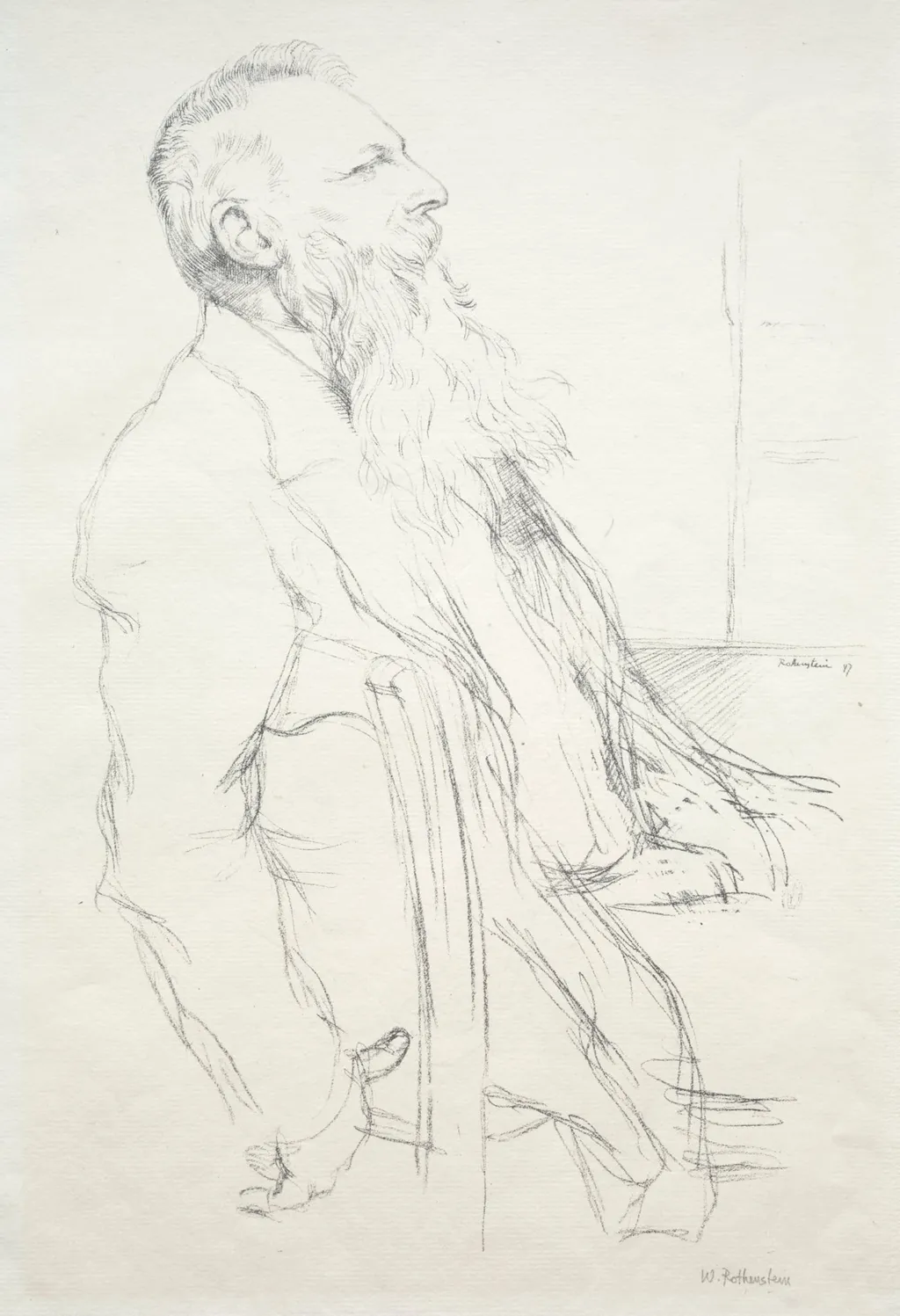
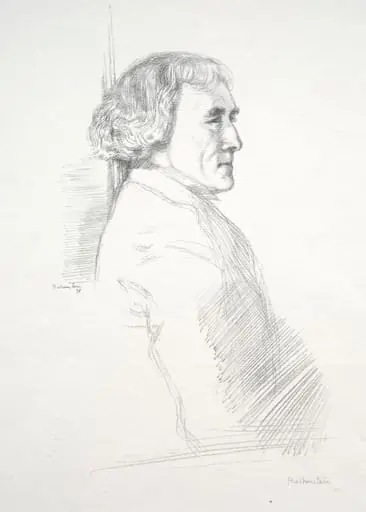
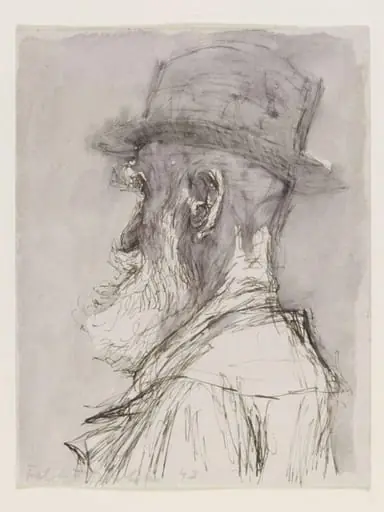
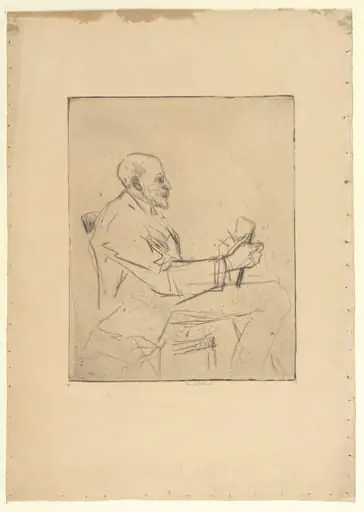
Auguste Rodin is a print by the Impressionist artist William Rothenstein. It dates from 1897 and is held in the collection of the Cleveland Museum of Art.
About this work
Overview
This 1897 drawing by William Rothenstein depicts the French sculptor Auguste Rodin in a spontaneous, intimate pose. Executed in pencil or charcoal, the work is a rapid study that prioritizes expressive gesture over detail. It resides in the collection of The Cleveland Museum of Art, where it serves as a direct record of Rodin’s physical presence and demeanor during his later years.
Subject & Meaning
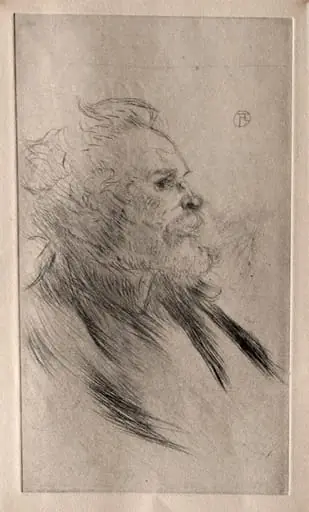
Rodin is portrayed as an aging man, his face marked by deep lines and a thick, unruly beard. His head tilts gently, hands resting on his knees, conveying a sense of quiet exhaustion or contemplation. The image avoids idealization, instead emphasizing the weight of time and labor on the artist’s body, suggesting a personal, unguarded moment rather than a formal portrait.
Technique & Style
The sketch’s texture emerges from rapid, overlapping strokes that suggest the roughness of beard and the creases of skin without precise definition.
Rothenstein employed loose, fluid lines to capture Rodin’s form with immediacy. The sketch’s texture emerges from rapid, overlapping strokes that suggest the roughness of beard and the creases of skin without precise definition. This approach aligns with late 19th-century drawing practices that valued spontaneity and emotional resonance over polished finish, echoing the observational ethos of Impressionist draftsmanship.
History & Provenance
Created during Rothenstein’s time in Paris, the drawing likely resulted from one of his visits to Rodin’s studio in the late 1890s. It entered The Cleveland Museum of Art’s collection through established acquisition channels, possibly as part of a broader donation of Rothenstein’s works. Its preservation reflects early 20th-century interest in documenting prominent artists through personal sketches.
Context
In the 1890s, artists frequently made quick studies of peers as a means of mutual observation and artistic exchange. Rothenstein, a British artist with strong ties to French modernism, was part of this network. His sketch of Rodin reflects a broader trend among contemporaries to record the physicality and character of fellow creators, moving beyond ceremonial portraiture toward psychological immediacy.
Legacy
The drawing endures as a modest but resonant document of artistic camaraderie. It offers insight into how one sculptor was perceived by another, preserving Rodin’s presence not as a monument but as a man. While not widely exhibited, it remains a key example of Rothenstein’s skill in capturing essence through minimal means, influencing later generations of observational draftsmen.
Artist & collection
Artist
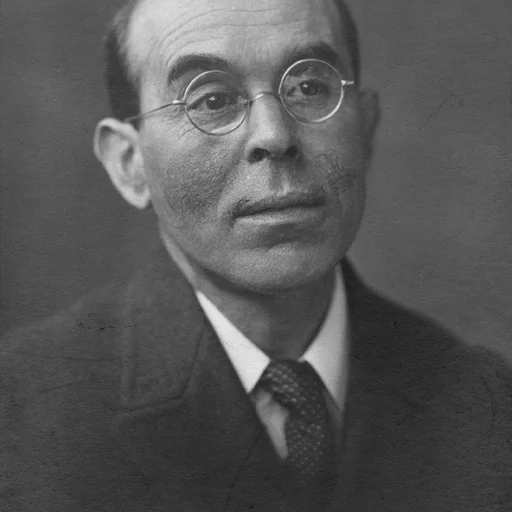
Sir William Rothenstein was an English painter, printmaker, draughtsman, lecturer, and writer on art.