Artwork
寒山拾得図 (Kanzan Jittoku zu)|Hanshan and Shide
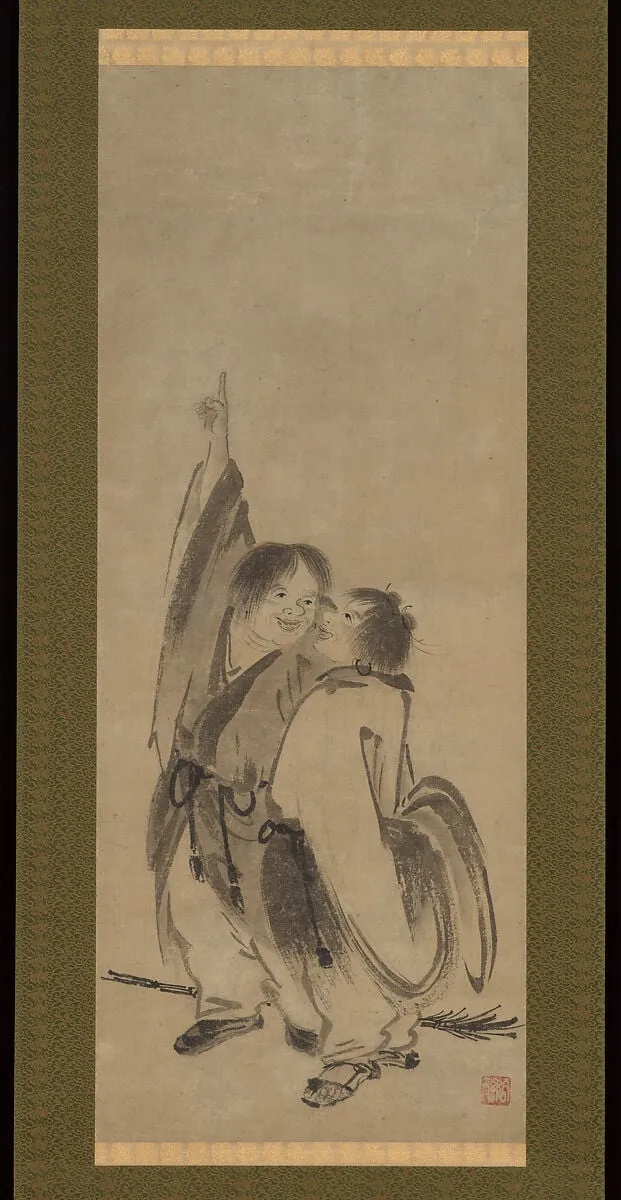
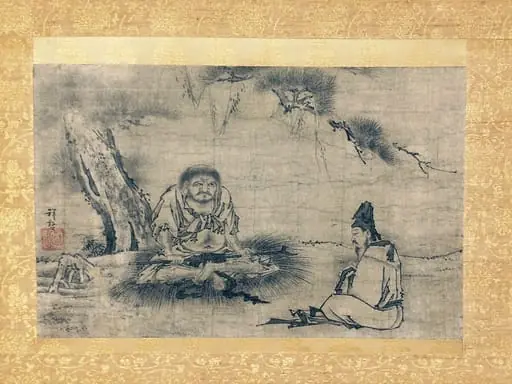
寒山拾得図 (Kanzan Jittoku zu)|Hanshan and Shide is an ink painting by the Nihonga artist Kenkō Shōkei. It dates from 1500 and is held in the collection of the Metropolitan Museum of Art.
About this work
Overview
The work portrays two disheveled figures seated beneath a twisted pine, one clutching a scroll, the other a broom, their expressions animated and informal.
Kenkō Shōkei’s hanging scroll, dated to around the turn of the 16th century, presents a monochrome ink composition on paper. The work portrays two disheveled figures seated beneath a twisted pine, one clutching a scroll, the other a broom, their expressions animated and informal. Rendered in a single brushstroke palette, the painting exemplifies a modest yet evocative approach to religious subject matter.
Subject & Meaning
The two characters are identified as Hanshan and Shide, legendary Chinese hermits whose unconventional behavior was later embraced by Japanese Zen as an emblem of spontaneous enlightenment. Their patched robes and mischievous demeanor convey a sense of liberated wisdom, suggesting that true insight can arise outside formal monastic discipline.
Technique & Style
Shōkei employs a brisk cross‑hatching method to model light and shadow, allowing the ink to build tonal depth through intersecting strokes. The figures are outlined with loose, gestural lines, and the pine’s bark is rendered with textured, stippled marks, creating a dynamic contrast between the rugged natural setting and the lively human presence.
History & Provenance
Created circa 1500, the scroll belongs to the tradition of Japanese Zen ink painting that imported Chinese iconography. While specific ownership records are scarce, the piece has been preserved within temple collections before entering a museum setting, where it continues to illustrate the cross‑cultural transmission of Zen ideals.
Artist & collection