Artwork
禅機(鳥窠道林・白居昜)|Zen Encounter (Niaoke Daolin and Bai Juyi)
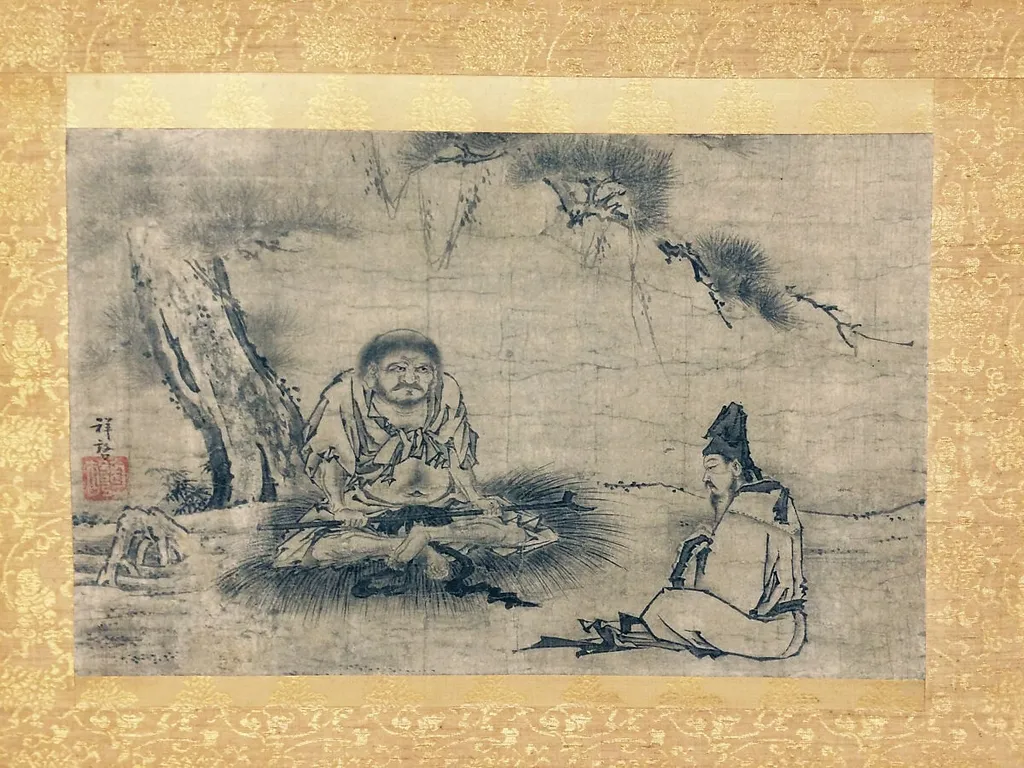
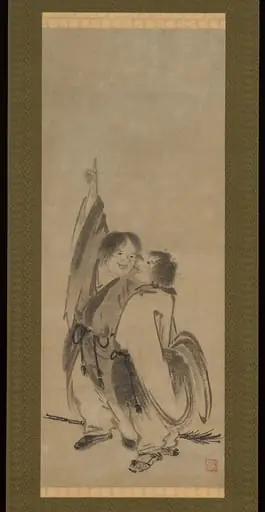
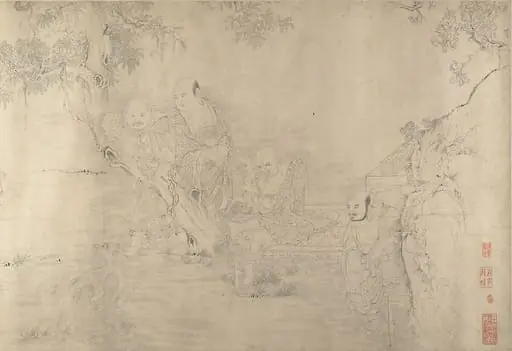
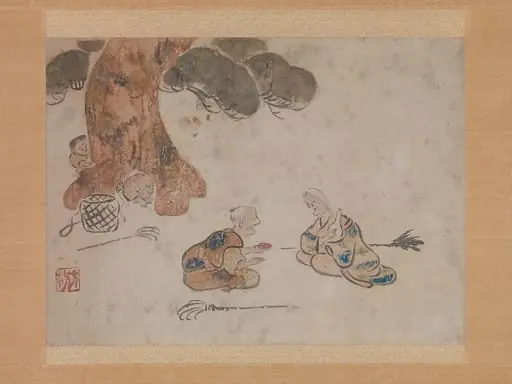
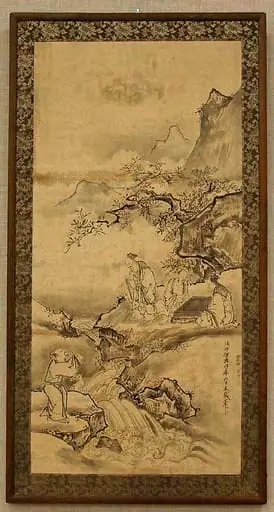
禅機(鳥窠道林・白居昜)|Zen Encounter (Niaoke Daolin and Bai Juyi) is an ink painting by the Nihonga artist Kenkō Shōkei. It dates from 1500 and is held in the collection of the Metropolitan Museum of Art.
About this work
Overview
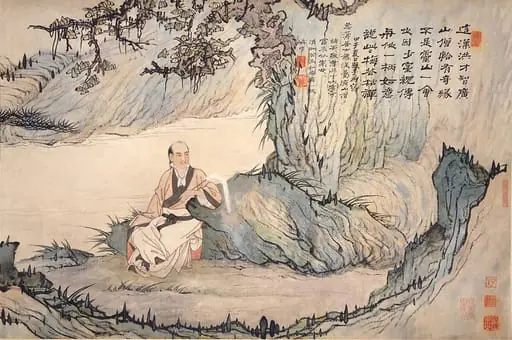
Created around the turn of the 16th century, this hanging scroll by the Japanese painter Kenkō Shōkei presents a quiet, contemplative scene rendered in ink on paper. The work belongs to the religious genre, illustrating a moment of serene dialogue between two figures within a natural landscape.
Subject & Meaning
The composition features two seated men amid trees and rocks, their posture and interaction suggesting a calm exchange of thoughts. The setting evokes the Zen ideal of mindfulness and the value placed on simple, meditative encounters in nature.
Technique & Style
Executed with monochrome ink, the scroll employs delicate brushwork to suggest foliage, stone, and the figures’ garments. The minimal palette and restrained line quality reflect the aesthetic of Japanese ink painting, where suggestion often replaces detailed representation.
History & Provenance
Attributed to Kenkō Shōkei, an artist active in the early 1500s, the piece is catalogued under the title Zen Encounter (Niaoke Daolin and Bai Juyi). Its provenance traces back to Japanese religious collections, though specific ownership records remain limited.
Context
During the Muromachi period, Zen Buddhism heavily influenced visual arts, encouraging works that emphasized quiet reflection. This scroll aligns with that tradition, portraying a tranquil dialogue that mirrors the period’s spiritual and artistic preoccupations.
Artist & collection