Artwork
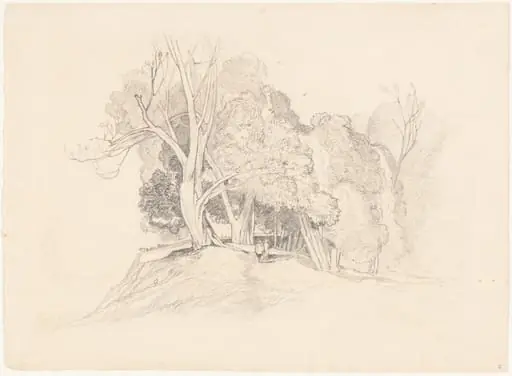
Trees by a Rail Fence
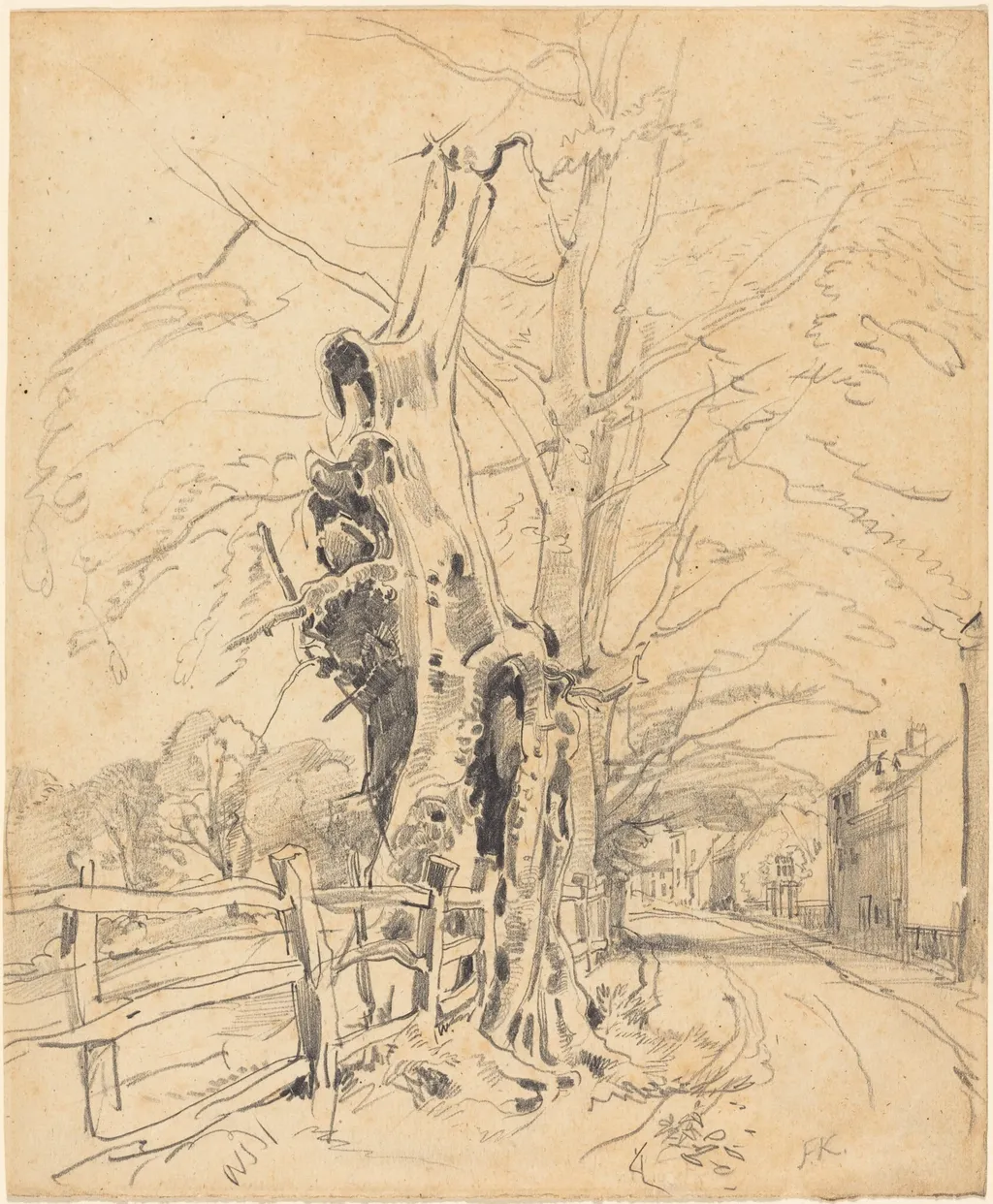
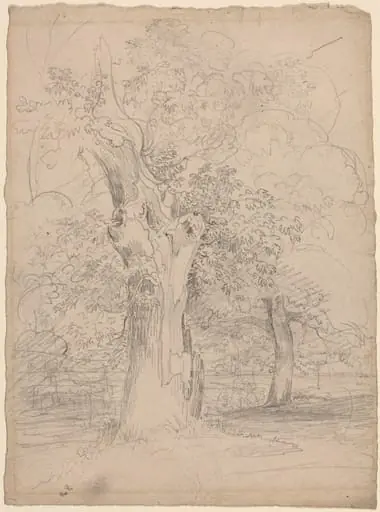
Trees by a Rail Fence is a graphite drawing by the Impressionist artist John Frederick Kensett. It dates from 1854 and is held in the collection of the National Gallery of Art.
About this work
Overview
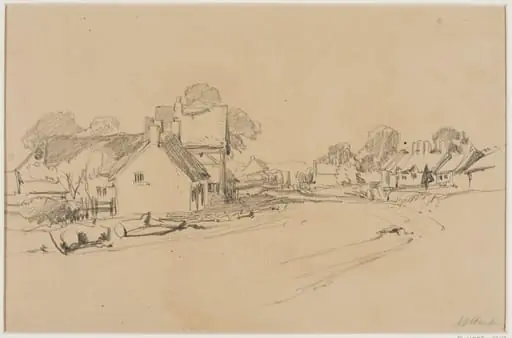
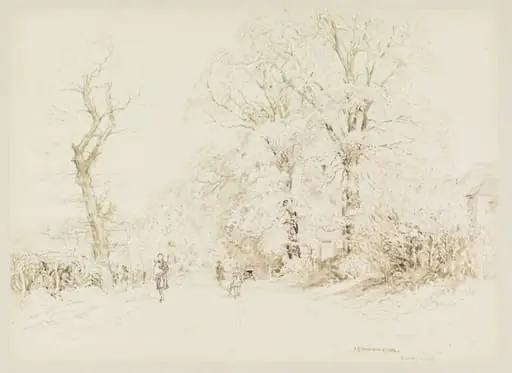
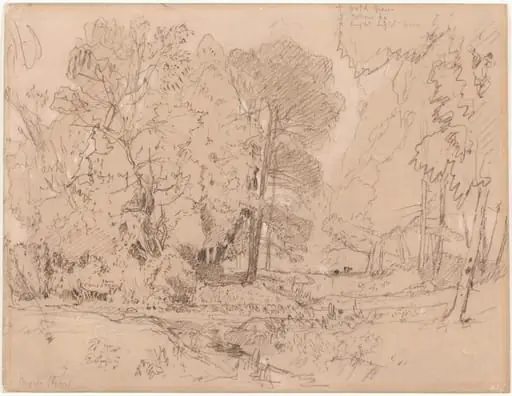
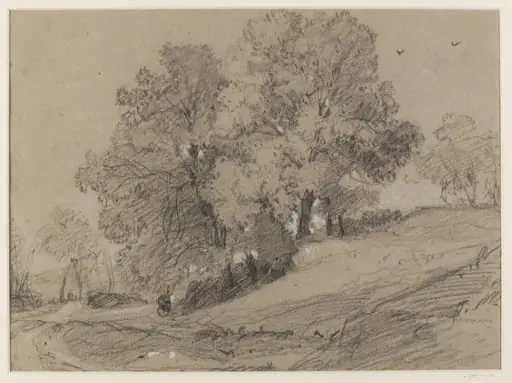
John Frederick Kensett’s drawing, dated around 1854, presents a modest rural scene rendered in graphite on wove paper. The composition centers on a line of trees positioned beside a low rail fence, with a muted sky receding behind them. The work’s restrained palette and careful line work convey a quiet, contemplative atmosphere.
Subject & Meaning
The drawing focuses on the interplay between natural forms and a simple human-made structure. Bare‑branch trees dominate the visual field, their silhouettes suggesting both resilience and transience, while the fence introduces a sense of order and perspective. The subdued setting invites reflection on the ordinary beauty of a cultivated landscape.
Technique & Style
Kensett employed graphite on smooth wove paper, allowing for fine, precise lines and subtle tonal gradations. The delicate hatching captures the texture of bark and the linearity of the fence, while the soft shading suggests atmospheric depth. The drawing exemplifies mid‑nineteenth‑century American landscape drawing, emphasizing observation and restrained realism.
History & Provenance
Created circa 1854, the piece belongs to Kensett’s early period, before his later association with the Hudson River School’s luminous vistas. Its provenance traces through private collections before entering a public institution in the early twentieth century, where it has been catalogued as an example of his formative graphic work.
Artist & collection

Artist
John Frederick Kensett was an American landscape painter and engraver born in Cheshire, Connecticut.

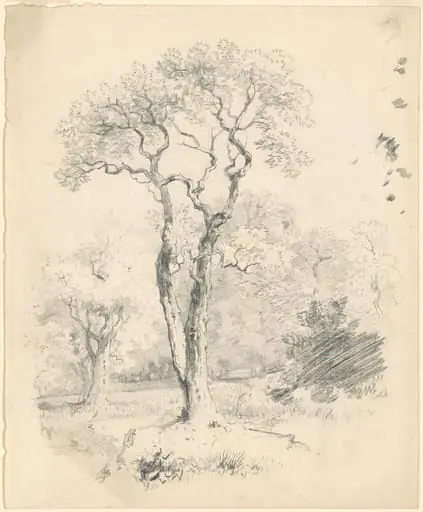
![Grove of Trees [verso], by Friedrich Salathé](https://artifactworldgallery.com/img/friedrich-salathe--grove-of-trees-verso--4013b539bd981a94-w320.webp)