Artwork
Bacchus and Ariadne
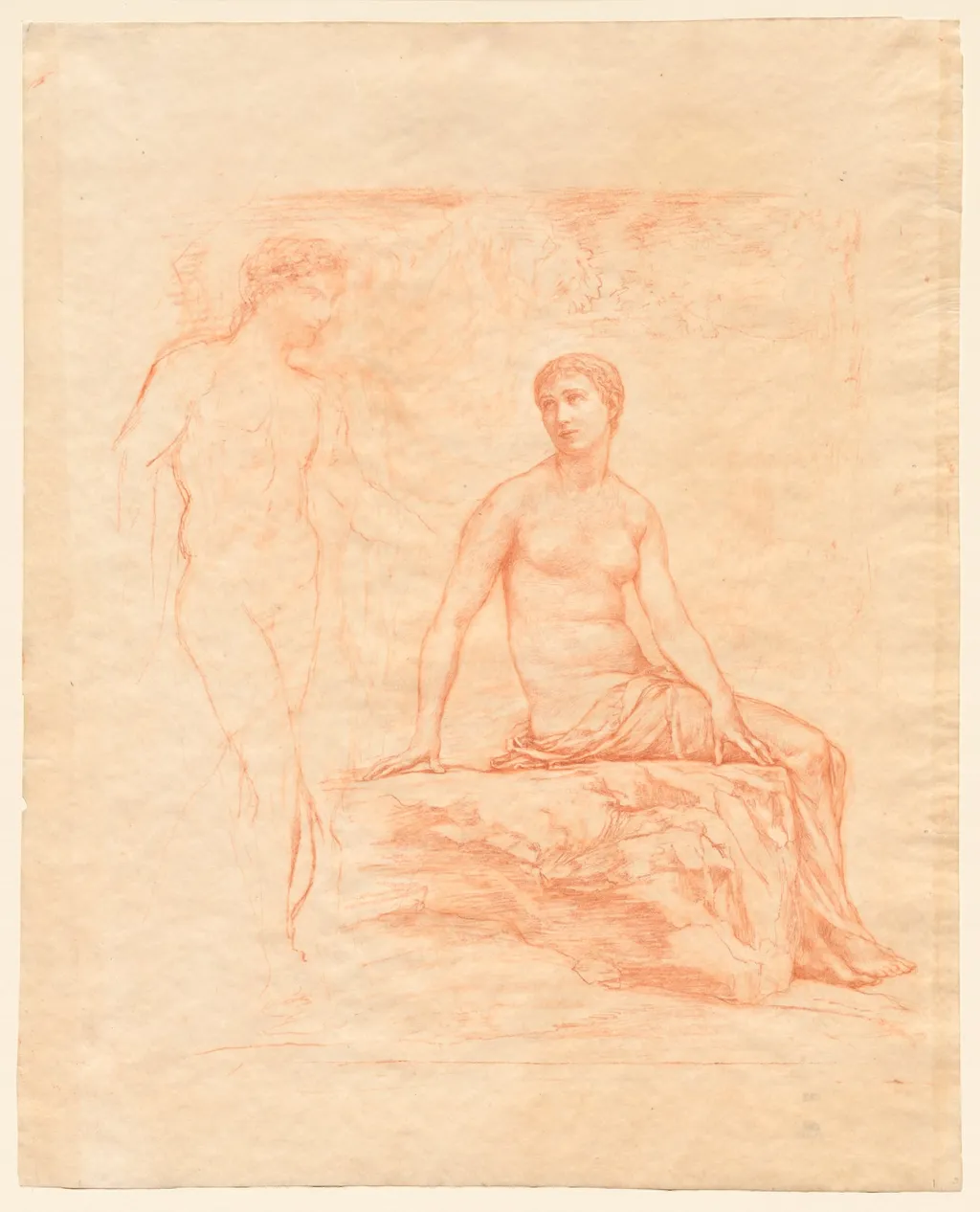
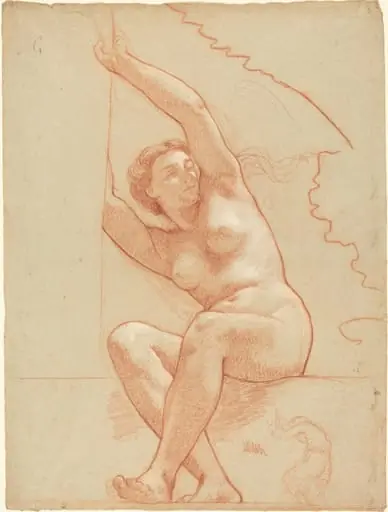
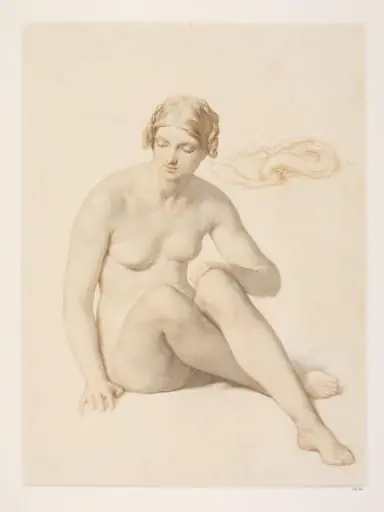
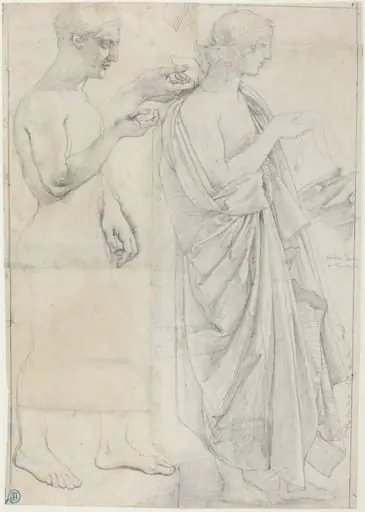
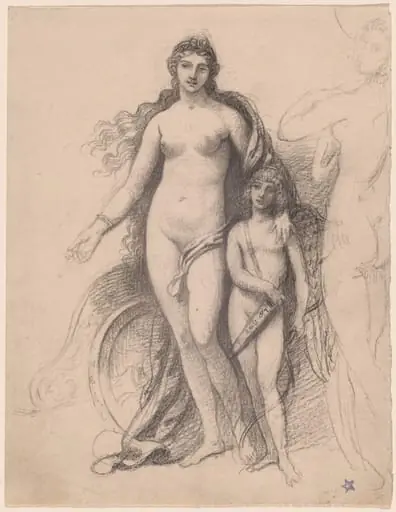
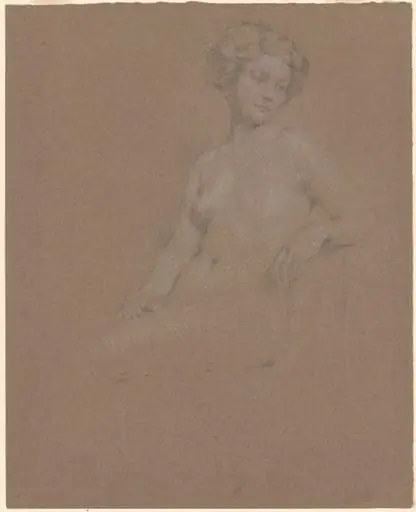
Bacchus and Ariadne is a drawing by the Impressionist artist John La Farge. It dates from 1880 and is held in the collection of the Cleveland Museum of Art.
About this work
Overview
Created in the early 1880s, this red chalk drawing by John La Farge was part of a decorative program for Cornelius Vanderbilt’s New York residence.
Created in the early 1880s, this red chalk drawing by John La Farge was part of a decorative program for Cornelius Vanderbilt’s New York residence. Collaborating with artists including Augustus Saint-Gaudens, La Farge drew inspiration from Italian Renaissance aesthetics, deliberately reviving historical techniques to evoke the grandeur of Florentine courtly art. The work functions as both a preparatory study and a standalone composition steeped in classical allusion.
Subject & Meaning
The scene depicts Bacchus, god of wine, riding a chariot drawn by cheetahs, while Ariadne watches from the shore. Though rooted in Greek myth, the figures are rendered with the poise and attire of Renaissance personages rather than ancient prototypes. La Farge’s reinterpretation merges classical narrative with early modern idealism, suggesting a timeless continuity between antiquity and the Renaissance revival.
Technique & Style
Red chalk, a medium favored by Renaissance draftsmen like Michelangelo and Raphael, was chosen to align the work with Florentine drawing traditions. La Farge employed fluid, expressive lines and subtle tonal gradations to model form, evoking the soft modeling associated with sfumato. The technique lends the figures a sculptural presence, bridging the gap between sketch and finished painting.
History & Provenance
The drawing originated as part of a larger decorative scheme for Vanderbilt’s mansion, commissioned during a period when American elites sought to emulate European cultural prestige. Though the interior decorations have since been dispersed, this drawing survives as a key artifact of La Farge’s interdisciplinary approach, linking architecture, painting, and classical revival in Gilded Age America.
Context
La Farge’s work emerged amid a broader American fascination with Renaissance art, fueled by travel, collecting, and architectural emulation. His use of mythological subjects in Renaissance style reflected a desire to elevate domestic interiors to the level of European palazzi. The drawing thus embodies a transatlantic cultural project, reimagining antiquity through the lens of 15th-century Italian aesthetics.
Legacy
This drawing exemplifies La Farge’s role in shaping American taste for historical synthesis. By blending classical myth with Renaissance technique, he influenced later artists and designers seeking to ground modern American art in European traditions. Its survival offers insight into how 19th-century patrons and creators reinterpreted antiquity not as a relic, but as a living visual language.
Artist & collection

Artist
John La Farge (March 31, 1835 – November 14, 1910) was an American artist whose career spanned illustration, murals, interior design, painting, and popular books on his Asian travels and other art-related topics.

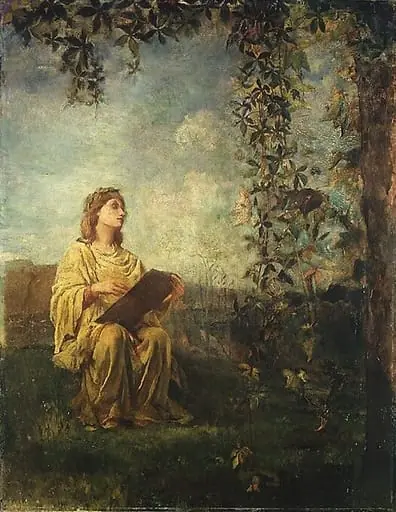 The Muse of Painting
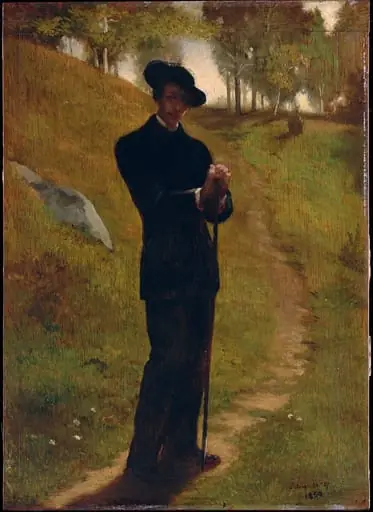 Portrait of the Painter
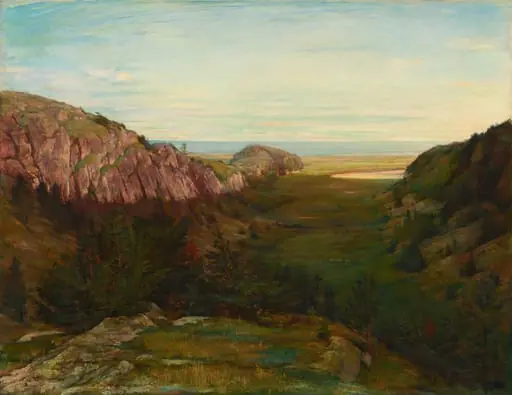 The Last Valley - Paradise Rocks
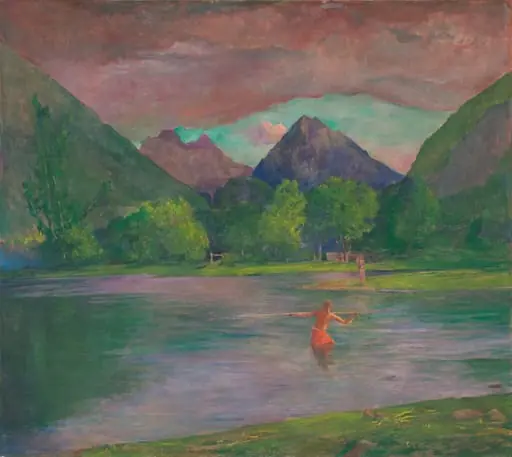 The Entrance to the Tautira River, Tahiti. Fisherman Spearing a Fish
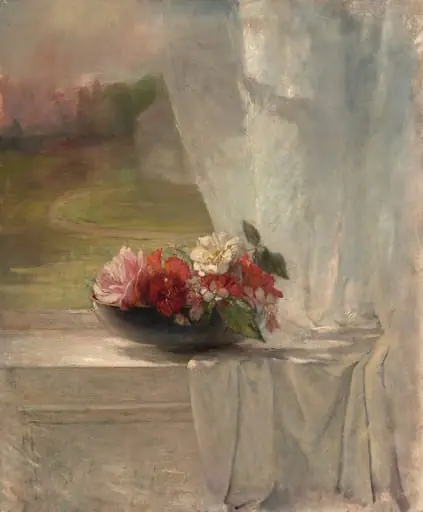 Flowers on a Window Ledge
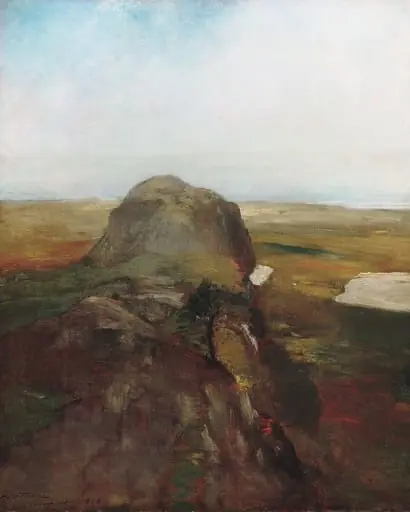 Autumn Study, View over Hanging Rock, Newport, R.I.
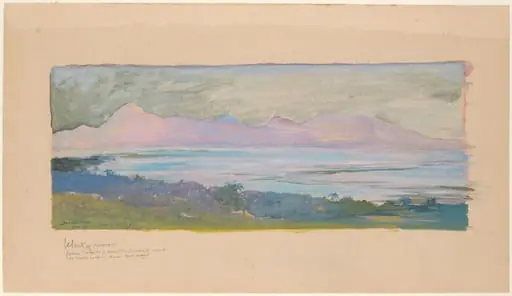 The Island of Moorea Looking across the Strait from Tahiti, January 1891
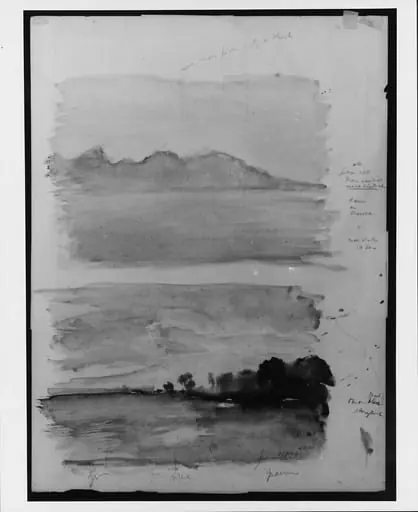 Double Study of Dawn, Moorea Seen across the Water, Tahiti