Artwork
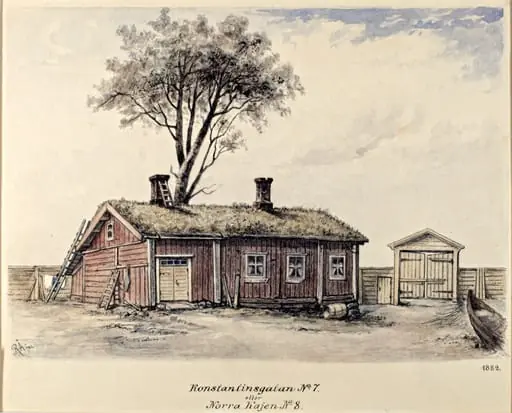
Konstantininkatu 7 tai Pohjoisranta 8
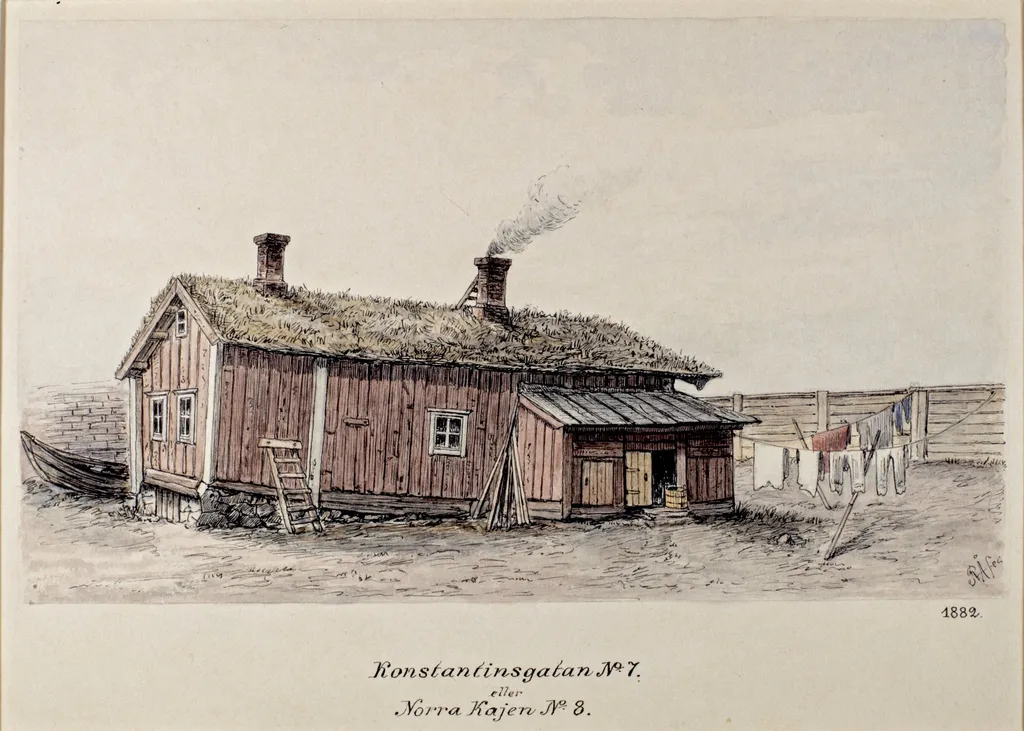
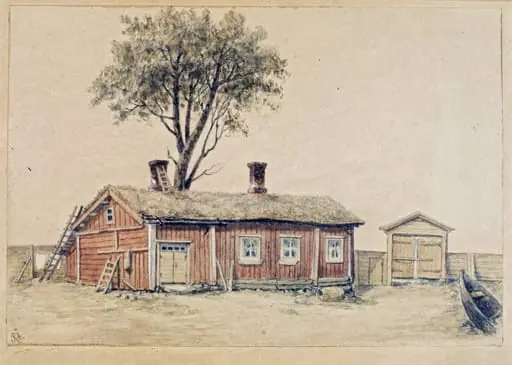
Konstantininkatu 7 tai Pohjoisranta 8 is a drawing by Rudolf Åkerblom. It dates from 1897 and is held in the collection of the Helsinki City Museum.
About this work
Overview
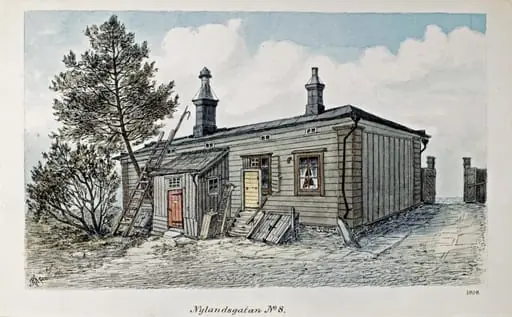
Rudolf Åkerblom’s drawing, dated around 1897, portrays a modest wooden dwelling topped with a thatched grass roof. A chimney releases a thin column of smoke, while a ladder rests against the wall and laundry hangs from a line. Adjacent to the house a small boat lies on the ground, and a fence borders a muddy strip, suggesting a humble, everyday setting.
Subject & Meaning
The composition captures a quiet moment of domestic routine, emphasizing the simplicity of rural life. By depicting ordinary objects—a ladder, drying clothes, a grounded boat—the work reflects the lived experience of ordinary people and invites viewers to consider the rhythms of daily labor and shelter.
Technique & Style
Executed in a straightforward drawing technique, Åkerblom employs clear lines and modest shading to convey texture, such as the thatch roof and the wetness of the mud. The restrained palette and lack of decorative flourish lend the image a documentary quality, reinforcing its observational character.
History & Provenance
Created circa 1897, the piece belongs to Åkerblom’s early period, when he focused on scenes of everyday Finnish life. The work’s title references two possible locations—Konstantininkatu 7 or Pohjoisranta 8—suggesting uncertainty about its precise setting.
Context
At the turn of the twentieth century, Finnish artists increasingly turned to rural subjects, documenting the nation’s agrarian roots amid rapid urbanization. Åkerblom’s drawing aligns with this trend, offering a visual record of modest housing and the surrounding landscape during a period of social change.
Artist & collection