Artwork
Vuorikatu 7
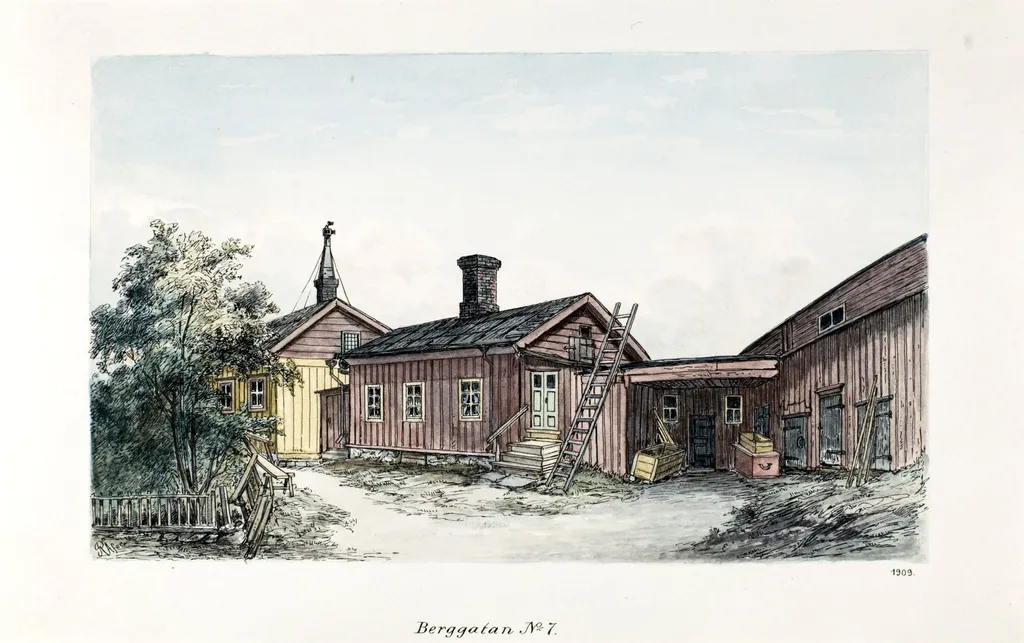
Vuorikatu 7 is a drawing by Rudolf Åkerblom. It dates from 1897 and is held in the collection of the Helsinki City Museum.
About this work
Overview
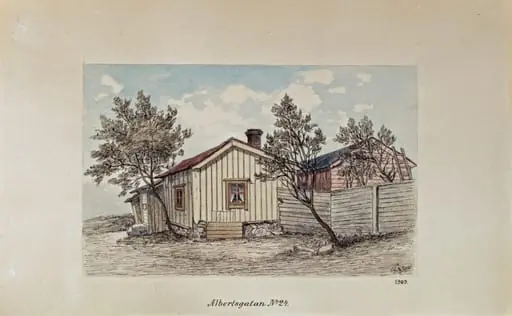
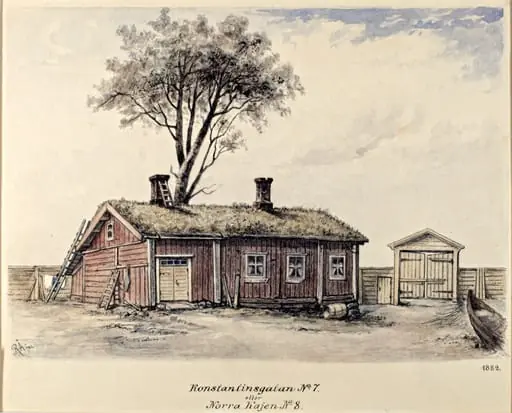
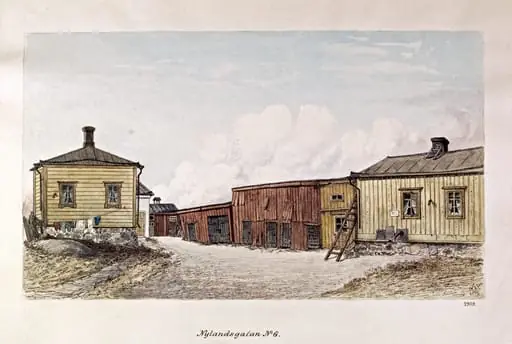
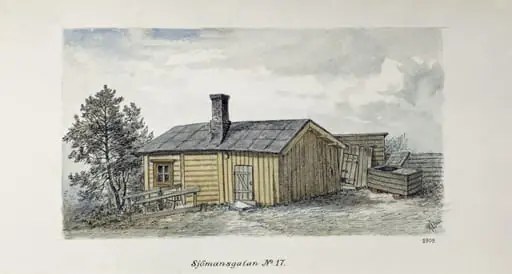
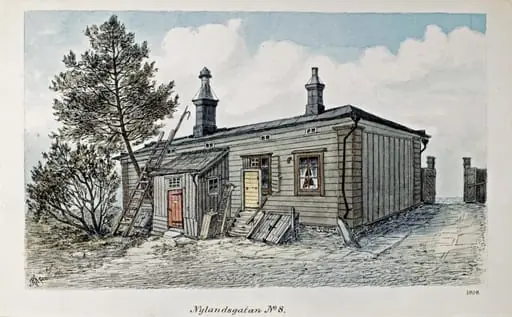
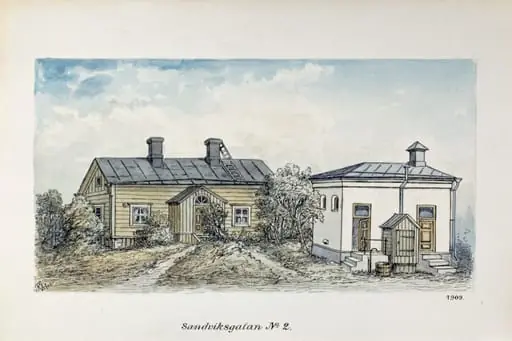
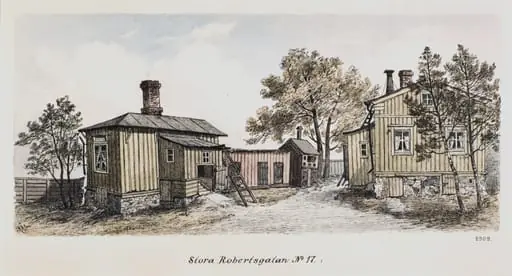
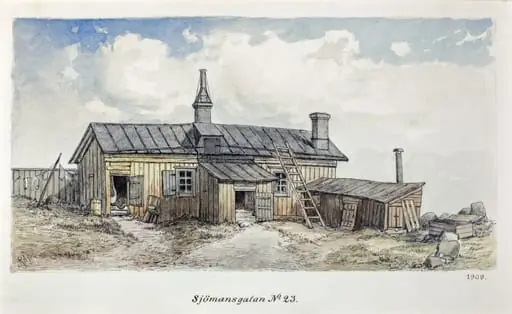
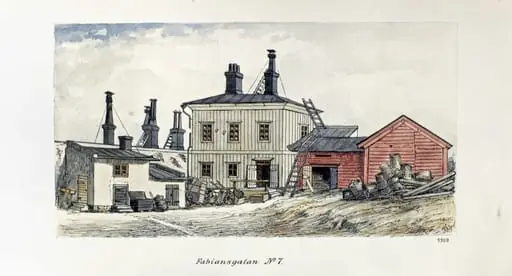
Rudolf Åkerblom created Vuorikatu 7 around 1897 as a quiet observational sketch. It depicts a modest row of wooden structures in a Finnish urban setting, rendered with minimal embellishment. The scene lacks theatricality, instead capturing the unadorned rhythm of daily life in a working-class neighborhood. The composition emphasizes texture and spatial arrangement over narrative drama.
Subject & Meaning
The sketch portrays utilitarian architecture—simple dwellings with functional details like chimneys and leaning ladders. A lone tree and scattered tools suggest domestic activity, while muddy ground implies recent weather or frequent use. There is no indication of wealth or ceremony; the focus lies in the ordinary, the worn, and the lived-in, reflecting a respect for everyday environments.
Technique & Style
Åkerblom employed loose, economical lines and muted earth tones—browns, ochres, and grays—to convey form and atmosphere. The brushwork is direct, avoiding polish or idealization. Shadows and surface textures are suggested rather than meticulously rendered, reinforcing the sketch’s immediacy. The composition is unstructured yet balanced, prioritizing observational truth over formal composition.
History & Provenance
Created during Åkerblom’s active period in late 19th-century Finland, Vuorikatu 7 is part of a body of work documenting local architecture and street life. Its survival as a standalone sketch suggests it was not intended for public display but rather as a personal record. The work remains within private or institutional collections, with no known exhibition history prior to the 20th century.
Context
In the 1890s, Finnish artists increasingly turned to domestic and rural scenes as national identity took shape. Åkerblom’s focus on modest urban dwellings aligned with this trend, contrasting with grand historical or romanticized subjects. His sketches contributed to a growing visual archive of everyday Finnish life, documenting spaces often overlooked by official art.
Legacy
Vuorikatu 7 exemplifies Åkerblom’s commitment to unembellished observation. While not widely exhibited, his sketches like this one inform later studies of Finnish vernacular architecture and social history. They remain valuable for their unvarnished portrayal of late 19th-century urban life, offering insight into the material culture of ordinary communities.
Own this work as a print
Artist & collection