Artwork
Lauttasaari, Katajaharjunniemi
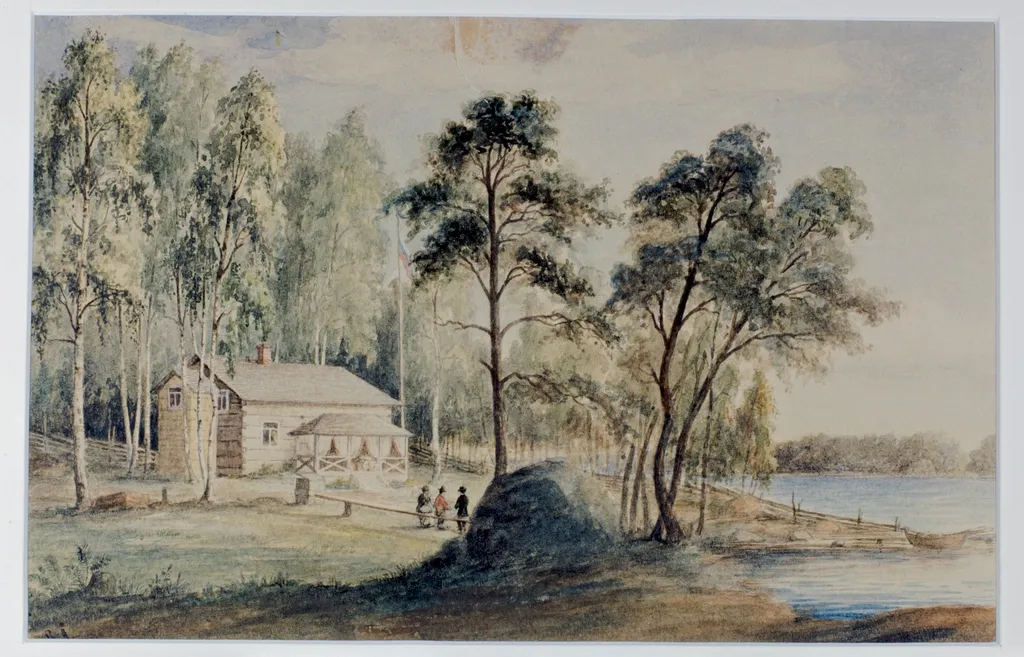
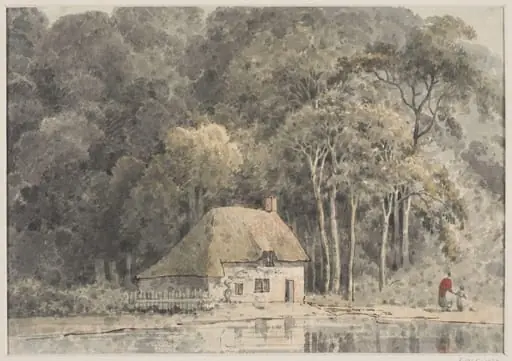
Lauttasaari, Katajaharjunniemi is a drawing by Rudolf Åkerblom. It dates from 1897 and is held in the collection of the Helsinki City Museum.
About this work
Overview
A flagpole, a dock, and a beached boat anchor the scene, while three small figures move along the shoreline, suggesting quiet daily life.
Created around 1897 by Rudolf Åkerblom, this watercolor depicts a tranquil lakeside location in Lauttasaari, Finland. The composition centers on a modest wooden cottage, flanked by slender trees and bordered by still water. A flagpole, a dock, and a beached boat anchor the scene, while three small figures move along the shoreline, suggesting quiet daily life. The work captures a moment of stillness, free from dramatic action or ornament.
Subject & Meaning
The scene presents an unadorned Finnish lakeside dwelling, evoking a sense of enduring solitude. The cottage, with its weathered porch and low fence, implies long-term habitation, while the lone flagpole and empty boat hint at human presence without intrusion. The figures are minimal, integrated into the landscape rather than dominating it, reinforcing a theme of harmony between people and nature.
Technique & Style
Åkerblom employed loose, fluid brushwork typical of watercolor sketching, allowing pigments to bleed softly into one another. Pale greens and muted blues dominate, creating a hazy, atmospheric effect that diffuses light across the surface. The lack of sharp detail invites contemplation, with forms suggested rather than defined, emphasizing mood over precision.
History & Provenance
The work originates from Åkerblom’s personal observations of the Lauttasaari region during the late 19th century. While specific ownership history is not widely documented, it aligns with a broader Finnish tradition of landscape studies from that era, often produced as private records rather than public exhibitions. Its survival suggests it was preserved within family or local collections.
Context
In the 1890s, Finland was developing a distinct national identity through art, with many artists turning to rural and lakeside scenes as symbols of cultural authenticity. Åkerblom’s quiet depiction reflects this trend, avoiding grandeur in favor of intimate, everyday settings. Such works contributed to a visual language that celebrated the Finnish landscape as a site of quiet resilience.
Legacy
Though not widely exhibited, this watercolor exemplifies a modest but persistent strand in Finnish art: the observation of ordinary places with sensitivity and restraint. Its preservation offers insight into how artists of the time recorded their surroundings without romanticizing them. It remains a quiet testament to the aesthetic value found in unremarkable, enduring landscapes.
Own this work as a print
Artist & collection

 Pond at Hampstead
 Büyükdere on the Bosphorus from the Giant's Grave
 Landscape with Barn
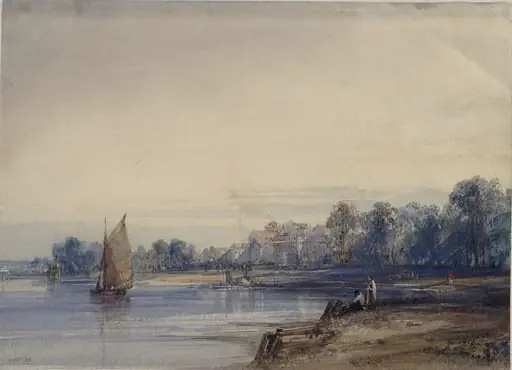 On the Thames
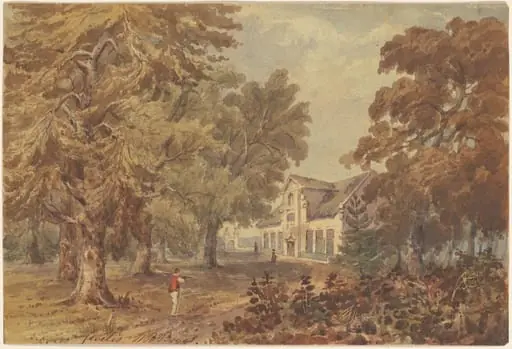 Cloetis
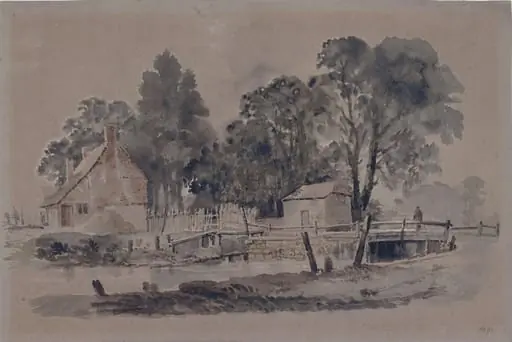 Stream with bridge and cottages
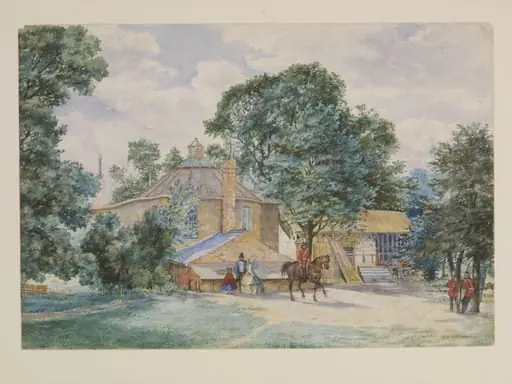 The first lecture theatre at the South Kensington Museum, later the Victoria and Albert Museum
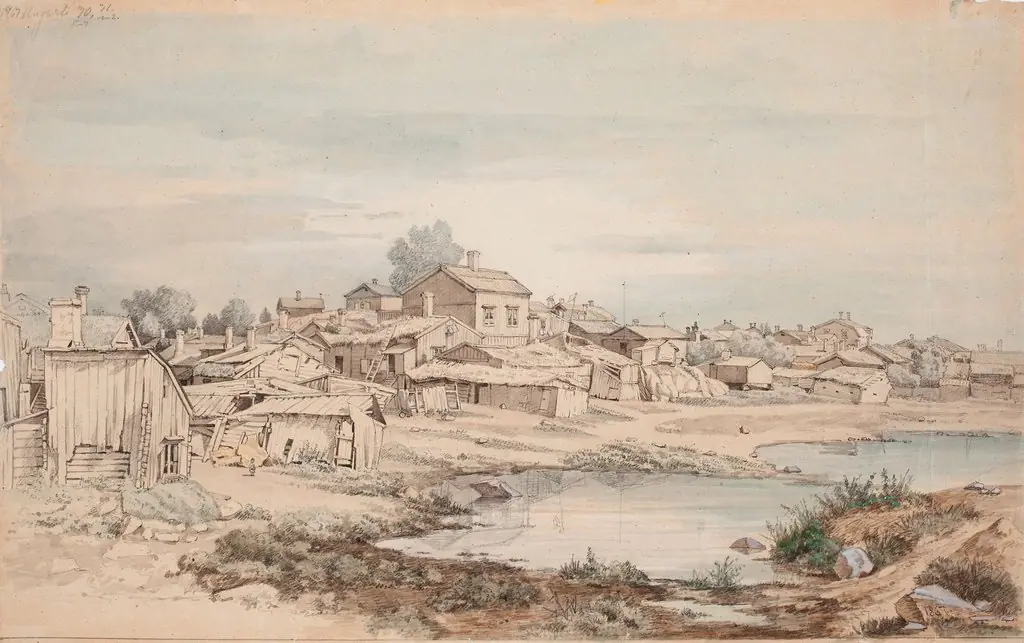 Katajanokka, luonnos
 Landscape
 Cottage near Norwood
 View at Adegaon, Seoni District, Madhya Pradesh
 Cottage by a Lakeside, Somerset