Artwork
Munkkisaarenkatu 12
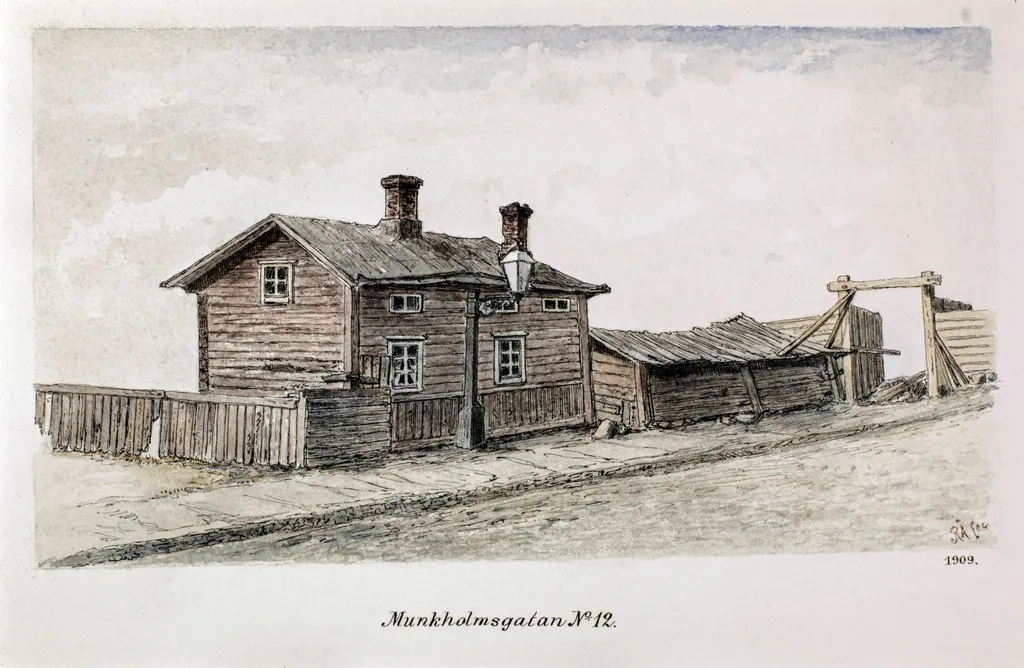
Munkkisaarenkatu 12 is a drawing by Rudolf Åkerblom. It dates from 1897 and is held in the collection of the Helsinki City Museum.
About this work
Overview
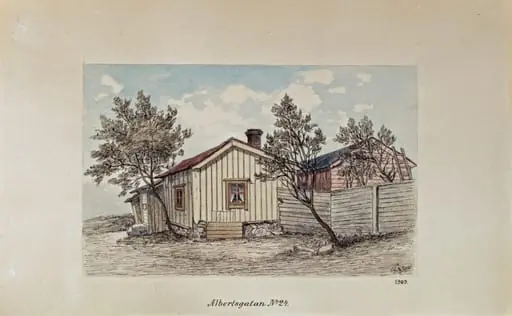
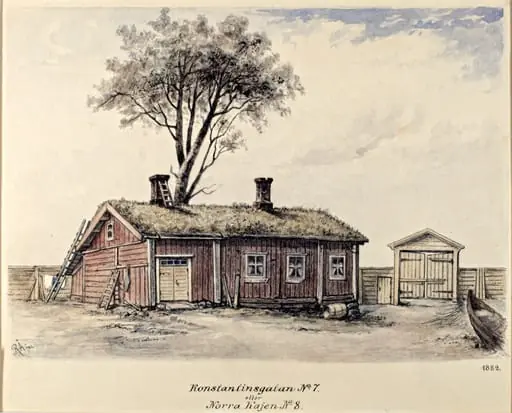
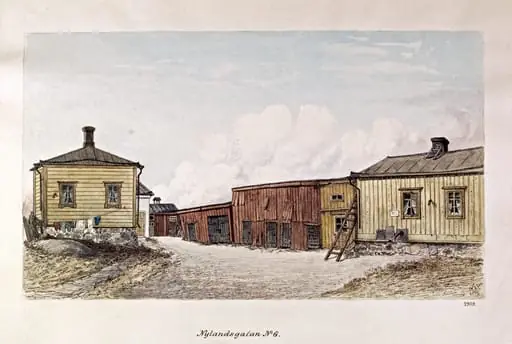
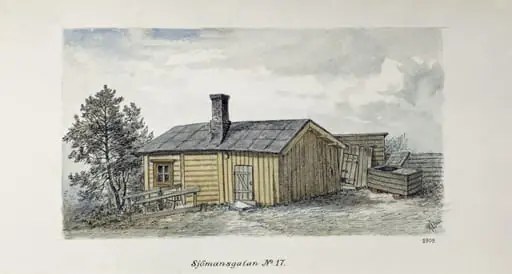
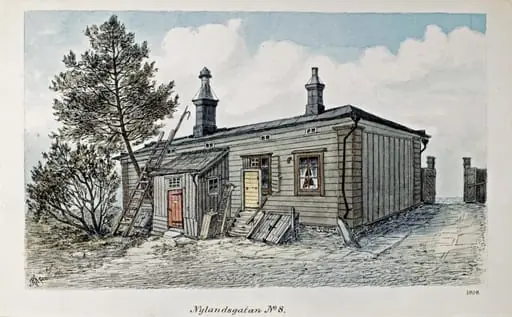
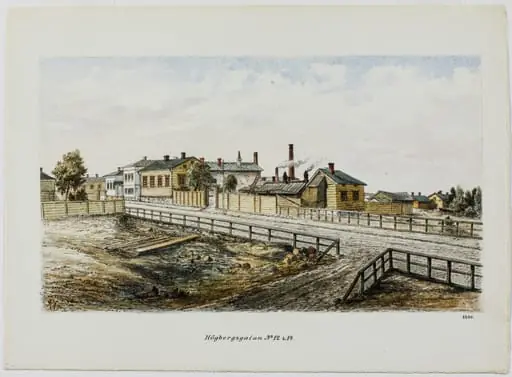
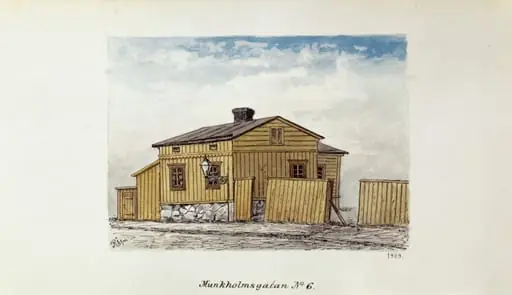
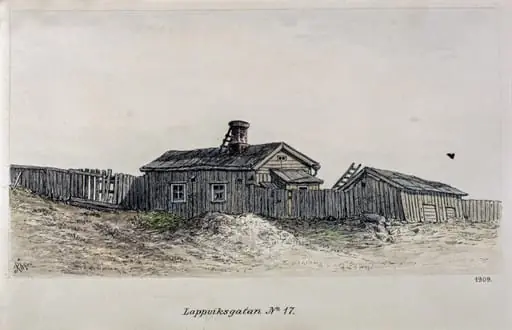
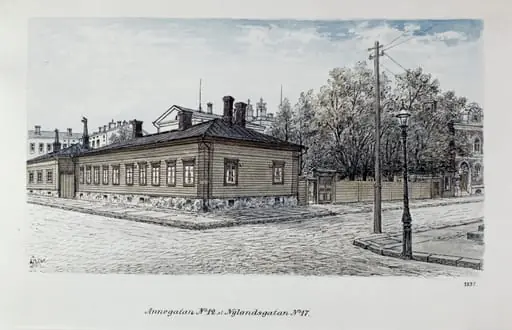
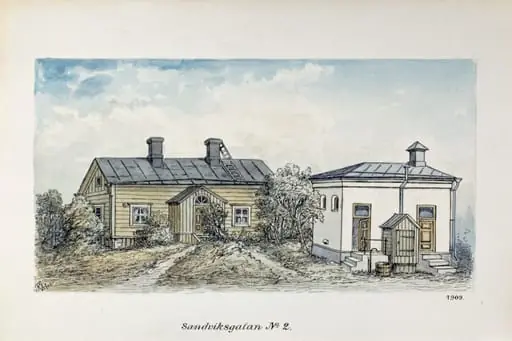
Rudolf Åkerblom created Munkkisaarenkatu 12 around 1897 as a detailed drawing of a modest residential building in Helsinki. The work captures a quiet urban scene with minimal embellishment, focusing on the architecture of a wooden house and its immediate surroundings. Rendered in pencil or ink, the piece reflects a documentary approach to everyday urban life in late 19th-century Finland.
Subject & Meaning
The subject is a utilitarian home on a residential street, devoid of ornamentation or signs of wealth. The presence of a streetlamp and a pile of building materials suggests a neighborhood in transition, perhaps under development. The scene conveys neither grandeur nor decay, but rather the unremarkable rhythm of daily life, offering a quiet testament to ordinary urban existence.
Technique & Style
Åkerblom employed fine cross-hatching and stippling to model form and suggest texture in the wooden walls, fence, and ground. These methods create subtle tonal variations without color, emphasizing structure and surface. The precision of the lines reflects a methodical, observational approach, aligning with the tradition of architectural draftsmanship rather than expressive brushwork.
History & Provenance
The drawing originated in Helsinki during a period of urban expansion, likely produced as part of Åkerblom’s personal or professional documentation of local architecture. Its survival suggests it was preserved within the artist’s archive or by a collector interested in vernacular building records. No public exhibition history is widely documented.
Context
In the 1890s, Helsinki was undergoing modernization, with wooden houses still common in residential areas before the rise of brick and stone construction. Åkerblom’s depiction aligns with a broader interest in recording traditional building forms as they began to disappear. The work reflects a cultural moment when urban identity was shifting, and documentation became a quiet act of preservation.
Legacy
Munkkisaarenkatu 12 remains a modest but valuable record of Helsinki’s architectural past. While not widely exhibited, it contributes to understanding how local artists engaged with their urban environment through careful observation. The drawing serves as a historical artifact, offering insight into domestic life and material culture at the turn of the century.
Own this work as a print
Artist & collection