Artwork
Lapinlahdenkatu 17
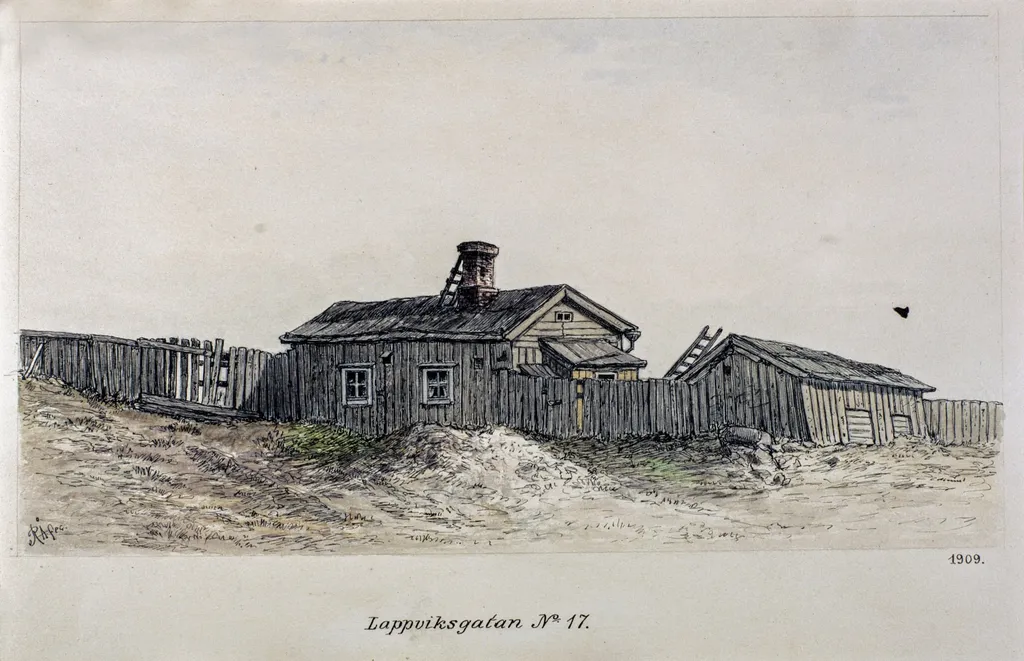
Lapinlahdenkatu 17 is a drawing by Rudolf Åkerblom. It dates from 1897 and is held in the collection of the Helsinki City Museum.
About this work
Overview
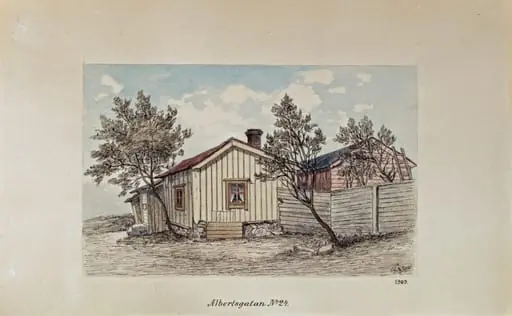
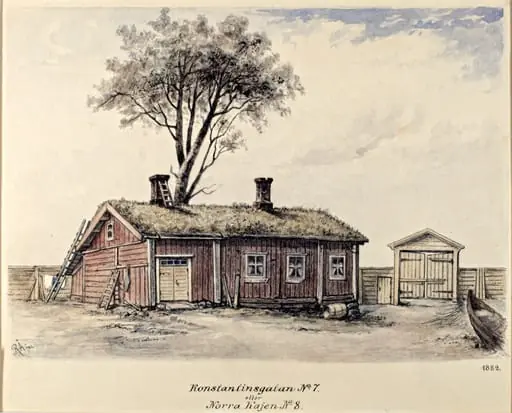
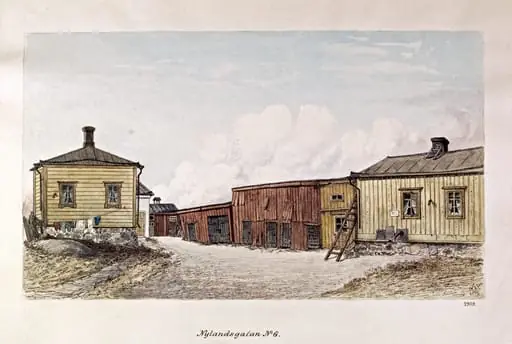
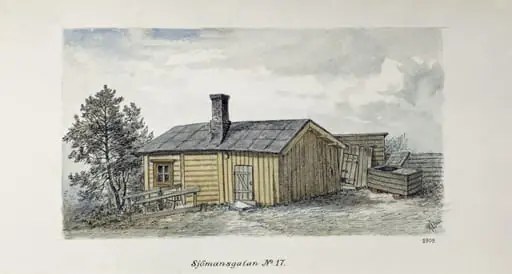
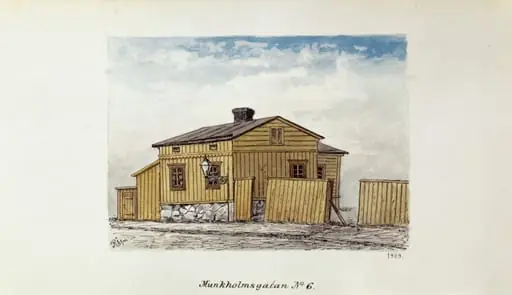
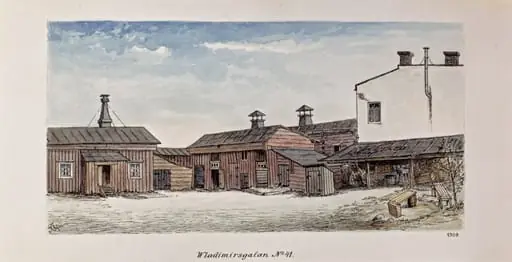
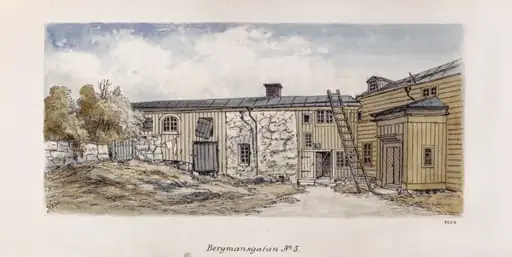
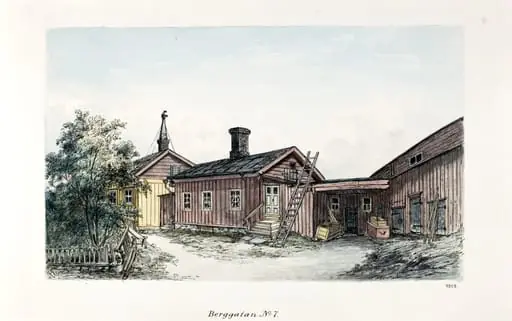
Rudolf Åkerblom created this pencil drawing around 1897, capturing a modest rural dwelling at Lapinlahdenkatu 17 in Helsinki.
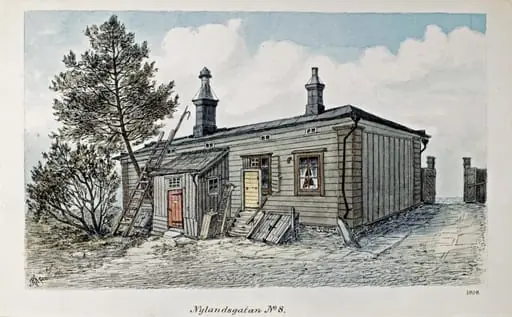
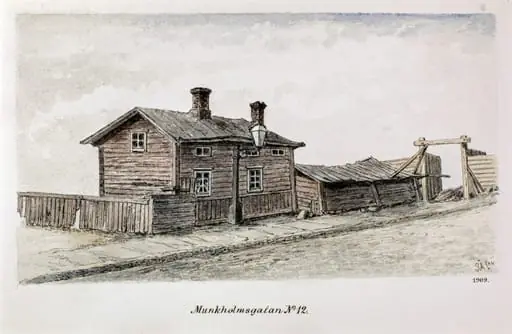
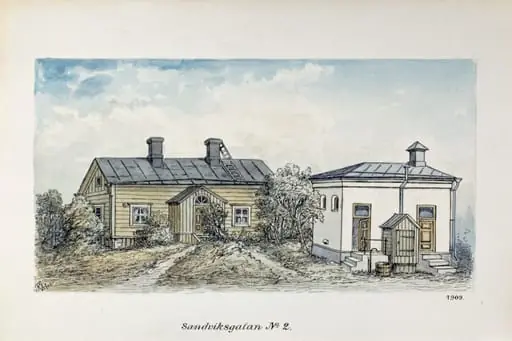
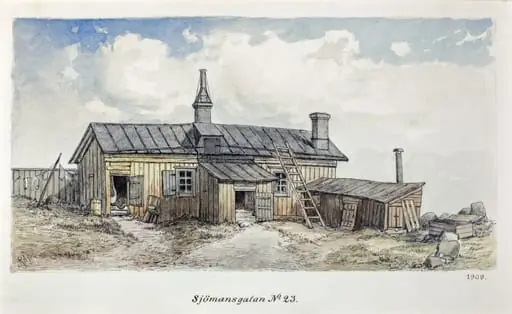
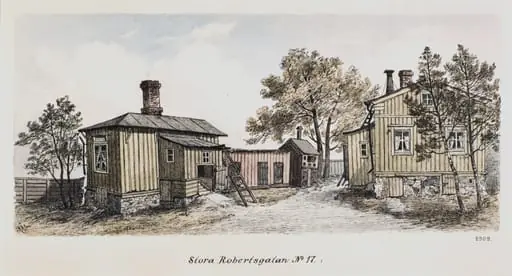
Rudolf Åkerblom created this pencil drawing around 1897, capturing a modest rural dwelling at Lapinlahdenkatu 17 in Helsinki. The composition focuses on a weathered wooden structure with a gable roof, a single side window, and a chimney. A ladder rests against the roof, and a bird soars overhead. Rendered with careful linework and subtle shading, the image conveys a sense of stillness and unadorned everyday life.
Subject & Meaning
The drawing portrays a humble domestic structure typical of late 19th-century Finnish urban peripheries. Its unpretentious architecture and isolated setting suggest a quiet, working-class existence. The presence of the ladder and the lone bird implies human activity and natural continuity, reinforcing themes of solitude and routine rather than grandeur or symbolism.
Technique & Style
Åkerblom employed precise pencil strokes to define textures—rough wood grain, the solidity of the fence, and the softness of the sky. Shading is restrained but effective, modeling forms without heavy contrast. The line work is deliberate and observational, reflecting a commitment to realism over romanticization, characteristic of academic drawing practices of the period.
History & Provenance
The drawing originates from Åkerblom’s personal sketchbook, likely made during his time in Helsinki. It was preserved within his family collection and later acquired by a public institution in the mid-20th century. No exhibition history or significant public record exists prior to its inclusion in institutional archives, suggesting it was a private study rather than a commissioned work.
Context
In the 1890s, Helsinki was expanding rapidly, yet peripheral streets like Lapinlahdenkatu retained older, modest dwellings. Åkerblom, trained as an architect, often documented such structures as urbanization transformed the cityscape. This drawing reflects a broader cultural interest in preserving visual records of vanishing vernacular architecture during Finland’s national awakening.
Legacy
Though not widely exhibited, the drawing remains a quiet testament to Åkerblom’s observational discipline. It contributes to the historical record of Helsinki’s architectural evolution and exemplifies the role of academic draftsmanship in documenting everyday environments. Its value lies in its unembellished fidelity to place and time.
Artist & collection