Artwork
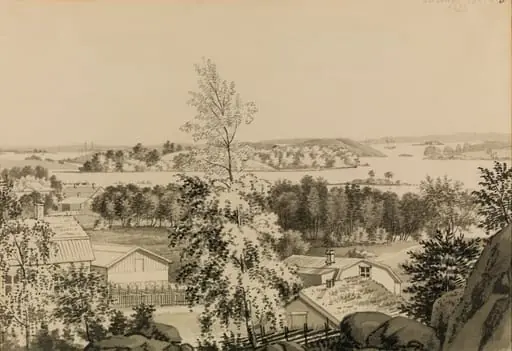
Näkymä Katajanokalta N:o 1
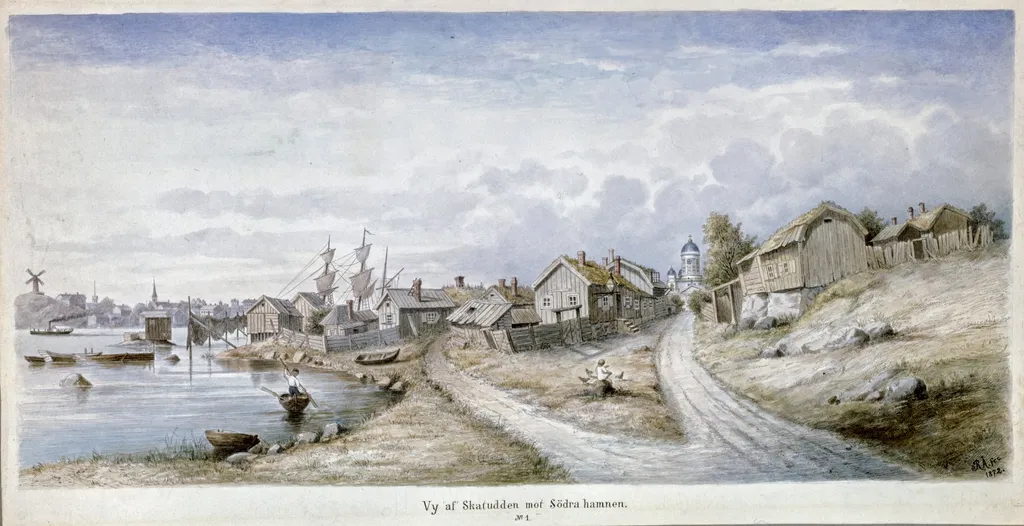
Näkymä Katajanokalta N:o 1 is a drawing by Rudolf Åkerblom. It dates from 1897 and is held in the collection of the Helsinki City Museum.
About this work
Overview
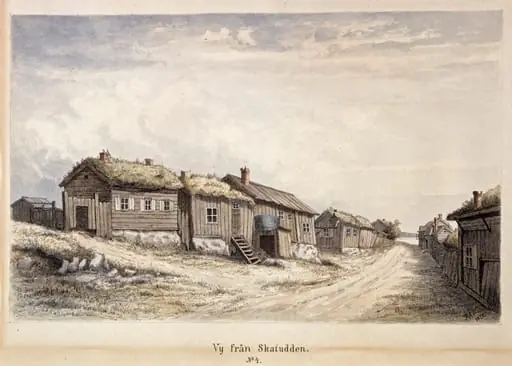
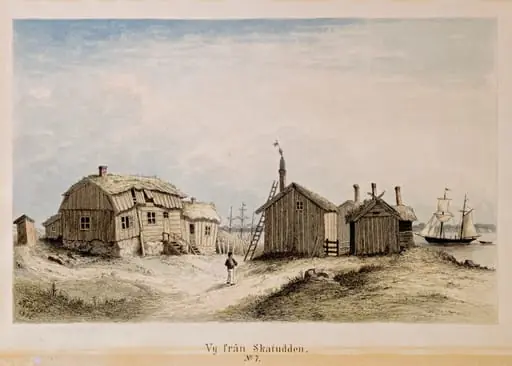
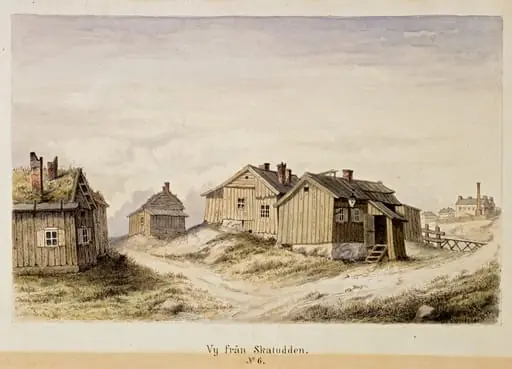
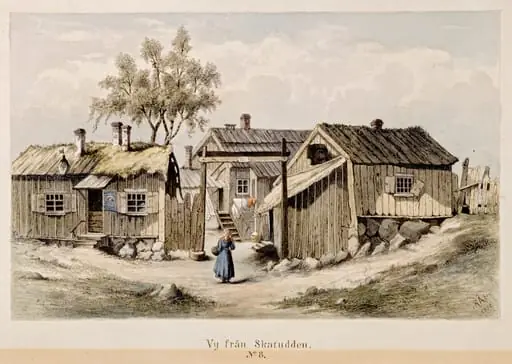
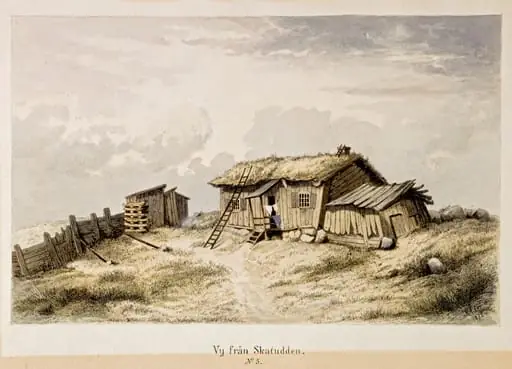
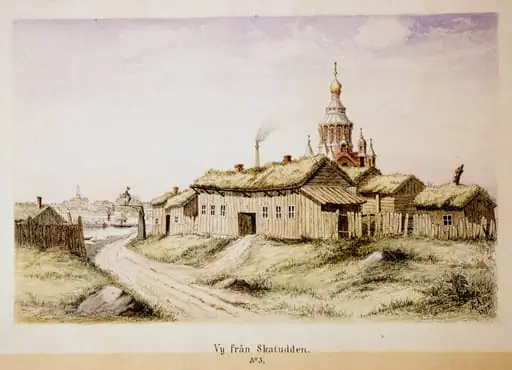
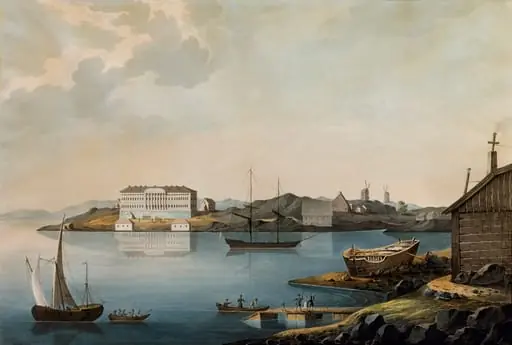
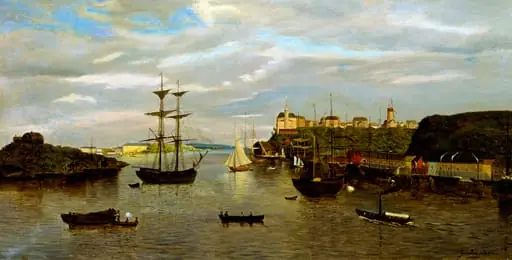
Näkymä Katajanokalta N:o 1, created circa 1897 by Rudolf Åkerblom, is a serene depiction of a coastal village. The scene unfolds with small wooden houses on a hillside, a winding dirt road, and a tranquil waterfront with idle boats and a distant anchored sailing ship.
Subject & Meaning
The subject is a peaceful, everyday coastal village scene, emphasizing calmness and routine. Figures are engaged in simple tasks near the water, suggesting a snapshot of ordinary life. The inclusion of a windmill and sailing ship adds to the sense of a self-sufficient, possibly rural, community.
Technique & Style
Executed with light pencil strokes, the work showcases texture in grass and buildings, contributing to its serene and everyday ambiance. The technique, reminiscent of cross-hatching principles (though not explicitly stated as such here), builds depth through layered lines.
History & Provenance
Created around 1897, the piece's title in Swedish implies it might depict an actual location observed by the artist. Specific provenance details are not provided.
Context
Given its late 19th-century creation, the work reflects a interest in capturing mundane, rural life, common in European art of the period. The use of pencil for such a detailed scene also speaks to the artist's preference for subtlety over more vibrant mediums.
Legacy
While specific influences or direct artistic lineage are not detailed, the work's emphasis on everyday life and its rendering in pencil strokes reflect broader artistic trends of observing and capturing the ordinary, potentially influencing later artists in similar pursuits.
Artist & collection