Artwork
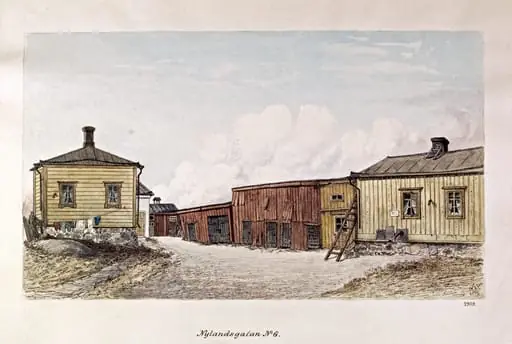
Näkymä Katajanokalta n:o 6
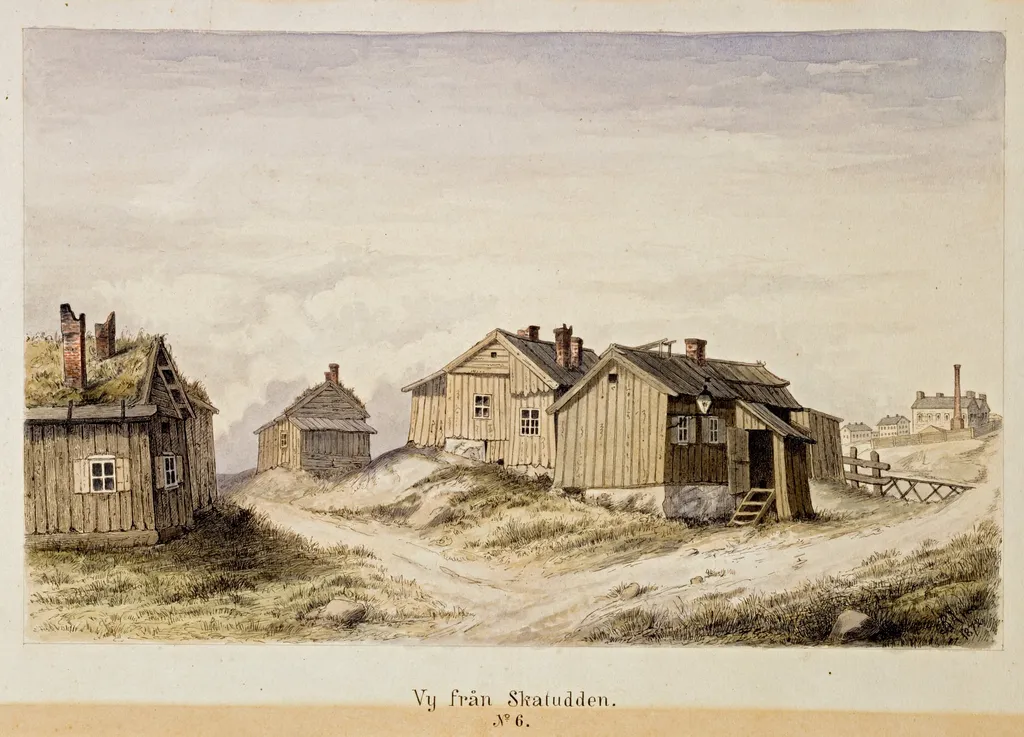
Näkymä Katajanokalta n:o 6 is a drawing by Rudolf Åkerblom. It dates from 1897 and is held in the collection of the Helsinki City Museum.
About this work
Overview
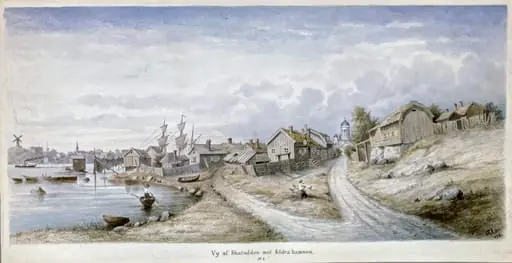
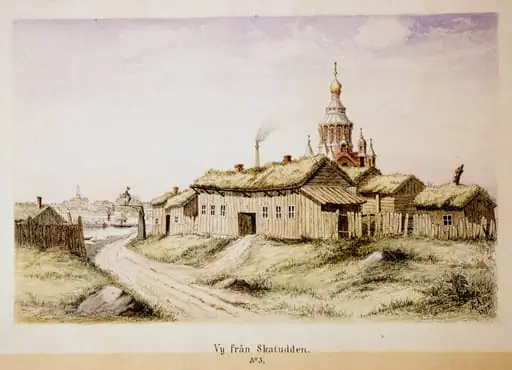
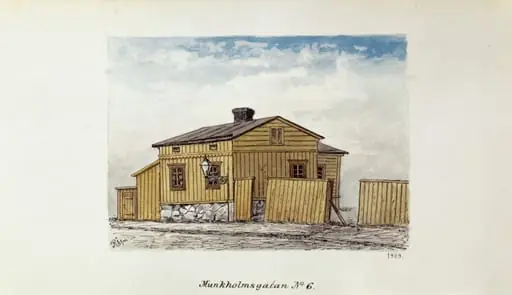
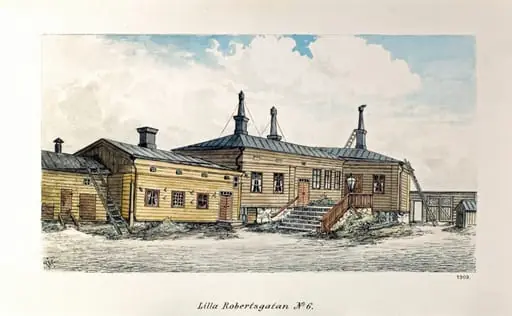
Näkymä Katajanokalta n:o 6 is a pencil drawing by Finnish artist Rudolf Åkerblom, dated around 1897. It depicts a quiet residential cluster on the Katajanokka peninsula in Helsinki, rendered with restrained tonal gradations. The composition emphasizes stillness and modest architecture, capturing a moment of everyday life without dramatic emphasis or idealization.
Subject & Meaning
The absence of figures and the muted atmosphere convey a sense of solitude, possibly reflecting the artist’s interest in the quiet rhythms of urban peripheries.
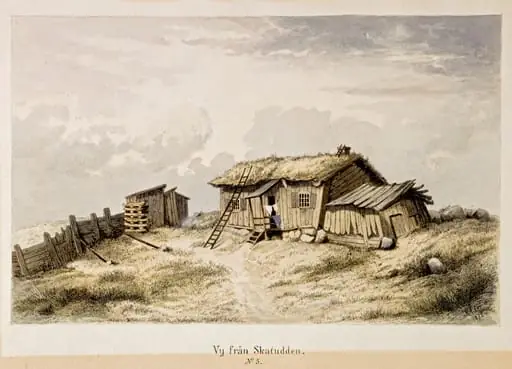
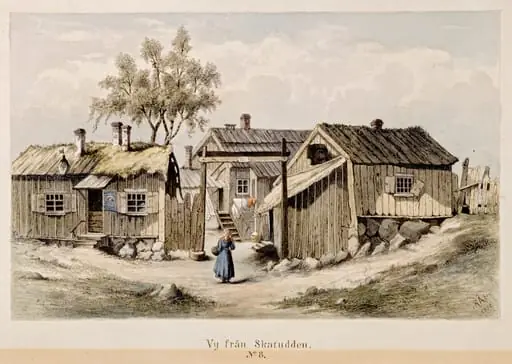
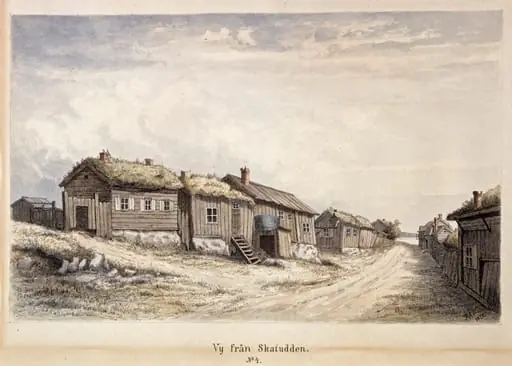
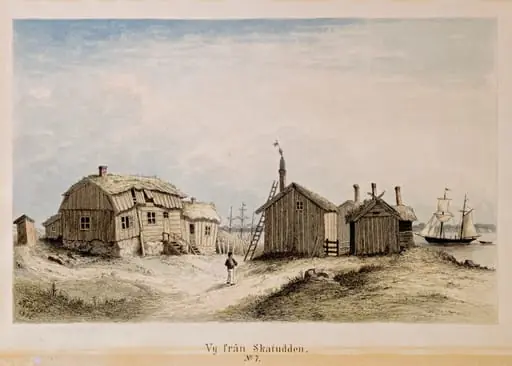
The scene presents a row of modest wooden dwellings nestled on a gentle slope, their weathered forms suggesting long-term habitation. A narrow path connects the structures, and a solitary bench near the largest house implies a space for quiet reflection. The absence of figures and the muted atmosphere convey a sense of solitude, possibly reflecting the artist’s interest in the quiet rhythms of urban peripheries.
Technique & Style
Åkerblom employed soft, delicate pencil strokes to build subtle tonal variations, avoiding sharp contrasts. The palette is limited to earthy browns, grays, and pale greens, reinforcing the subdued mood. Lines are loose and observational, capturing the irregularities of the buildings and the natural slope of the land without idealized precision, aligning with a realist, almost documentary approach.
History & Provenance
Created during Åkerblom’s active period in late 19th-century Finland, the work likely stems from his personal sketches of Helsinki’s developing neighborhoods. While specific ownership history is not widely documented, it is held within Finnish institutional collections, reflecting its recognition as part of the nation’s artistic record of urban and domestic life at the time.
Context
In the 1890s, Helsinki was expanding beyond its historic core, and areas like Katajanokka saw the rise of modest housing for working-class residents. Åkerblom’s drawing reflects this transitional phase, documenting vernacular architecture before modernization altered the landscape. His focus on unadorned dwellings aligns with broader Nordic trends favoring honest representation over romanticized scenery.
Legacy
Though not widely exhibited internationally, the drawing remains a representative example of Åkerblom’s contribution to Finnish graphic art. It preserves a vanishing architectural type and offers insight into how artists of the period engaged with ordinary urban environments. The work continues to be referenced in studies of late 19th-century Finnish visual culture.
Artist & collection