Artwork
Pieni Roobertinkatu 6, piha
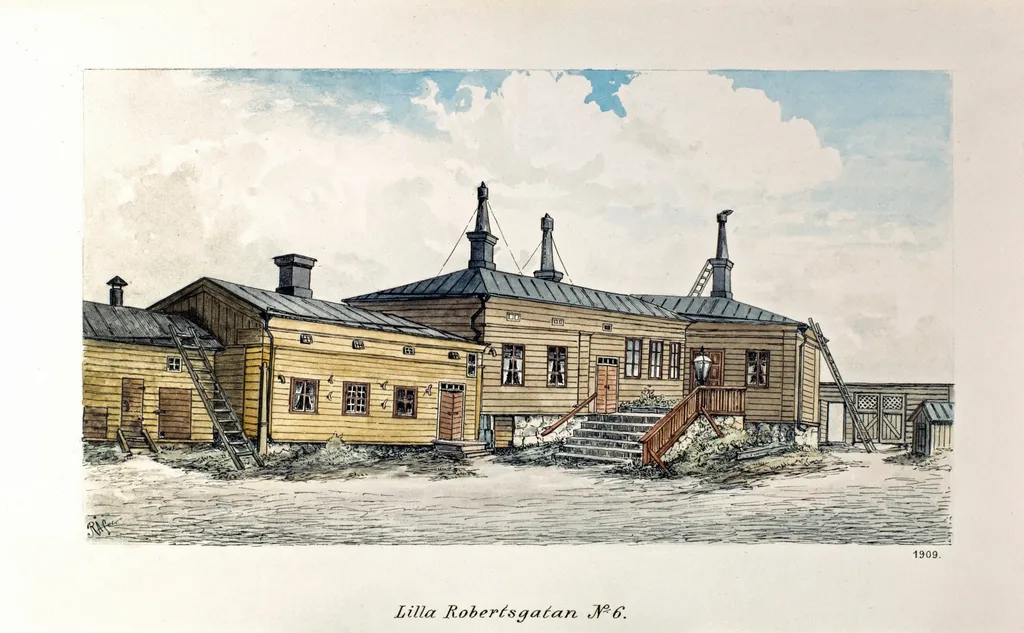
Pieni Roobertinkatu 6, piha is a drawing by Rudolf Åkerblom. It dates from 1897 and is held in the collection of the Helsinki City Museum.
About this work
Overview
Pieni Roobertinkatu 6, piha is a quiet interior view of a residential courtyard in Helsinki, painted around 1897 by Rudolf Åkerblom.
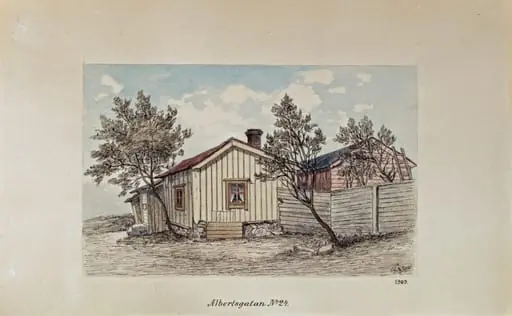
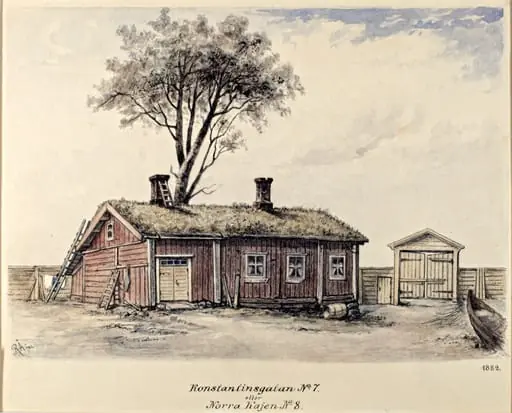
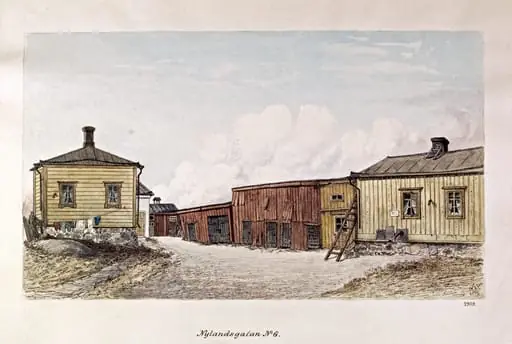
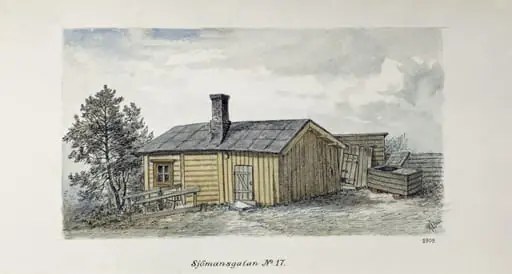
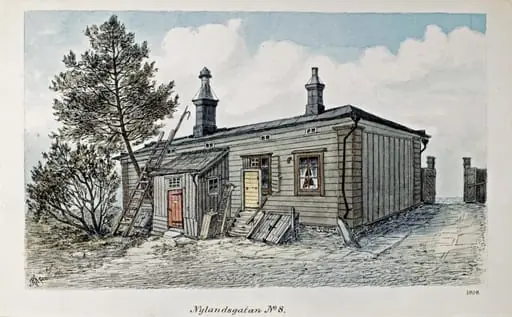
Pieni Roobertinkatu 6, piha is a quiet interior view of a residential courtyard in Helsinki, painted around 1897 by Rudolf Åkerblom. The scene captures a modest home with a yellow-painted facade, a dark gabled roof, and a chimney. A wooden staircase ascends to the entrance, while a ladder rests against the side wall. The yard is largely bare, suggesting daily use rather than ornamentation. The composition emphasizes stillness and unadorned domestic life.
Subject & Meaning
The painting presents an unremarkable urban courtyard, devoid of people or activity, yet imbued with a sense of lived-in calm. It reflects the ordinary rhythms of late 19th-century Helsinki life, where private yards served as functional spaces rather than decorative ones. The absence of figures invites contemplation of solitude and routine, offering a quiet meditation on domestic architecture rather than a narrative moment.
Technique & Style
Åkerblom employs a restrained palette of warm yellows, deep browns, and soft blues to convey texture and light. Brushwork is deliberate but not ornate, with clean lines defining architectural forms and subtle gradations suggesting atmospheric depth. The sky, rendered in pale washes, enhances the scene’s serenity without drawing attention. The style aligns with Nordic realism, prioritizing observation over dramatic effect.
History & Provenance
Created around 1897, the work originates from Åkerblom’s period of active painting in Helsinki, where he documented local architecture and everyday environments. Its provenance traces within Finnish collections, though specific ownership history remains undocumented. The piece was likely produced for private or academic circulation rather than public exhibition, consistent with the artist’s modest output during this phase.
Context
In late 19th-century Finland, urban expansion brought new residential patterns, and artists like Åkerblom turned to ordinary streetscapes as subjects. This work reflects a broader interest in documenting the built environment amid modernization. Unlike grand historical or romantic scenes, such images valued quiet authenticity, aligning with emerging national sensibilities that celebrated everyday Finnish life.
Legacy
Pieni Roobertinkatu 6, piha contributes to a lesser-known but significant body of Finnish domestic realism from the 1890s. While Åkerblom did not achieve widespread fame, his works offer valuable insight into the visual culture of Helsinki’s residential neighborhoods. The painting remains a quiet testament to the aesthetic value found in unassuming, everyday spaces.
Artist & collection