Artwork
Vuorimiehenkatu 5
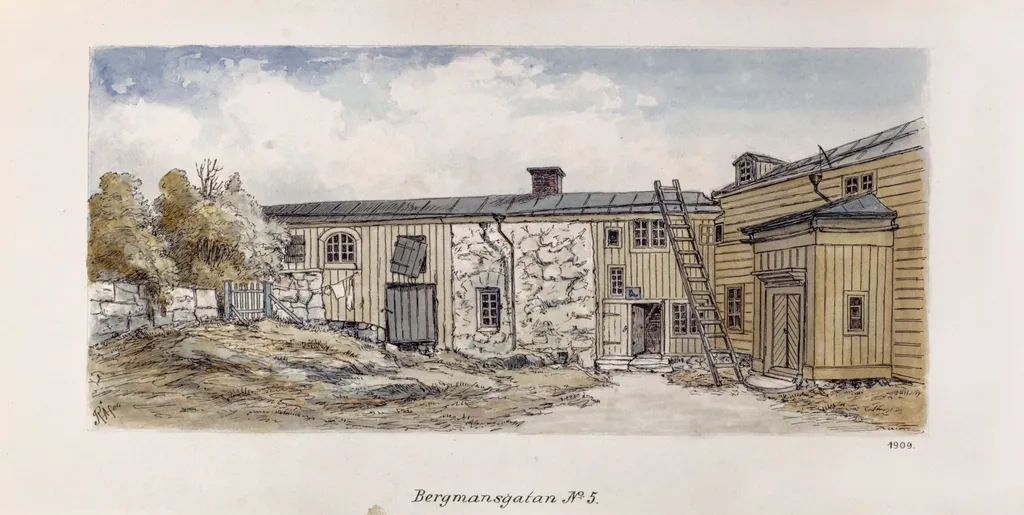
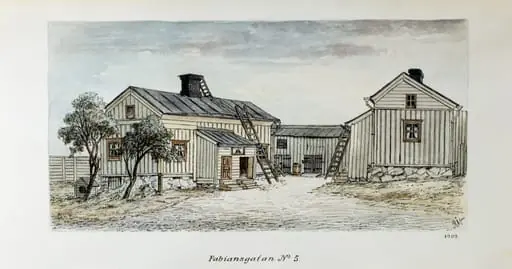
Vuorimiehenkatu 5 is a drawing by Rudolf Åkerblom. It dates from 1897 and is held in the collection of the Helsinki City Museum.
About this work
Overview
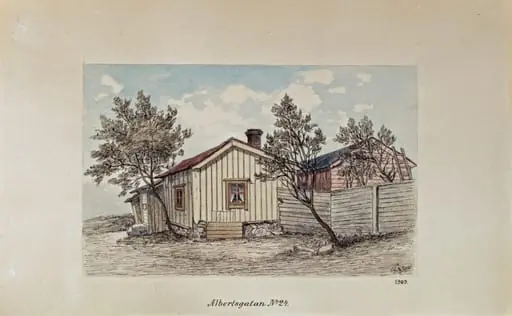
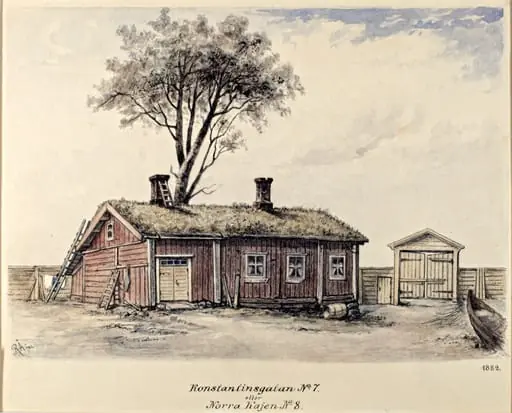
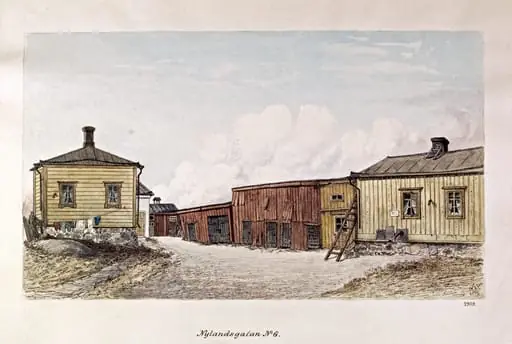
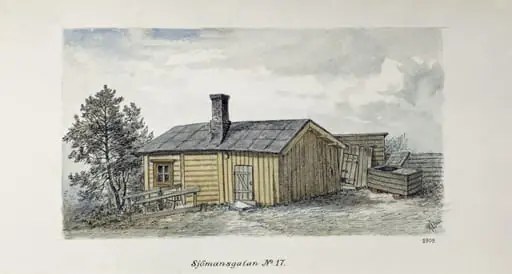
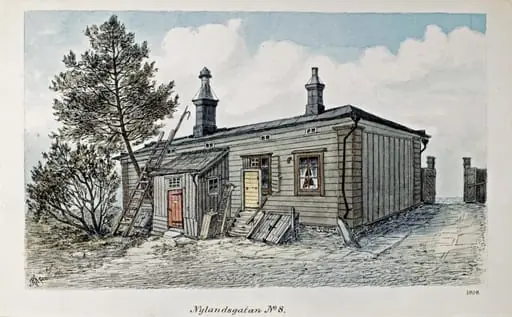
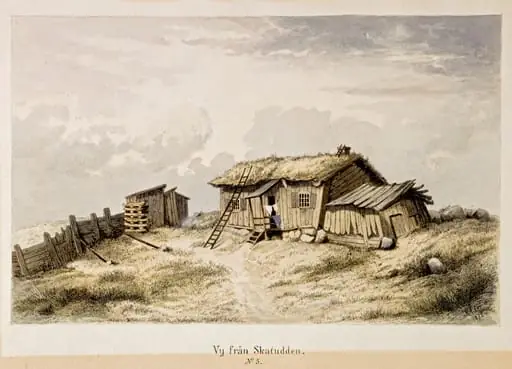
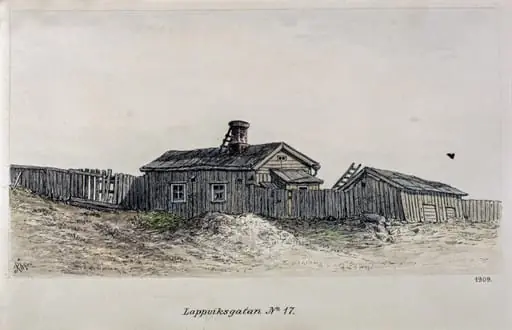
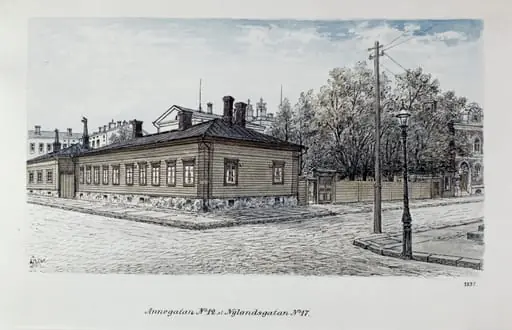
Vuorimiehenkatu 5 is a late‑19th‑century drawing by Finnish artist Rudolf Åkerblom, dated to around 1897. The work records a modest urban scene, presenting two adjacent wooden structures with a ladder propped against one of them, set against a muted sky.
Subject & Meaning
The composition captures everyday architecture: two weathered houses with faded paint, a low stone wall with an open gate, and a narrow dirt lane strewn with a few leaves. The inclusion of the ladder suggests routine maintenance, emphasizing the ordinary labor of city life.
Technique & Style
Åkerblom employs a restrained palette of line and tone, relying on simple geometric forms and careful texturing. Cross‑hatching builds the shadows on the wood grain, while the light sky, rendered with minimal cloud strokes, isolates the structures and heightens their tactile presence.
History & Provenance
Created circa 1897, the drawing belongs to Åkerblom’s early period, when he documented Helsinki’s built environment. Its provenance traces through private collections before entering a public archive, where it serves as a visual record of the city’s late‑Victorian streetscape.
Context
The work reflects a broader Nordic interest in documenting urban change during rapid industrialization. By focusing on modest, aging buildings rather than grand monuments, Åkerblom aligns with contemporary realist tendencies that valued the everyday over the heroic.
Legacy
Vuorimiehenkatu 5 remains a valuable reference for scholars studying Helsinki’s architectural evolution and for conservators interested in historic building materials. Its modest scale and precise rendering continue to illustrate the power of line work in conveying texture and atmosphere.
Artist & collection