Artwork
A Kneeling Woman with an Incense Burner and a Page Holding a Crown and Scepter
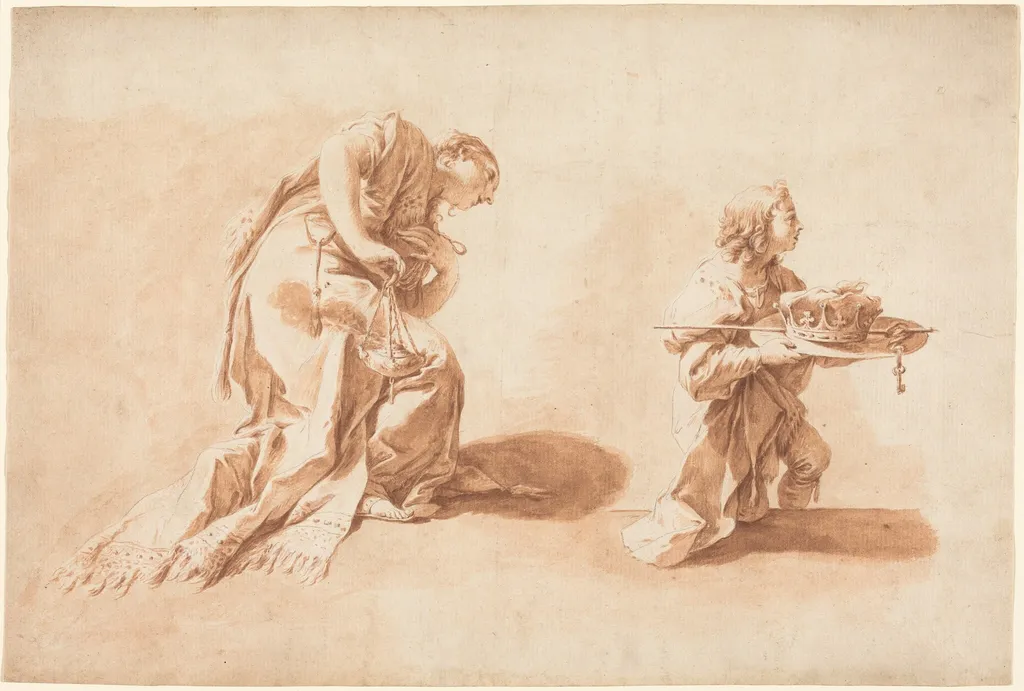
A Kneeling Woman with an Incense Burner and a Page Holding a Crown and Scepter is a chalk drawing by the Baroque artist Anton Kern. It dates from 1726 and is held in the collection of the National Gallery of Art.
About this work
Overview
Created around 1726, this drawing by Anton Kern is a figural study in pen and brown ink, layered with wash and heightened with white pigment on laid paper.
Created around 1726, this drawing by Anton Kern is a figural study in pen and brown ink, layered with wash and heightened with white pigment on laid paper. Executed in black chalk underdrawing, the composition centers on two figures: a kneeling woman and a standing page. The restrained palette and minimal background focus attention on posture and gesture, suggesting a ceremonial moment rather than a narrative scene.
Subject & Meaning
The woman, kneeling with an incense burner, evokes devotion or ritual, while the boy beside her holds a crown and scepter—symbols of temporal authority. Their juxtaposition implies a relationship between spiritual reverence and royal power, possibly referencing coronation rites or divine sanction. The quiet intensity of the woman’s pose contrasts with the boy’s rigid bearing, suggesting a solemn transfer or acknowledgment of sacred duty.
Technique & Style
Kern employs layered brown ink washes to model form subtly, with black chalk defining contours and white highlights adding luminosity to fabric folds and smoke. The incense’s thin curl is rendered with delicate pen lines, enhancing the sense of movement. The contrast between the woman’s flowing robes and the page’s stiff attire reflects a deliberate stylistic choice to distinguish humility from ceremonial formality.
History & Provenance
Anton Kern, a Bohemian artist active in the early 18th century, produced this work during a period of intense religious and courtly patronage in Central Europe. While the drawing’s early ownership is undocumented, its technical precision aligns with preparatory studies for larger religious or allegorical compositions common in Habsburg artistic circles of the time.
Context
In early 18th-century Bohemia, religious imagery often intertwined with monarchical symbolism, reflecting the close alliance between Church and Crown. Kern’s drawing fits within a broader tradition of preparatory sketches used by artists to explore symbolic relationships between figures, particularly in scenes of devotion, coronation, or divine favor.
Legacy
Though Kern is not widely known today, this drawing exemplifies the refined draftsmanship of Central European Baroque preparatory work. Its focus on gesture and symbolic contrast influenced later studies of sacred and courtly figures, preserving a quiet yet potent visual language of authority and piety in an era of elaborate ceremonial art.
Artist & collection
Artist
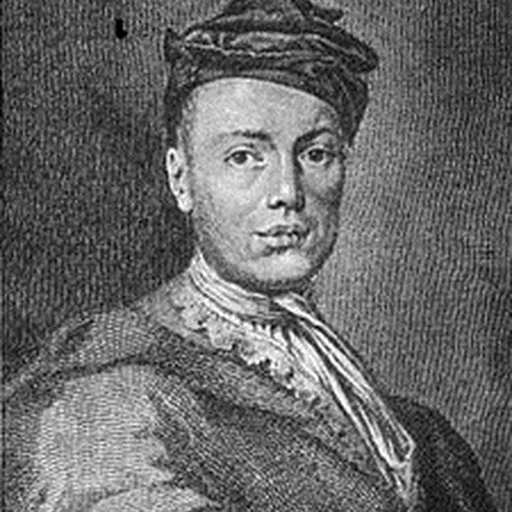
Anton Kern or Körne (12 December 1709 - 8 June 1747) was a Bohemian-born painter; primarily of religious and historical scenes.

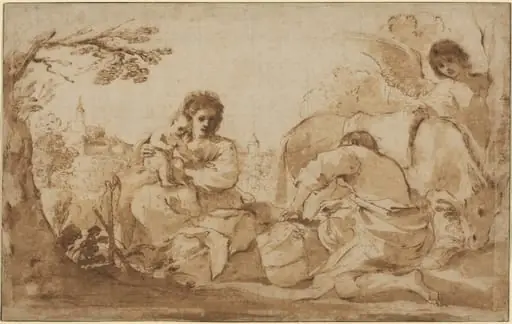 The Rest on the Flight into Egypt
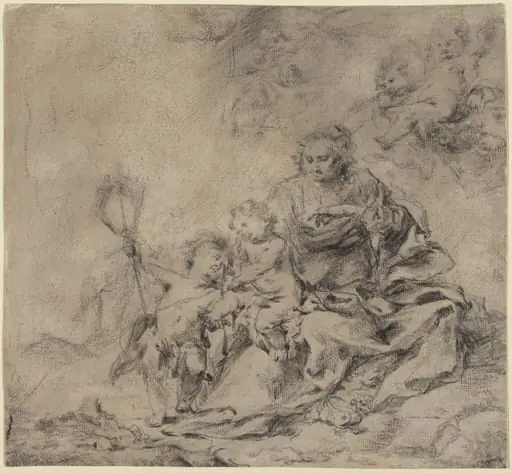 The Virgin and Child with John the Baptist
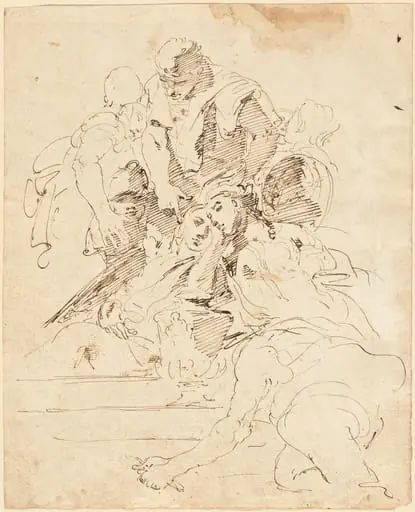 Classical Figures Gathered around an Urn
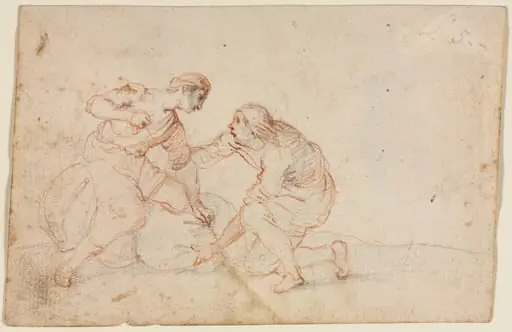 Two Men Tying a Bundle (recto)
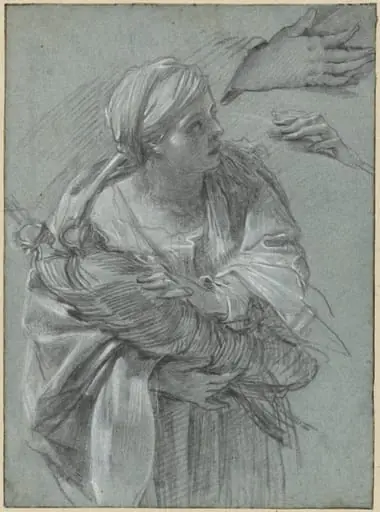 Creusa Carrying the Gods of Troy
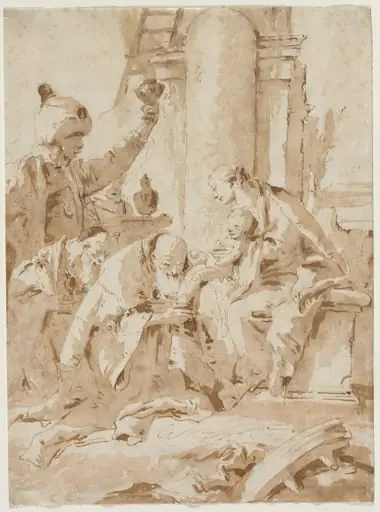 The Adoration of the Magi
 Two Seated Women
 Temptation of Christ
 The Meeting of Antony and Cleopatra
 Flight into Egypt: The Embarkment of the Holy Family
 Rest on the Flight into Egypt
 The Little Preacher